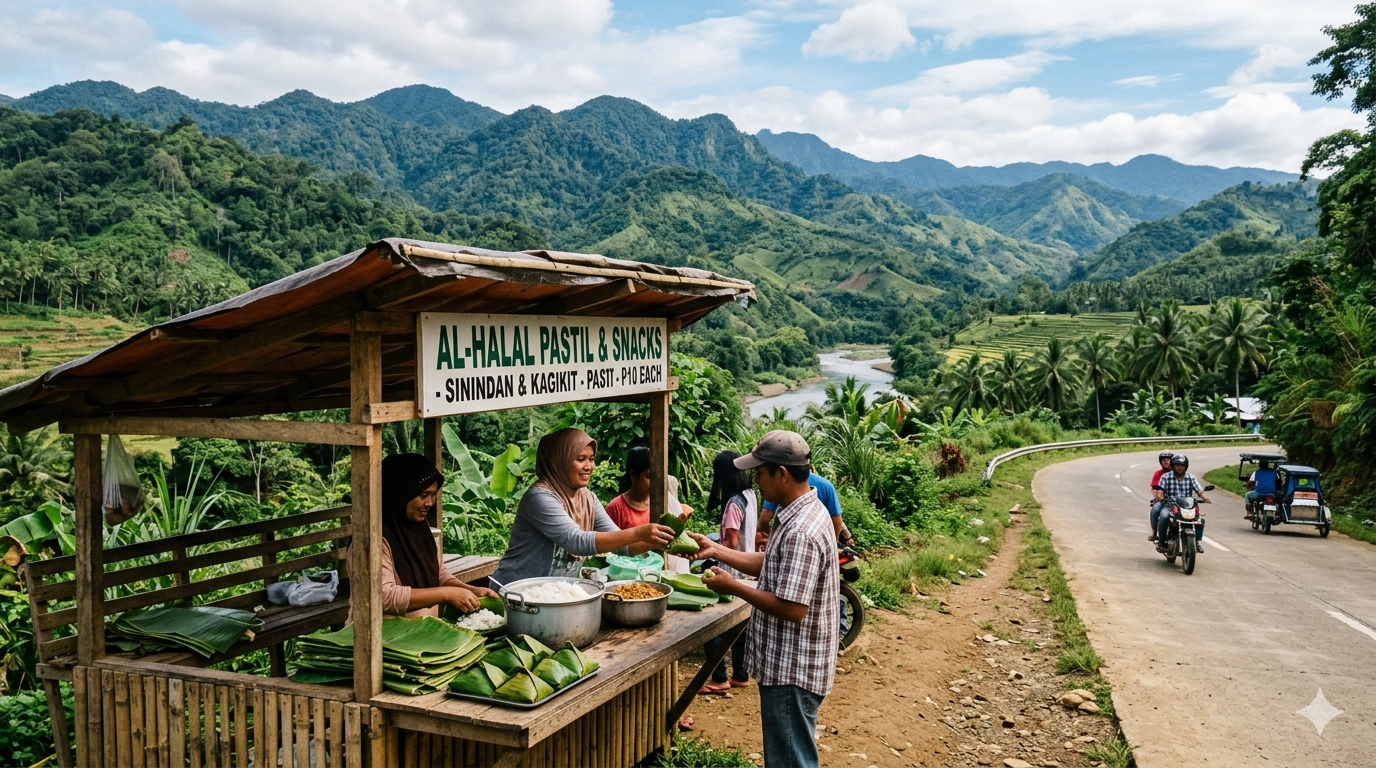
Pastil: Nutritional Overview of a Traditional Mindanao Dish
A neutral exploration of pastil, its ingredients, and nutritional considerations.
Pastil is a traditional dish originating from Mindanao, typically consisting of steamed rice topped with shredded cooked meat, wrapped in banana leaves. This article provides a neutral overview of its typical ingredients, macronutrient composition, and considerations for balanced nutrition. Information references Philippine food safety and labeling standards, including guidelines from the Department of Health (DOH) and the Food and Drug Administration (FDA Philippines).
Ingredients and Composition:
- Rice: Usually steamed white rice; provides carbohydrates as the main energy source.
- Meat filling: Often chicken, beef, or fish; contributes protein and small amounts of fat. Seasoning varies by region.
- Banana leaf wrap: Primarily serves as packaging; minimal nutritional contribution but can provide antioxidant compounds when heated.
Nutritional Considerations (Hypothetical Example):
A single serving (approx. 150–200 g of rice with 50 g of meat) may provide:
- Carbohydrates: 35–45 g
- Protein: 10–15 g
- Fat: 3–7 g
- Fiber: 1–2 g
- Sodium: dependent on seasoning
Dietary Notes:
- Pastil can be part of a nutrient-balanced meal when combined with vegetables or fruit.
- Portion sizes vary; monitoring rice-to-meat ratio helps manage macronutrient balance.
- Cooking methods (steaming vs. frying the meat) affect fat content.
Food Safety Considerations:
- Follow safe food handling practices, including proper meat cooking and hygienic wrapping.
- Check freshness and storage of ingredients to prevent microbial contamination, in line with FDA Philippines food safety guidelines.
Context
In nutrition science studies, traditional dishes like pastil are recognized for their cultural value and energy content. Under consumer protection and labeling standards in the Philippines, it is important to provide accurate ingredient lists and avoid unverified health claims. Dietary results vary individually, and portion sizes should be adapted according to personal nutritional requirements. Consultation with licensed nutrition or medical professionals is recommended for personalized guidance.
FAQs
What is pastil?
Pastil is a Mindanaoan dish consisting of steamed rice topped with shredded meat, typically wrapped in banana leaves.
What macronutrients does pastil provide?
Pastil provides primarily carbohydrates from rice, protein from meat, and a small amount of fat depending on the meat and cooking method.
Can pastil be part of a balanced diet?
When consumed with vegetables or fruit, pastil can contribute to a meal that includes multiple nutrient groups. Individual dietary needs vary.
Trusted Sources
- Department of Health Philippines – Nutrition and Food Safety Guidelines
- FDA Philippines – Food Safety Standards
- Academic journals on Filipino traditional foods and dietary composition
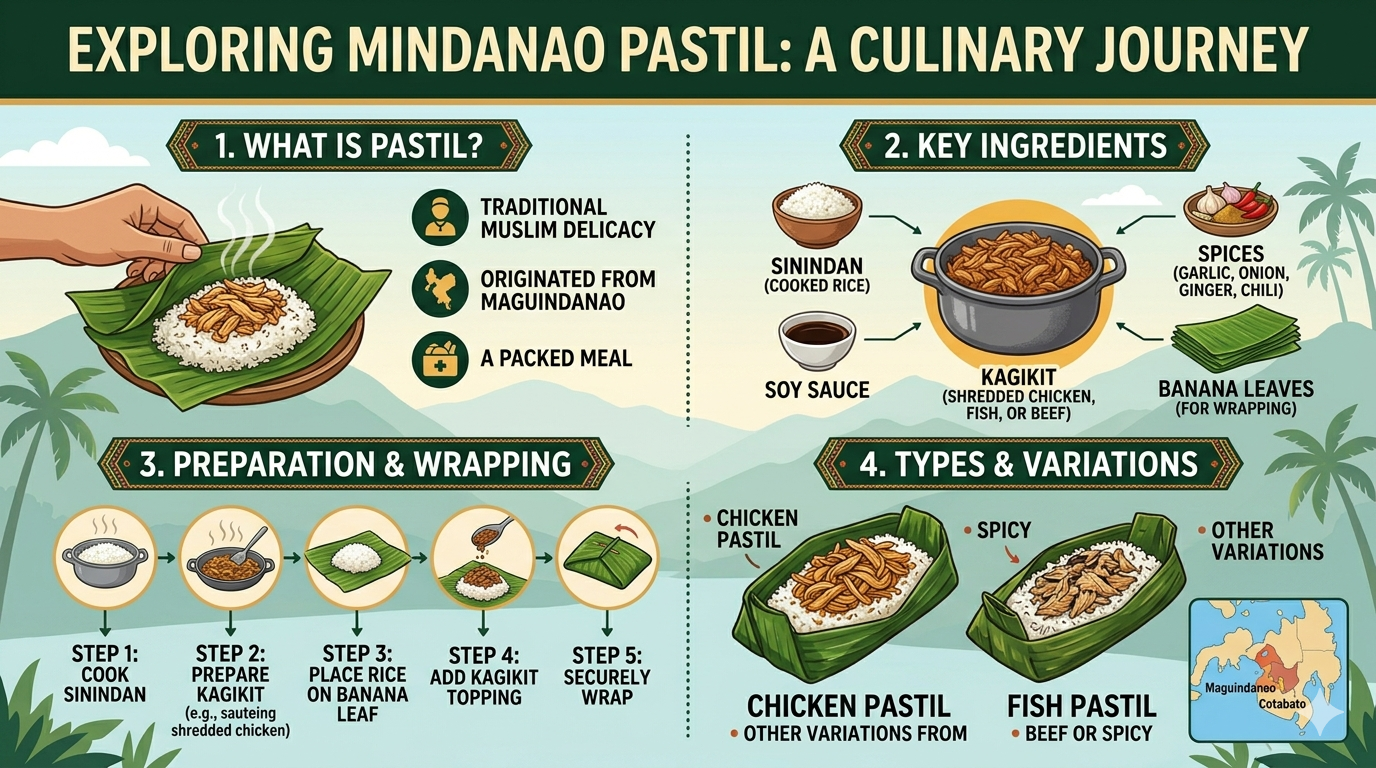
Diagram showing pastil’s rice base, shredded meat topping, and banana leaf wrapping
Disclaimer
This article is for general informational and educational purposes only. It does not constitute professional medical, nutrition, or dietary advice. References to dishes, ingredients, or preparation methods do not imply endorsement or guarantee of health outcomes. Readers are encouraged to consult licensed nutritionists, dietitians, or medical professionals for personalized guidance.