Pinakbet: Nutritional Overview of a Traditional Filipino Vegetable Dish
Pinakbet is a traditional Filipino dish composed mainly of locally grown vegetables such as bitter melon, eggplant, squash, okra, and string beans, typically flavored with fermented shrimp paste (bagoong). This article provides an informational overview of its nutrient composition, dietary considerations, and hypothetical meal planning applications. It follows guidance from the Department of Health (DOH) and Food and Drug Administration (FDA Philippines) regarding safe food consumption and nutrition information.
Nutritional Principles
Pinakbet is rich in dietary fiber, which contributes to digestive health, and contains a variety of micronutrients, including:
- Vitamin A – from squash and bitter melon
- Vitamin C – from okra, tomatoes, and eggplant
- Potassium – from squash and eggplant
- Magnesium and trace minerals – from vegetables and small amounts of shrimp paste
The dish generally has a low fat content unless additional cooking oil is used. Sodium intake can increase if fermented shrimp paste or commercial bagoong is added.
Food Groups and Nutrient Balance
- Vegetables – primary component, rich in fiber and micronutrients
- Protein – minimal, mainly from shrimp paste or small seafood additions
- Carbohydrates – usually added via rice or other grains when consumed as part of a meal
In a balanced meal, pinakbet can be paired with whole grains (like brown rice) and lean protein sources (such as tofu or fish) to provide a more complete nutrient profile.
Hypothetical Meal Example (Informational)
Sample Lunch Plate:
- 1 cup cooked brown rice
- 1 cup pinakbet
- 50 g grilled fish or tofu
- 1 glass water
Approximate Nutrient Highlights (per plate, educational purposes only):
- Calories: 350–400 kcal
- Protein: 12–15 g
- Carbohydrates: 55–60 g
- Fat: 8–10 g
- Fiber: 6–8 g
This is for informational purposes and does not guarantee any specific health outcomes.
Context
In nutrition science studies, diets rich in vegetables like those in pinakbet are associated with adequate fiber and micronutrient intake, supporting general nutrition. Under Philippine consumer protection and labeling standards, monitoring added salts, oils, or processed condiments helps ensure dietary awareness. Nutrient intake varies individually, and overall dietary balance should be considered in consultation with licensed nutrition professionals.
FAQs
What is pinakbet?
Pinakbet is a Filipino vegetable stew that typically includes bitter melon, eggplant, squash, okra, and string beans, often flavored with fermented shrimp paste.
What nutrients are in pinakbet?
Pinakbet provides dietary fiber, vitamins A and C, potassium, and trace minerals, with minor protein contributions from shrimp paste or seafood.
How can pinakbet fit into a meal plan?
It can be included as part of a balanced meal with whole grains and lean protein while monitoring sodium content.
Trusted Sources
- Department of Health (DOH Philippines) – Nutrition and Food Safety Advisories
- Food and Drug Administration (FDA Philippines) – Food Labeling Guidelines
- Philippine Dietary Reference Intakes (PDRI) – Nutrient Recommendations
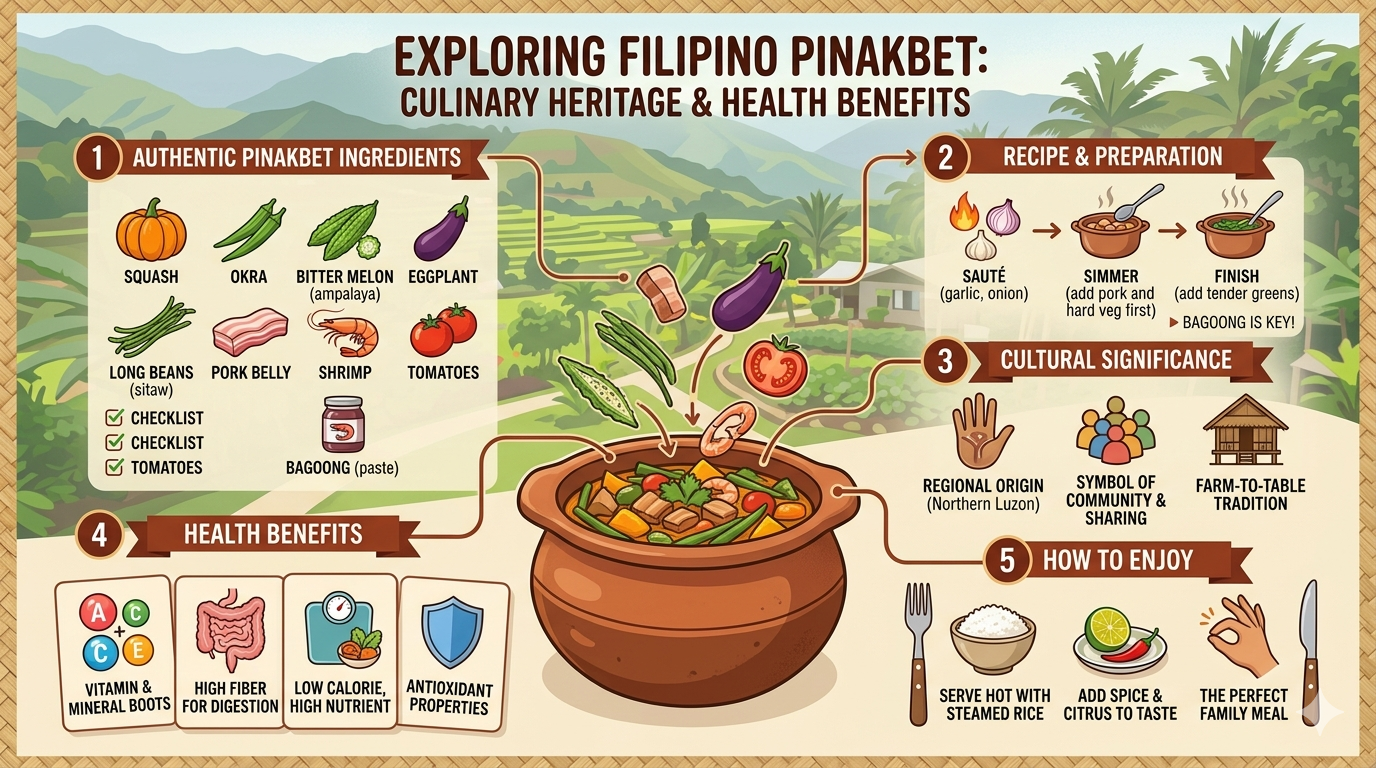
Diagram of vegetables included in Pinakbet.
Disclaimer
This article is for general informational and educational purposes only. It does not constitute professional medical, nutrition, or dietary advice. References to traditional dishes or foods do not imply endorsement or guarantee of health outcomes. Readers are encouraged to consult licensed nutritionists, dietitians, or medical professionals for personalized guidance.