Satti (Zamboanga’s Skewered Meat Dish)
Satti is a traditional grilled meat dish from the Zamboanga Peninsula and Southern Mindanao region of the Philippines. It is commonly eaten as a local breakfast food and has cultural roots in regional culinary traditions that include influences from Southeast Asian satay-style skewers.
What Is Satti?
Satti consists of small strips of grilled meat — typically chicken or beef — threaded onto bamboo skewers. The meat is grilled over charcoal and served with a distinctive warm spicy sauce and rice. In Zamboanga and nearby areas, rice may be presented as puso (rice wrapped and cooked in woven coconut leaves).
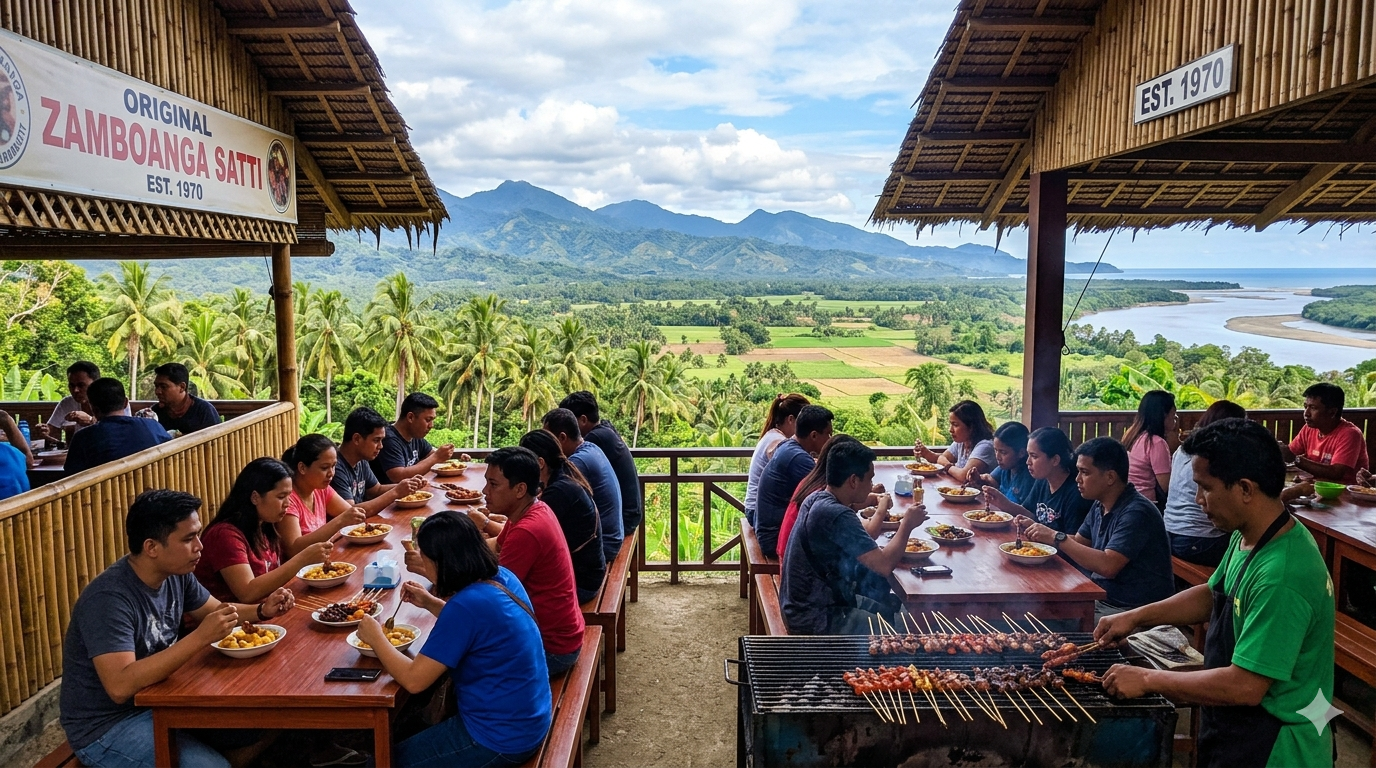
The dish is regularly found in local eateries known as “satti houses” where it is traditionally enjoyed in the morning.
Typical Ingredients (Cultural / Culinary Context)
- Meat: Chicken or beef (sometimes liver)
- Marinade & Spices: Garlic, pepper, turmeric or curry-like spices (varies by cook)
- Sauce: Spicy, reddish sauce that may include tomato, chili, and aromatic seasonings (recipe style varies)
- Rice: Often served with rice or rice cooked in coconut leaves (puso)
The sauce’s exact composition differs among local cooks and establishments.
Nutritional Considerations
While specific nutrition values can vary based on ingredients and preparation, Satti typically includes:
- Protein: from grilled chicken or beef.
- Carbohydrates: from rice or puso.
- Fats: from the meat and sauce components.
The overall energy and nutrient content depends on portion size and ingredients used; for example, leaner meats and minimal added fats can influence macronutrient proportions. This is informational only and not a dietary recommendation. (Standard nutrition principles)
Cultural and Regional Context
Satti has a place in Tausug and Southern Mindanao food culture, especially in Zamboanga City, where local residents eat it as a familiar comfort food. It shares similarities in concept with Southeast Asian satay, though local preparation and serving styles reflect regional tastes and traditions.
Context
In Philippine regional cuisines, dishes like Satti illustrate how various cultural influences shape local food traditions. Such foods are part of everyday eating for many residents and are often associated with community routines — for instance, Satti houses opening early in the morning for breakfast service. Differences in sauces, spices, and accompaniments show how even a similar dish can have distinct regional identities.
FAQs
What is puso?
Puso refers to rice cooked inside woven coconut leaves; it is a traditional way of preparing rice in parts of Mindanao and often served with grilled dishes.
Is Satti the same as satay?
Satti and satay both involve grilled skewered meats, but satti refers specifically to the Filipino variant found in Mindanao regions, with local sauces and accompaniments that may differ from other Southeast Asian satay styles.
When is Satti typically eaten?
In its regional context, satti is frequently enjoyed in the morning as a common breakfast meal, but some people have it at other times of day too.
Trusted Sources
- Wikipedia entry on Satti (filipino dish)
- Zamboanga food and travel guides describing satti as a local specialty
- Rappler’s description of satti as a traditional breakfast item in Southern Mindanao
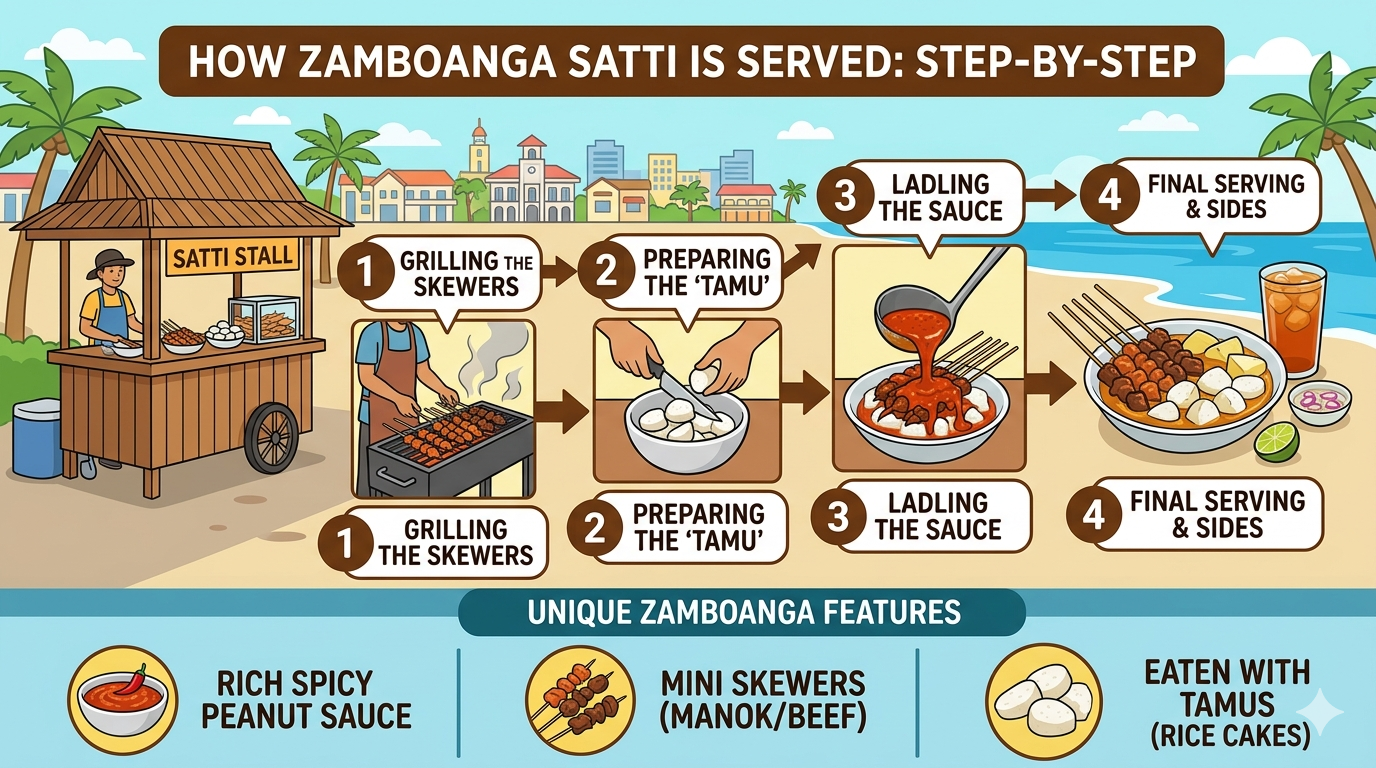
Infographic illustrating the main components of Zamboanga’s satti dish.
Disclaimer
This information is for general educational purposes only. It does not constitute nutritional, medical, or dietary advice. For personal dietary planning or nutrition guidance, consult a licensed nutritionist or healthcare professional.