by Ramil Villar | Apr 6, 2026 | Food & Nutrition Basics
Pastil: Nutritional Overview of a Traditional Mindanao Dish
A neutral exploration of pastil, its ingredients, and nutritional considerations.
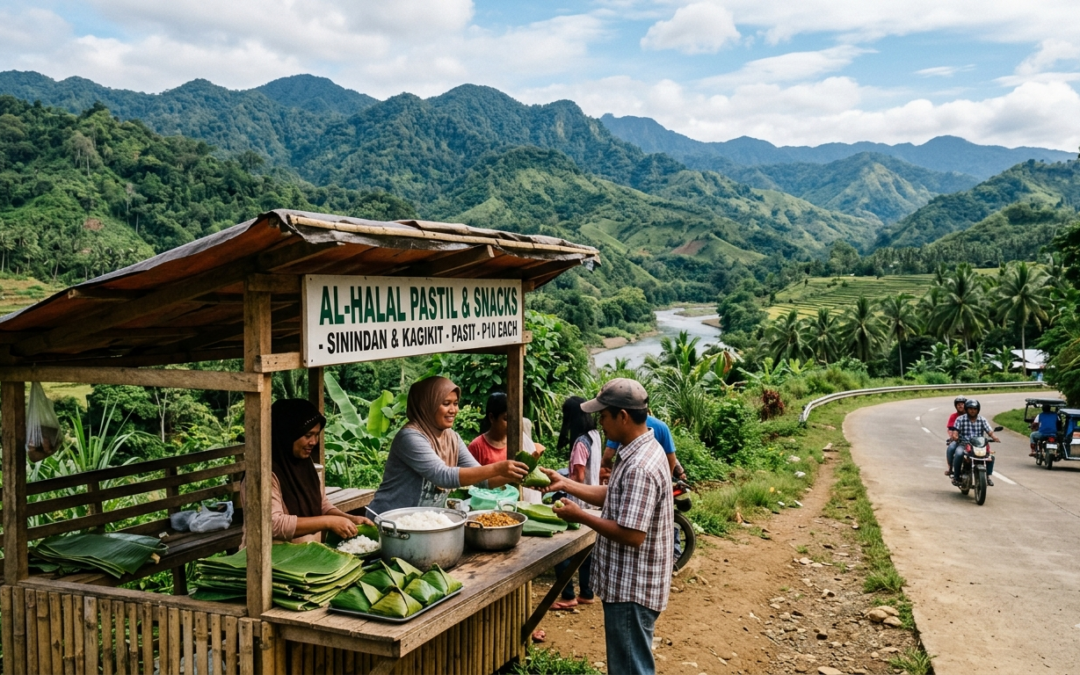
Pastil is a traditional dish originating from Mindanao, typically consisting of steamed rice topped with shredded cooked meat, wrapped in banana leaves. This article provides a neutral overview of its typical ingredients, macronutrient composition, and considerations for balanced nutrition. Information references Philippine food safety and labeling standards, including guidelines from the Department of Health (DOH) and the Food and Drug Administration (FDA Philippines).
Ingredients and Composition:
- Rice: Usually steamed white rice; provides carbohydrates as the main energy source.
- Meat filling: Often chicken, beef, or fish; contributes protein and small amounts of fat. Seasoning varies by region.
- Banana leaf wrap: Primarily serves as packaging; minimal nutritional contribution but can provide antioxidant compounds when heated.
Nutritional Considerations (Hypothetical Example):
A single serving (approx. 150–200 g of rice with 50 g of meat) may provide:
- Carbohydrates: 35–45 g
- Protein: 10–15 g
- Fat: 3–7 g
- Fiber: 1–2 g
- Sodium: dependent on seasoning
Dietary Notes:
- Pastil can be part of a nutrient-balanced meal when combined with vegetables or fruit.
- Portion sizes vary; monitoring rice-to-meat ratio helps manage macronutrient balance.
- Cooking methods (steaming vs. frying the meat) affect fat content.
Food Safety Considerations:
- Follow safe food handling practices, including proper meat cooking and hygienic wrapping.
- Check freshness and storage of ingredients to prevent microbial contamination, in line with FDA Philippines food safety guidelines.
Context
In nutrition science studies, traditional dishes like pastil are recognized for their cultural value and energy content. Under consumer protection and labeling standards in the Philippines, it is important to provide accurate ingredient lists and avoid unverified health claims. Dietary results vary individually, and portion sizes should be adapted according to personal nutritional requirements. Consultation with licensed nutrition or medical professionals is recommended for personalized guidance.
FAQs
What is pastil?
Pastil is a Mindanaoan dish consisting of steamed rice topped with shredded meat, typically wrapped in banana leaves.
What macronutrients does pastil provide?
Pastil provides primarily carbohydrates from rice, protein from meat, and a small amount of fat depending on the meat and cooking method.
Can pastil be part of a balanced diet?
When consumed with vegetables or fruit, pastil can contribute to a meal that includes multiple nutrient groups. Individual dietary needs vary.
Trusted Sources
- Department of Health Philippines – Nutrition and Food Safety Guidelines
- FDA Philippines – Food Safety Standards
- Academic journals on Filipino traditional foods and dietary composition
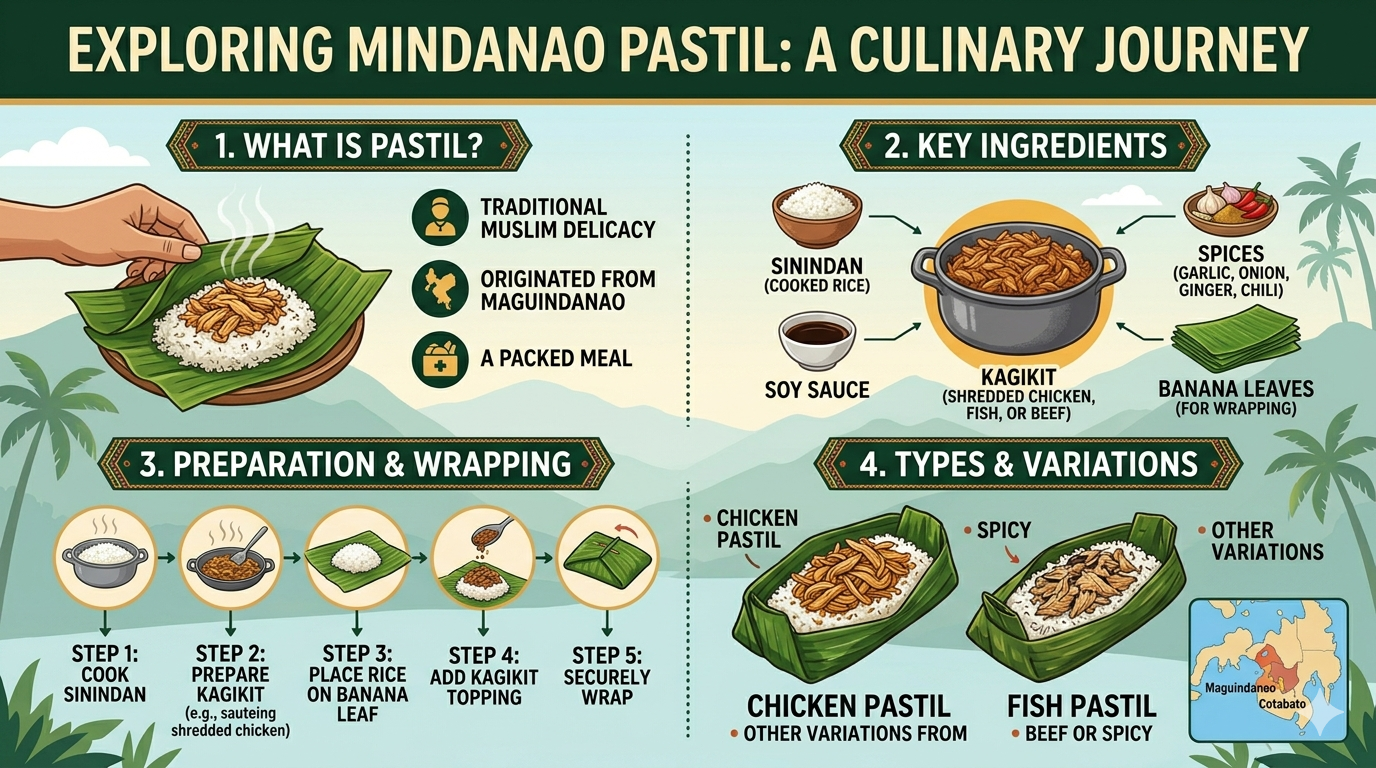
Diagram showing pastil’s rice base, shredded meat topping, and banana leaf wrapping
Disclaimer
This article is for general informational and educational purposes only. It does not constitute professional medical, nutrition, or dietary advice. References to dishes, ingredients, or preparation methods do not imply endorsement or guarantee of health outcomes. Readers are encouraged to consult licensed nutritionists, dietitians, or medical professionals for personalized guidance.
by Ramil Villar | Apr 6, 2026 | Food & Nutrition Basics
Understanding Tapsilog: Nutritional Overview and Meal Composition
A neutral exploration of this popular Filipino breakfast dish and its macronutrient considerations
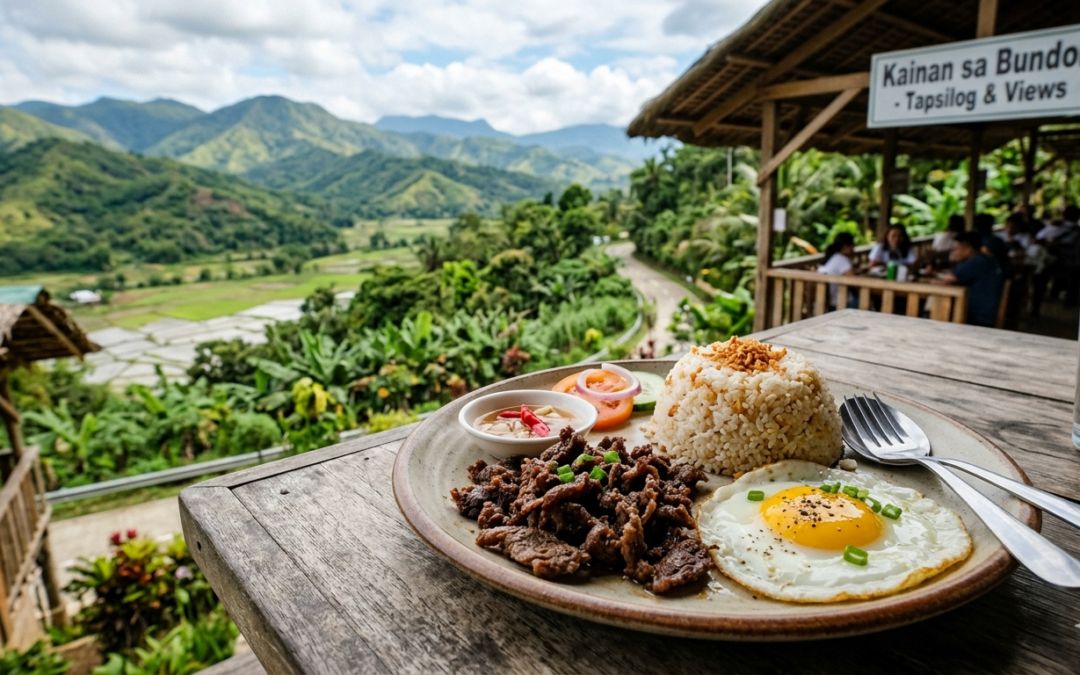
Tapsilog is a traditional Filipino breakfast meal typically composed of tapa (cured beef), sinangag (garlic fried rice), and itlog (fried egg). This article provides an educational look at Tapsilog’s nutritional components, macronutrient balance, and considerations for meal planning under safe dietary practices. References to DOH and FDA guidelines are included to support consumer awareness. Readers will gain insight into how this meal fits into general nutrition principles and hypothetical meal planning scenarios.
1. Components of Tapsilog
- Tapa (Beef Cured Meat):
Tapa is a source of protein and essential minerals such as iron and zinc. Sodium content may be elevated due to curing and seasoning methods.
- Sinangag (Garlic Fried Rice):
Provides carbohydrates as the primary energy source. The use of oil for frying increases the fat content and contributes to overall calorie intake.
- Itlog (Egg):
Eggs offer high-quality protein and micronutrients such as vitamin B12, choline, and selenium. Cooking method (fried vs boiled) affects fat content and caloric value.
2. Nutritional Considerations
- A standard Tapsilog portion generally includes moderate protein, carbohydrate, and fat content.
- Meal composition can be adjusted for portion control or to include vegetables or fruits to enhance fiber, vitamins, and minerals.
- Consumers are advised to consider sodium intake from cured meats and added salts.
3. Hypothetical Meal Planning Example (Educational Only)
| Component |
Portion |
Nutritional Focus |
| Tapa |
75 g |
Protein, Iron |
| Sinangag |
1 cup |
Carbohydrates, Energy |
| Egg |
1 large |
Protein, B12, Choline |
| Sliced tomatoes |
50 g |
Fiber, Vitamin C |
| Water |
250 mL |
Hydration |
This table is a neutral example for educational purposes and does not imply health outcomes.
Context
In nutrition science, meal planning involves balancing macronutrients and including a variety of foods to meet daily nutritional needs. Under consumer protection and labeling standards in the Philippines, awareness of sodium, saturated fat, and portion sizes supports informed dietary choices. Individual nutritional needs vary; consultation with a licensed dietitian or medical professional is recommended for personalized guidance.
FAQs
Q1: What is Tapsilog?
Tapsilog is a Filipino breakfast meal consisting of tapa (cured beef), sinangag (garlic fried rice), and itlog (egg).
Q2: What are the main nutrients in Tapsilog?
It provides protein, carbohydrates, fats, and micronutrients such as iron, vitamin B12, and choline, depending on portion sizes and preparation methods.
Q3: How can Tapsilog fit into meal planning?
Tapsilog can be included as part of a meal that balances macronutrients and fiber, while considering sodium and fat content for overall dietary balance.
Trusted Sources
- Department of Health, Philippines – Nutrition Guidelines
- Food and Drug Administration, Philippines – Food Labeling Standards
- Academy of Nutrition and Dietetics – Nutrition and Meal Planning Overview
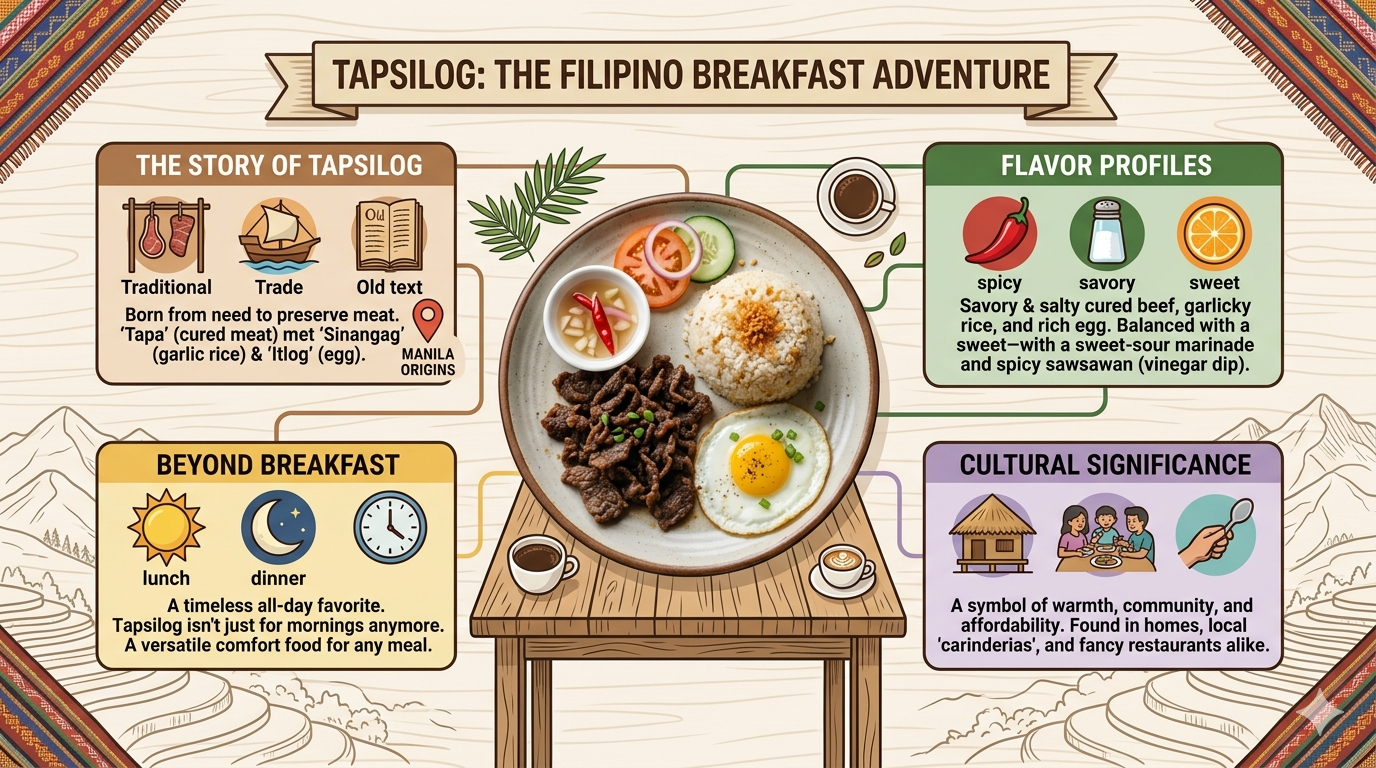
Infographic visually displaying Tapsilog’s main components and nutritional overview.
Mandatory Disclaimer
This article is for general informational and educational purposes only. It does not constitute professional medical, nutrition, or dietary advice. References to foods or meal components do not imply endorsement or guarantee of health outcomes. Readers are encouraged to consult licensed nutritionists, dietitians, or medical professionals for personalized guidance.
by Ramil Villar | Apr 6, 2026 | Food & Nutrition Basics
Understanding Traditional Filipino Rice Cakes: Puto Bumbong and Bibingka
A neutral overview of ingredients, nutritional considerations, and safe consumption practices.
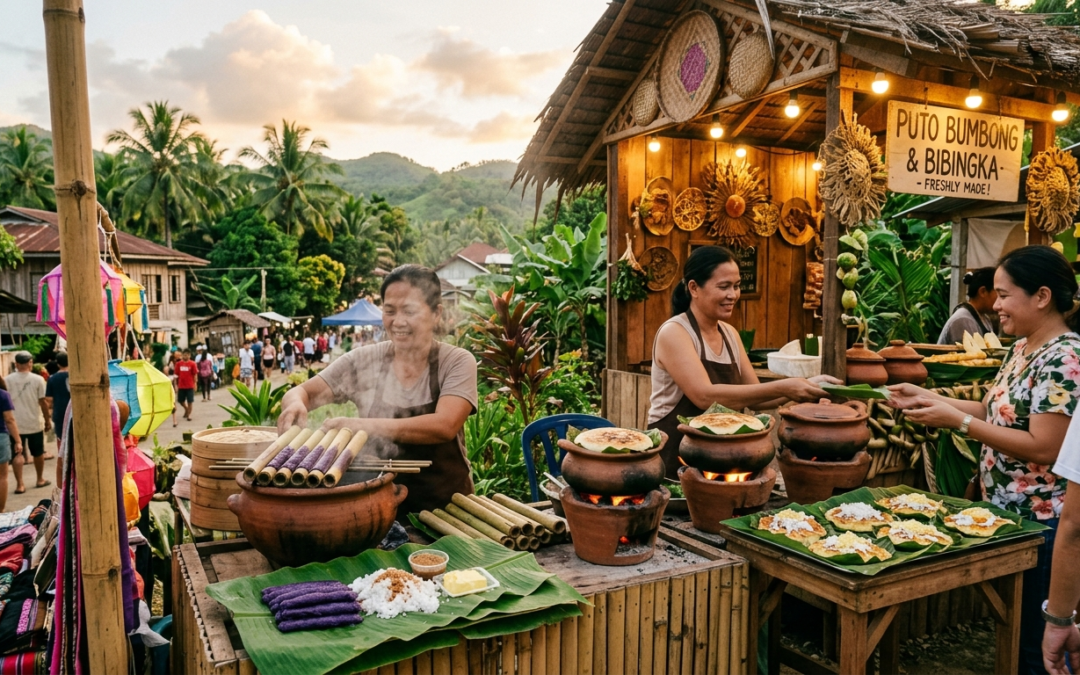
Puto bumbong and bibingka are traditional Filipino rice cakes often enjoyed during the Christmas season. These foods are made primarily from glutinous rice and are typically steamed or baked. This article provides an educational overview of their basic composition, nutritional aspects, and considerations for safe and mindful consumption. References are aligned with Philippine Department of Health (DOH) and Food and Drug Administration (FDA) guidance on food safety and labeling.
1. Ingredients and Preparation
- Puto Bumbong: Traditionally made from purple glutinous rice, steamed in bamboo tubes, and served with grated coconut, butter or margarine, and muscovado sugar.
- Bibingka: Usually made from rice flour, coconut milk, sugar, and sometimes eggs, baked in banana leaf-lined molds. Optional toppings include cheese, salted eggs, or grated coconut.
2. Nutritional Considerations
- Macronutrients: Both are primarily sources of carbohydrates, with small amounts of protein and fat depending on toppings used.
- Micronutrients: Ingredients like coconut and eggs can provide small amounts of minerals (e.g., potassium, phosphorus) and vitamins (e.g., B vitamins).
- Energy Density: These foods can be calorie-dense due to added sugar, butter, or toppings; portion moderation is a neutral approach to maintain balanced intake.
3. Safe Consumption Tips
- Choose vendors following proper food handling standards (clean surfaces, fresh ingredients).
- Be aware of sugar and fat content, particularly for individuals monitoring calorie or sugar intake.
- Store leftovers in clean containers and consume within safe time frames to reduce risk of spoilage.
4. Hypothetical Portion Example (Informational)
- Puto Bumbong: One medium serving (~100g) may contain approximately 150–200 kcal, mostly from carbohydrates.
- Bibingka: One small piece (~120g) may contain roughly 200–250 kcal, depending on added toppings.
Note: These are neutral estimates; individual recipes vary.
Context
In nutrition science studies, rice-based foods contribute primarily to carbohydrate intake and energy provision. Under consumer protection and labeling standards, it is important to note that added sugars, fats, and toppings affect nutrient composition. Dietary results vary individually, and portion moderation is a safe approach for general nutrition awareness.
FAQs
What is puto bumbong?
Puto bumbong is a traditional steamed purple rice cake, often served with coconut and sugar.
What is bibingka?
Bibingka is a baked rice cake commonly made with rice flour and coconut milk, sometimes topped with cheese or eggs.
Are these foods nutritious?
They provide energy primarily from carbohydrates and small amounts of protein and fat. Nutrient content varies depending on recipe and toppings.
Trusted Sources
- Department of Health (DOH), Philippines — Food Safety Guidelines
- Food and Drug Administration (FDA), Philippines — Nutrition and Labeling Standards
- National Nutrition Council (Philippines) — Dietary Guidelines
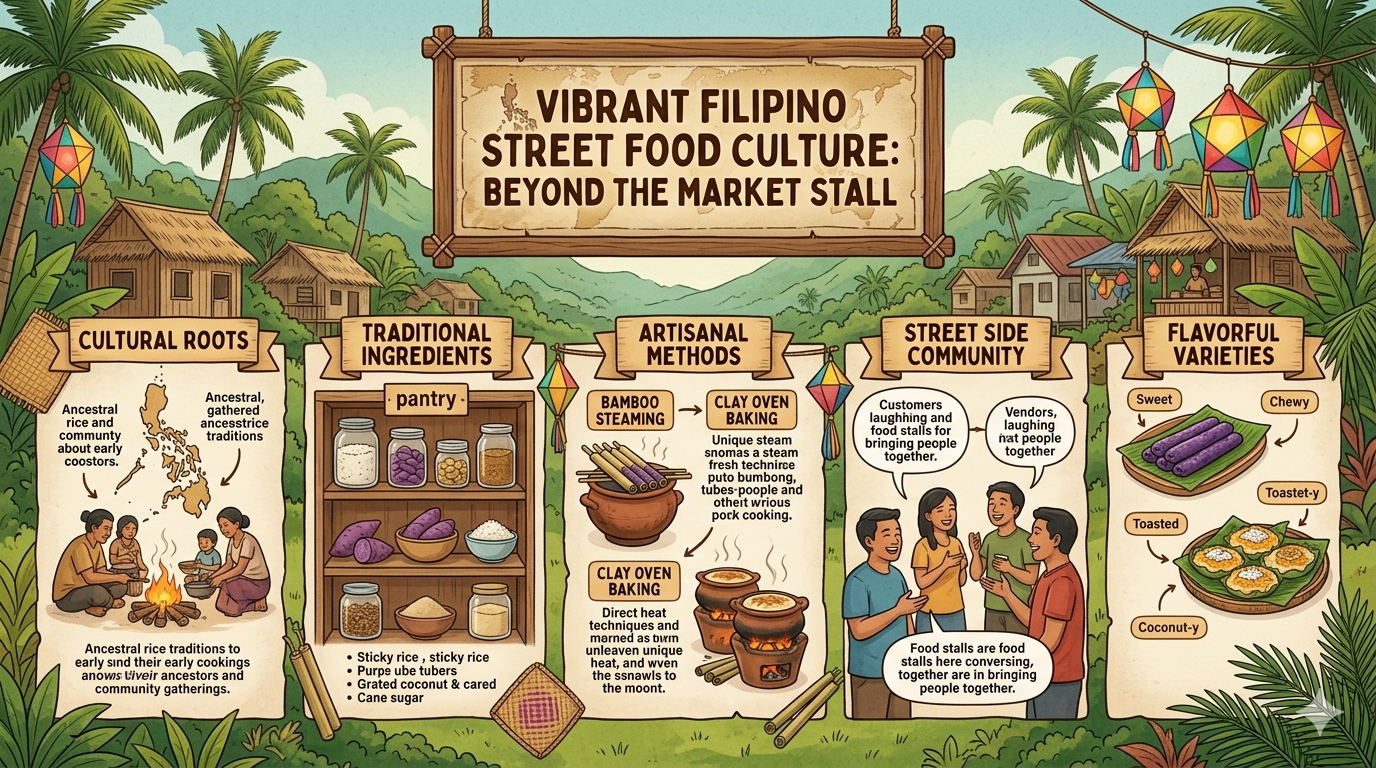
Infographic showing main ingredients used in puto bumbong and bibingka.
Disclaimer
This article is for general informational and educational purposes only. It does not constitute professional medical, nutrition, or dietary advice. References to foods or ingredients do not imply endorsement or guarantee of health outcomes. Readers are encouraged to consult licensed nutritionists, dietitians, or medical professionals for personalized guidance.
by Ramil Villar | Apr 6, 2026 | Food & Nutrition Basics
Understanding Kinilaw: Nutritional and Food Safety Insights
A neutral overview of preparation, ingredients, and safe consumption practices
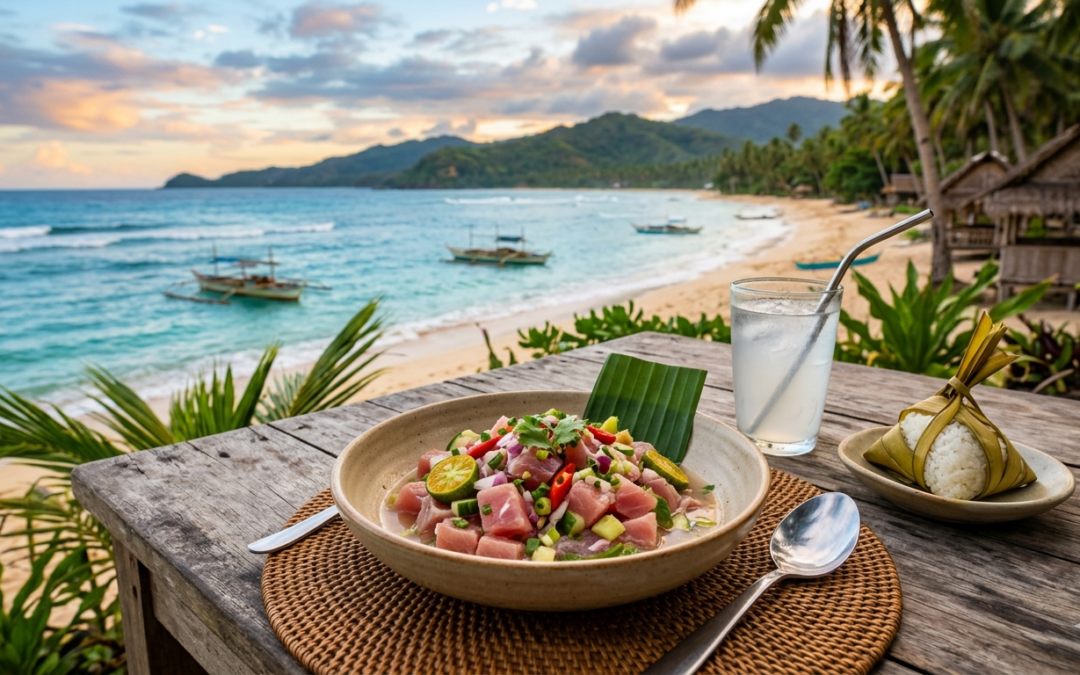
Kinilaw is a traditional Filipino dish typically made with raw seafood, vinegar, and various seasonings. This article provides a neutral, educational overview of kinilaw, including its common ingredients, macronutrient components, and food safety considerations. Readers will learn about the nutritional aspects of raw seafood, the importance of safe handling, and general dietary awareness under Philippine food safety regulations.
1. Ingredients and Macronutrients
Kinilaw commonly uses raw fish such as tuna, tanigue, or mackerel, combined with vinegar, citrus juice, onions, ginger, and chili. From a nutritional perspective:
- Proteins: Raw fish provides high-quality protein, which supports general body functions such as tissue maintenance.
- Fats: Some fish varieties contribute omega-3 fatty acids, beneficial for cellular functions.
- Carbohydrates: Minimal, mainly from added vegetables like onions or tomatoes.
- Micronutrients: Fish is a source of vitamins (e.g., B-complex) and minerals (e.g., selenium, iodine).
2. Food Safety Considerations
Under Philippine FDA and DOH guidance, consuming raw seafood requires careful handling:
- Ensure seafood is fresh and sourced from reliable suppliers.
- Store at proper temperatures (≤4°C) to reduce bacterial growth.
- Use clean utensils and surfaces to avoid cross-contamination.
- Acidic marinades like vinegar or citrus juice may reduce microbial activity but do not guarantee complete pathogen elimination.
3. Hypothetical Meal Planning Example
A sample kinilaw-based meal could include:
- 100g of tuna kinilaw
- 50g sliced tomatoes and onions
- 1 cup of brown rice
- 1 serving of fresh fruit (e.g., mango)
This provides an illustrative balance of protein, carbohydrates, fiber, and micronutrients. Portion sizes can be adjusted according to individual dietary needs.
4. Consumer Awareness Tips
- Read labels if using pre-marinated kinilaw kits to check for preservatives or added sodium.
- Verify product authenticity from certified seafood suppliers.
- Avoid unverified “instant kinilaw” claims that promise health outcomes.
Context
In nutrition science, raw seafood dishes like kinilaw are sources of high-quality protein and micronutrients but carry inherent food safety considerations. Under Philippine consumer protection and labeling standards, individuals are advised to practice safe handling and preparation techniques. Dietary results, such as nutrient absorption, vary individually and depend on overall diet and health status. Consultation with licensed nutritionists or medical professionals is recommended for personalized guidance.
FAQs
Q: What is kinilaw?
A traditional Filipino dish made with raw seafood, vinegar or citrus, and vegetables.
Q: Is kinilaw nutritious?
Kinilaw provides protein, healthy fats, and micronutrients depending on the seafood and ingredients used.
Q: How can I ensure kinilaw is safe to eat?
Proper storage, clean preparation surfaces, and sourcing seafood from reputable suppliers reduce food safety risks.
Trusted Sources
- Department of Health Philippines: Food Safety Guidelines
- FDA Philippines: Seafood Safety and Labeling
- Philippine Nutrition Foundation: Peer-reviewed publications on seafood nutrition
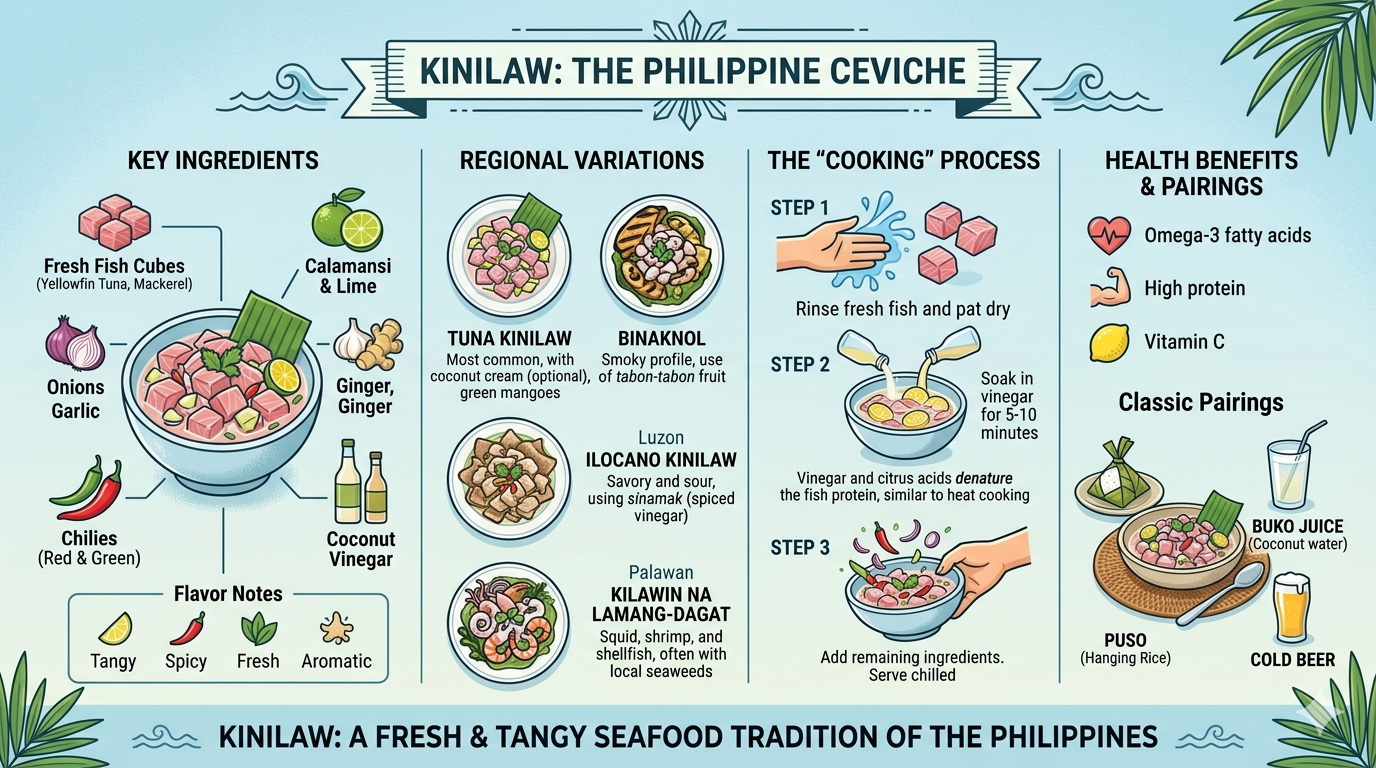
Diagram showing common ingredients in kinilaw
Disclaimer
This article is for general informational and educational purposes only. It does not constitute professional medical, nutrition, or dietary advice. References to foods or preparation methods do not imply endorsement or guarantee of health outcomes. Readers are encouraged to consult licensed nutritionists, dietitians, or medical professionals for personalized guidance.
by Ramil Villar | Apr 6, 2026 | Food & Nutrition Basics
Satti (Zamboanga’s Skewered Meat Dish)
Satti is a traditional grilled meat dish from the Zamboanga Peninsula and Southern Mindanao region of the Philippines. It is commonly eaten as a local breakfast food and has cultural roots in regional culinary traditions that include influences from Southeast Asian satay-style skewers.
What Is Satti?
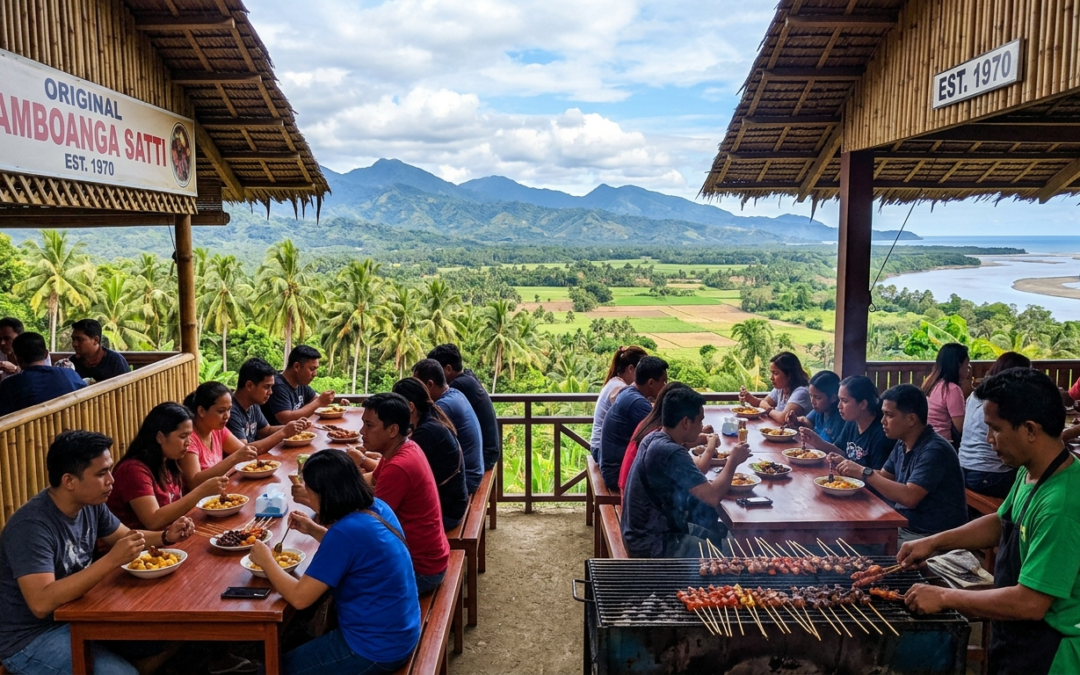
Satti consists of small strips of grilled meat — typically chicken or beef — threaded onto bamboo skewers. The meat is grilled over charcoal and served with a distinctive warm spicy sauce and rice. In Zamboanga and nearby areas, rice may be presented as puso (rice wrapped and cooked in woven coconut leaves).
The dish is regularly found in local eateries known as “satti houses” where it is traditionally enjoyed in the morning.
Typical Ingredients (Cultural / Culinary Context)
- Meat: Chicken or beef (sometimes liver)
- Marinade & Spices: Garlic, pepper, turmeric or curry-like spices (varies by cook)
- Sauce: Spicy, reddish sauce that may include tomato, chili, and aromatic seasonings (recipe style varies)
- Rice: Often served with rice or rice cooked in coconut leaves (puso)
The sauce’s exact composition differs among local cooks and establishments.
Nutritional Considerations
While specific nutrition values can vary based on ingredients and preparation, Satti typically includes:
- Protein: from grilled chicken or beef.
- Carbohydrates: from rice or puso.
- Fats: from the meat and sauce components.
The overall energy and nutrient content depends on portion size and ingredients used; for example, leaner meats and minimal added fats can influence macronutrient proportions. This is informational only and not a dietary recommendation. (Standard nutrition principles)
Cultural and Regional Context
Satti has a place in Tausug and Southern Mindanao food culture, especially in Zamboanga City, where local residents eat it as a familiar comfort food. It shares similarities in concept with Southeast Asian satay, though local preparation and serving styles reflect regional tastes and traditions.
Context
In Philippine regional cuisines, dishes like Satti illustrate how various cultural influences shape local food traditions. Such foods are part of everyday eating for many residents and are often associated with community routines — for instance, Satti houses opening early in the morning for breakfast service. Differences in sauces, spices, and accompaniments show how even a similar dish can have distinct regional identities.
FAQs
What is puso?
Puso refers to rice cooked inside woven coconut leaves; it is a traditional way of preparing rice in parts of Mindanao and often served with grilled dishes.
Is Satti the same as satay?
Satti and satay both involve grilled skewered meats, but satti refers specifically to the Filipino variant found in Mindanao regions, with local sauces and accompaniments that may differ from other Southeast Asian satay styles.
When is Satti typically eaten?
In its regional context, satti is frequently enjoyed in the morning as a common breakfast meal, but some people have it at other times of day too.
Trusted Sources
- Wikipedia entry on Satti (filipino dish)
- Zamboanga food and travel guides describing satti as a local specialty
- Rappler’s description of satti as a traditional breakfast item in Southern Mindanao
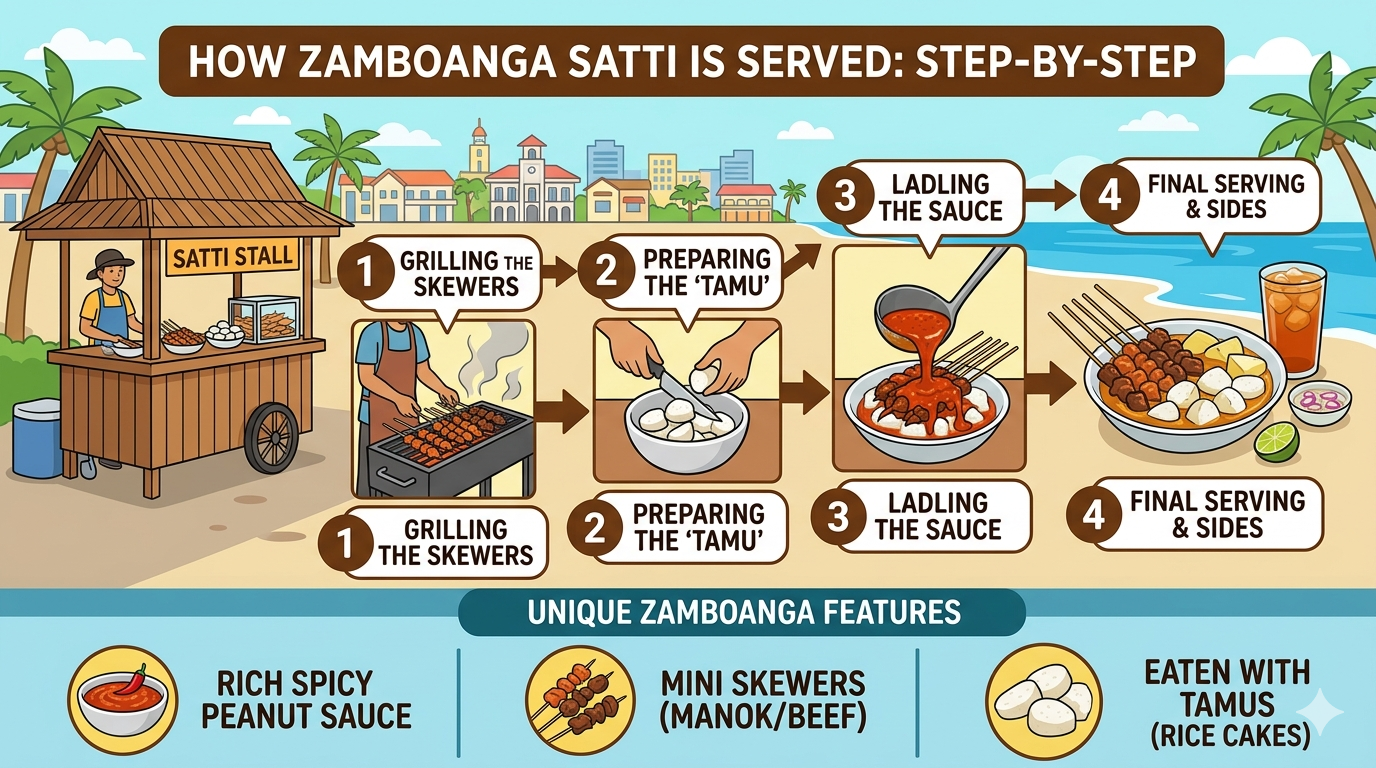
Infographic illustrating the main components of Zamboanga’s satti dish.
Disclaimer
This information is for general educational purposes only. It does not constitute nutritional, medical, or dietary advice. For personal dietary planning or nutrition guidance, consult a licensed nutritionist or healthcare professional.
by Ramil Villar | Apr 6, 2026 | Food & Nutrition Basics
Kinalas (Bicol): An Educational Look at a Filipino Noodle Dish
A neutral overview of what kinalas is, common ingredients, and basic nutrition considerations.
Kinalas is a traditional Filipino noodle dish from the Bicol region. This article explains what kinalas typically includes, basic nutritional components of its ingredients, and considerations for balanced eating. The content is informational and aligned with general nutrition principles; it does not promise health outcomes or endorse specific diets.
What Is Kinalas?
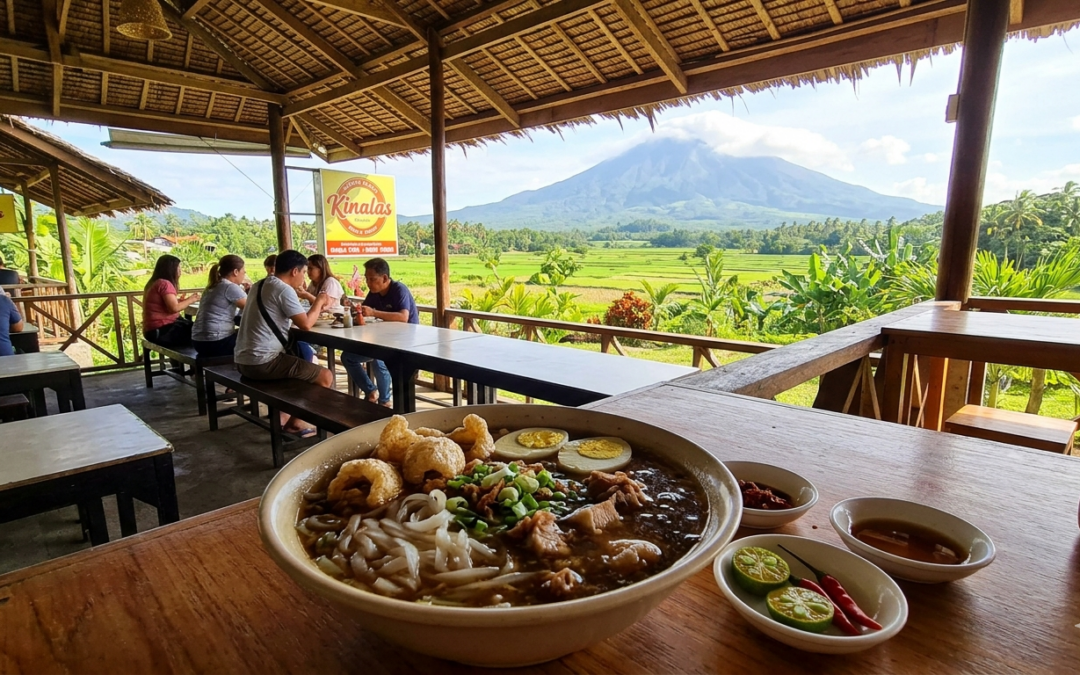
Kinalas is a savory noodle soup popular in parts of Bicol and neighboring provinces. It typically combines:
- Rice or egg noodles (locally known as “misua” or similar varieties),
- Broth made from simmering meat and bones, often pork,
- Meat slices and toppings such as pork head meat, pork skin, and sometimes offal,
- Condiments like garlic, onions, black pepper, and sometimes chili.
The name kinalas refers to the act of shredding or pulling the meat from the broth, which becomes part of the dish.
Basic Nutritional Components
Below are the common nutrient categories in kinalas based on its typical ingredients. Values vary widely depending on preparation and portion size.
Carbohydrates
- Noodles provide most of the carbohydrate content.
- Carbohydrates are a primary energy source in the diet.
Protein
- Meat and broth contribute protein, which is necessary for tissue maintenance and other bodily functions.
Fat
- Broths and cuts from pork can contain fat, including both visible fat and fat dissolved in the broth.
- Fat provides energy and supports absorption of fat‑soluble nutrients.
Sodium and Flavor Enhancers
- Broths and seasonings may contribute sodium (salt).
- Sodium is an essential mineral, but high intake is often moderated in dietary guidelines.
Other Nutrients
- Garnishes like onions and garlic provide small amounts of vitamins, minerals, and plant compounds.
Considerations for Balanced Eating
- Portion size: Traditional serving sizes vary. Moderation supports energy balance within a broader dietary pattern.
- Sodium awareness: Broths with added salt or flavor enhancers can contribute significant sodium; some individuals choose lower‑sodium options.
- Protein balance: Pairing with vegetables or legumes in the same meal can add fiber and micronutrients.
This overview does not recommend one way of eating over another; individual needs differ based on age, activity, health conditions, and cultural preferences.
Context
In nutrition science, foods like kinalas are examined in terms of their nutrient composition rather than as inherently “good” or “bad.” A balanced approach to eating typically includes a variety of foods from different groups over time. Philippine dietary guidelines emphasize a mix of grains, proteins, vegetables, fruits, and fluids to support overall nutrient needs.
Under consumer protection and labeling standards in the Philippines, prepared foods sold commercially should comply with Department of Health (DOH) and Food and Drug Administration (FDA Philippines) guidelines for food safety, handling, and accurate ingredient disclosure when applicable.
FAQs
What are the main ingredients in kinalas?
Kinalas typically includes noodles, broth (often from meat and bones), meat pieces, and seasonings like garlic and pepper.
Is kinalas high in protein?
The dish can provide a source of protein from the meat and broth, but the amount varies by recipe and serving size.
Can kinalas be part of a balanced meal?
In nutrition planning, combining a variety of foods across food groups over the day supports nutrient balance. Kinalas can be one component alongside vegetables or fruit in other meals.
Trusted Sources
- Food and nutrition science references on macronutrients and diet planning (academic journals)
- Philippine dietary guidelines and nutrition recommendations by DOH
- FDA Philippines food safety and labeling information
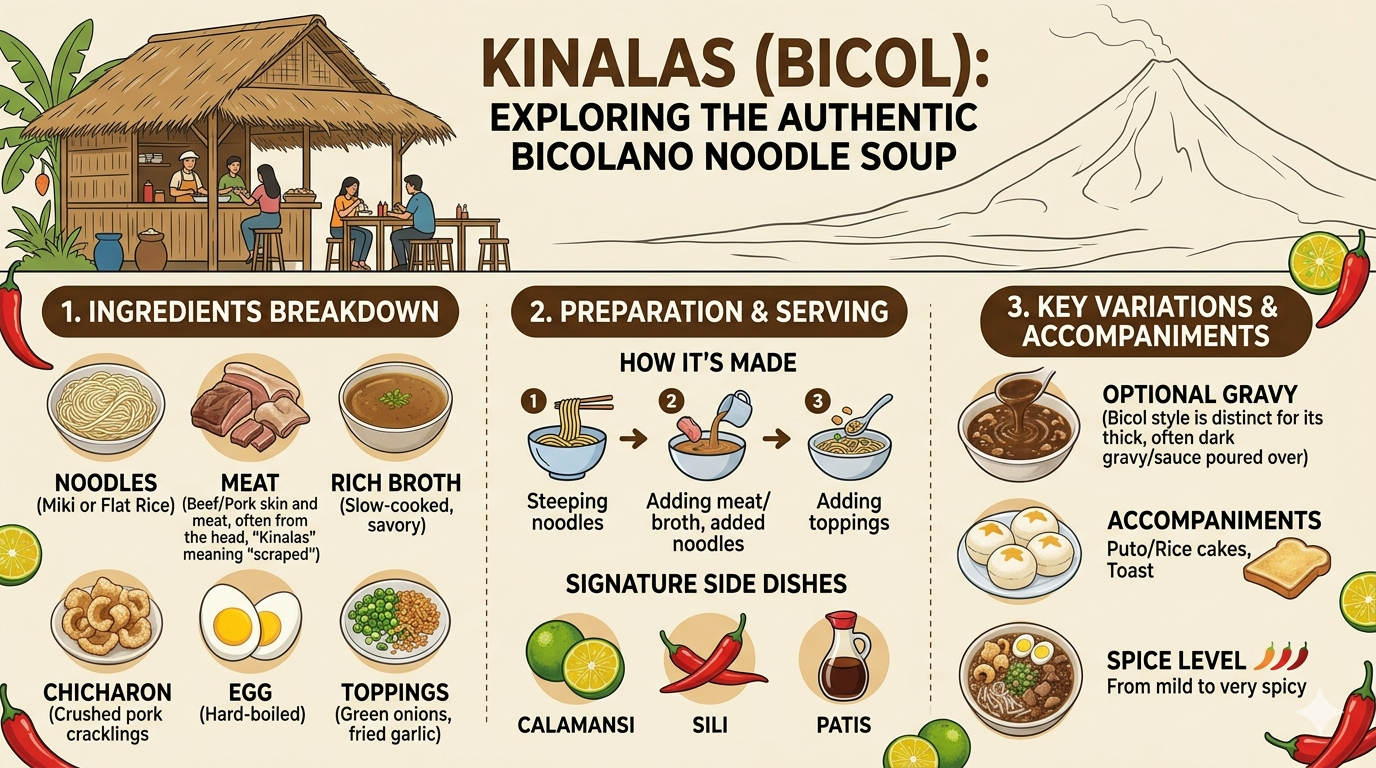
Visual summary of Kinalas ingredients and typical composition
Disclaimer
This article is for general informational and educational purposes only. It does not constitute professional medical, nutrition, or dietary advice. References to dishes or foods do not imply endorsement or guarantee of health outcomes. Readers are encouraged to consult licensed nutritionists, dietitians, or medical professionals for personalized guidance.