Kinalas (Bicol): An Educational Look at a Filipino Noodle Dish
A neutral overview of what kinalas is, common ingredients, and basic nutrition considerations.
Kinalas is a traditional Filipino noodle dish from the Bicol region. This article explains what kinalas typically includes, basic nutritional components of its ingredients, and considerations for balanced eating. The content is informational and aligned with general nutrition principles; it does not promise health outcomes or endorse specific diets.
What Is Kinalas?
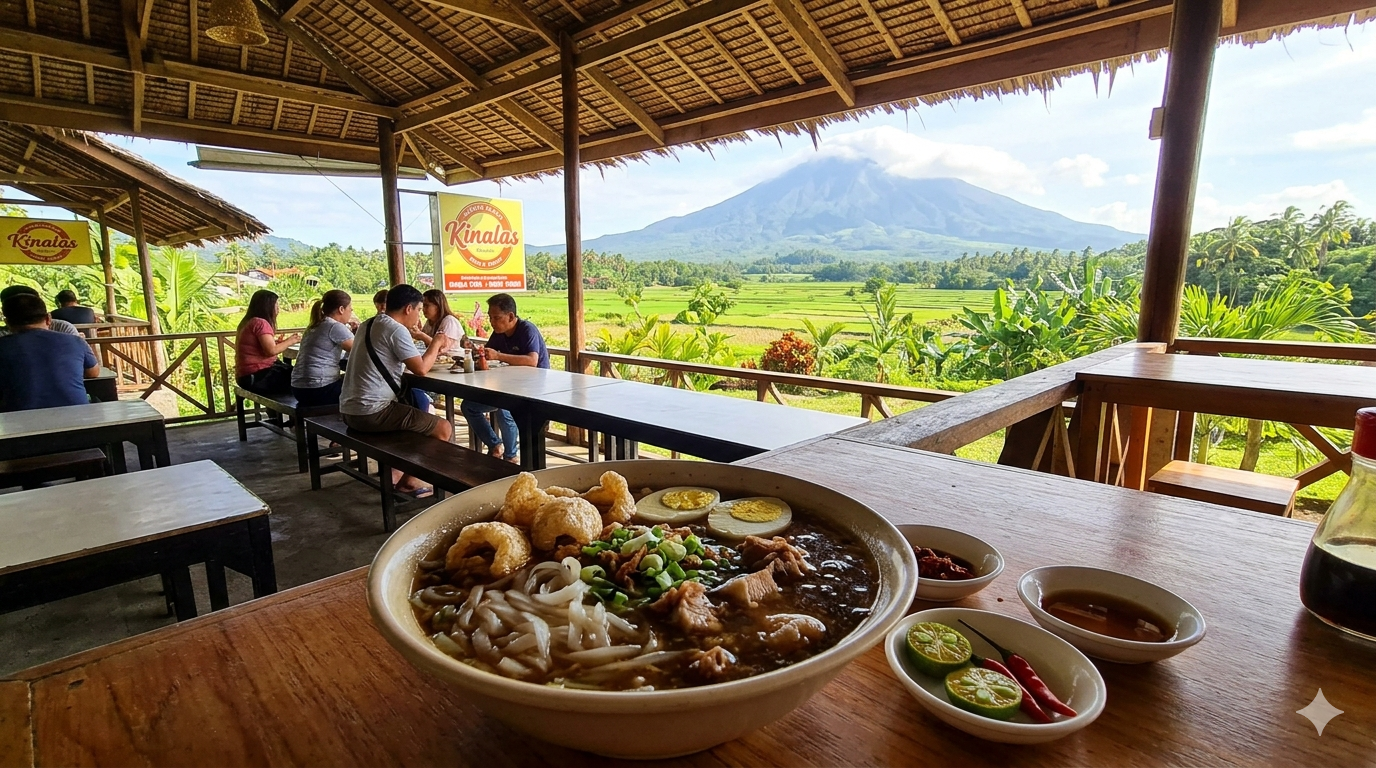
Kinalas is a savory noodle soup popular in parts of Bicol and neighboring provinces. It typically combines:
- Rice or egg noodles (locally known as “misua” or similar varieties),
- Broth made from simmering meat and bones, often pork,
- Meat slices and toppings such as pork head meat, pork skin, and sometimes offal,
- Condiments like garlic, onions, black pepper, and sometimes chili.
The name kinalas refers to the act of shredding or pulling the meat from the broth, which becomes part of the dish.
Basic Nutritional Components
Below are the common nutrient categories in kinalas based on its typical ingredients. Values vary widely depending on preparation and portion size.
Carbohydrates
- Noodles provide most of the carbohydrate content.
- Carbohydrates are a primary energy source in the diet.
Protein
- Meat and broth contribute protein, which is necessary for tissue maintenance and other bodily functions.
Fat
- Broths and cuts from pork can contain fat, including both visible fat and fat dissolved in the broth.
- Fat provides energy and supports absorption of fat‑soluble nutrients.
Sodium and Flavor Enhancers
- Broths and seasonings may contribute sodium (salt).
- Sodium is an essential mineral, but high intake is often moderated in dietary guidelines.
Other Nutrients
- Garnishes like onions and garlic provide small amounts of vitamins, minerals, and plant compounds.
Considerations for Balanced Eating
- Portion size: Traditional serving sizes vary. Moderation supports energy balance within a broader dietary pattern.
- Sodium awareness: Broths with added salt or flavor enhancers can contribute significant sodium; some individuals choose lower‑sodium options.
- Protein balance: Pairing with vegetables or legumes in the same meal can add fiber and micronutrients.
This overview does not recommend one way of eating over another; individual needs differ based on age, activity, health conditions, and cultural preferences.
Context
In nutrition science, foods like kinalas are examined in terms of their nutrient composition rather than as inherently “good” or “bad.” A balanced approach to eating typically includes a variety of foods from different groups over time. Philippine dietary guidelines emphasize a mix of grains, proteins, vegetables, fruits, and fluids to support overall nutrient needs.
Under consumer protection and labeling standards in the Philippines, prepared foods sold commercially should comply with Department of Health (DOH) and Food and Drug Administration (FDA Philippines) guidelines for food safety, handling, and accurate ingredient disclosure when applicable.
FAQs
What are the main ingredients in kinalas?
Kinalas typically includes noodles, broth (often from meat and bones), meat pieces, and seasonings like garlic and pepper.
Is kinalas high in protein?
The dish can provide a source of protein from the meat and broth, but the amount varies by recipe and serving size.
Can kinalas be part of a balanced meal?
In nutrition planning, combining a variety of foods across food groups over the day supports nutrient balance. Kinalas can be one component alongside vegetables or fruit in other meals.
Trusted Sources
- Food and nutrition science references on macronutrients and diet planning (academic journals)
- Philippine dietary guidelines and nutrition recommendations by DOH
- FDA Philippines food safety and labeling information
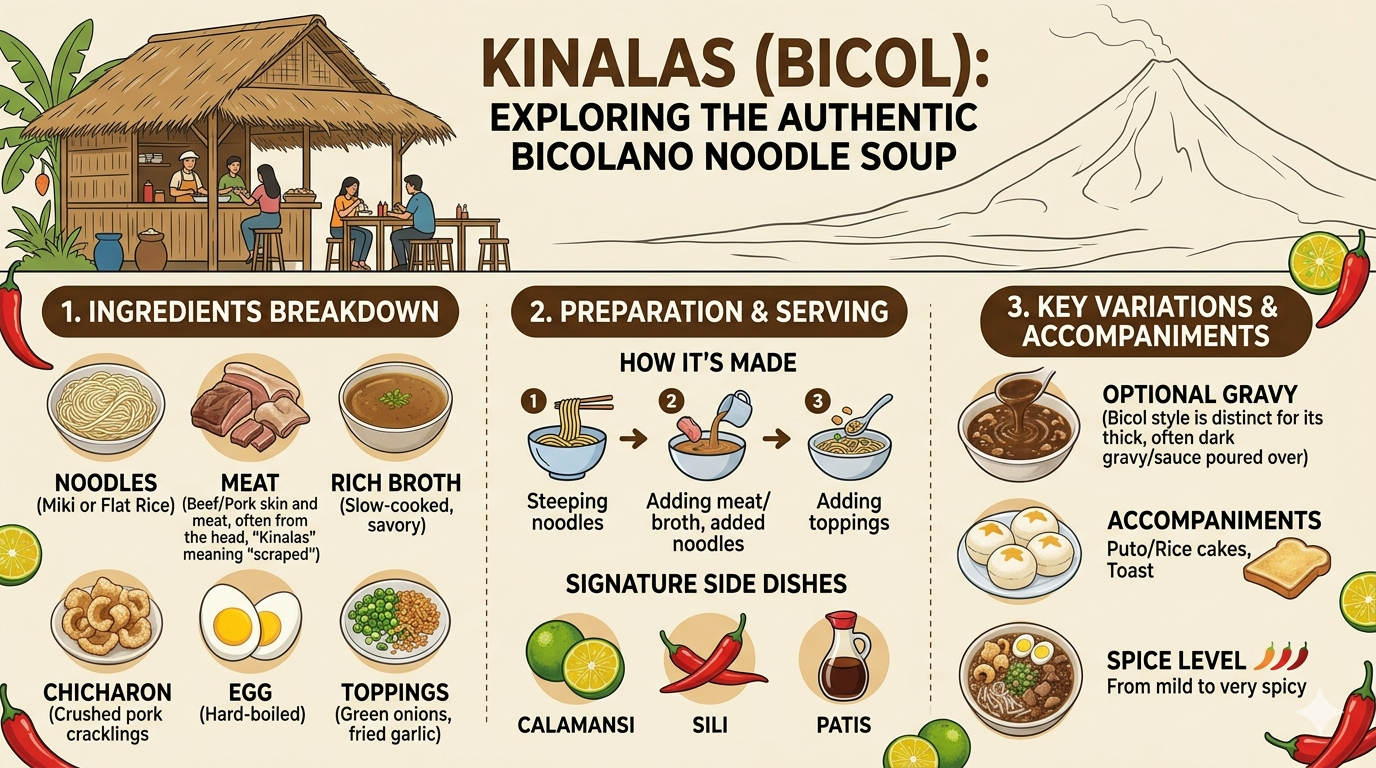
Visual summary of Kinalas ingredients and typical composition
Disclaimer
This article is for general informational and educational purposes only. It does not constitute professional medical, nutrition, or dietary advice. References to dishes or foods do not imply endorsement or guarantee of health outcomes. Readers are encouraged to consult licensed nutritionists, dietitians, or medical professionals for personalized guidance.