by Ramil Villar | Apr 2, 2026 | Food & Nutrition Basics
Lechon Cebu: Nutritional Overview and Food Safety Considerations
A neutral guide to understanding Lechon Cebu, its nutritional components, and safe consumption practices in the Philippine context.
Lechon Cebu is a traditional Filipino roasted pork dish, widely recognized for its crisp skin and flavorful meat. This article provides an educational overview of its nutritional content, macronutrient considerations, and safe preparation practices. It also aligns with guidance from the Department of Health (DOH), Food and Drug Administration (FDA Philippines), and other relevant Philippine authorities.
Nutritional Components
Lechon Cebu is primarily composed of pork meat and skin. Its key macronutrient profile includes:
- Protein: Essential for tissue maintenance and muscle function.
- Fat: Includes both saturated and unsaturated fats; contributes to energy intake.
- Calories: Energy-dense due to fat content.
Micronutrients present in pork include B-vitamins (B1, B6, B12) and minerals such as iron and zinc. Nutritional values may vary depending on the cut, size, cooking method, and added ingredients (e.g., marinades or seasoning).
Portion Considerations
Diet planning typically involves monitoring portion size and balancing with other foods such as vegetables, fruits, and whole grains. Hypothetical meal planning may include smaller servings of roasted pork complemented by fiber-rich foods to achieve a balanced nutrient intake.
Safe Consumption Practices
- Ensure pork is cooked to an internal temperature of at least 71°C (160°F) to reduce foodborne illness risk.
- Maintain hygiene during handling and roasting to prevent contamination.
- Moderation is recommended due to the high fat and calorie content.
Context
In nutrition science studies, foods like Lechon Cebu are considered energy-dense. Under Philippine consumer protection and food labeling standards, dishes containing pork and fat must be prepared following FDA and LGU food safety regulations. Dietary results from consuming such foods vary individually, depending on overall meal patterns and lifestyle. Consultation with licensed nutrition or medical professionals is advised for personalized guidance.
FAQs
What is Lechon Cebu?
Lechon Cebu is a roasted pork dish originating from Cebu, Philippines, known for its crisp skin and seasoned meat.
What are the main nutrients in Lechon Cebu?
It provides protein, fat (including saturated fats), calories, and micronutrients like B-vitamins and minerals.
Is it safe to eat Lechon Cebu regularly?
Moderation and proper food handling are important. Cooking thoroughly and balancing meals with other nutrient-dense foods are recommended.
Trusted Sources
- Department of Health Philippines (DOH) food safety advisories
- Food and Drug Administration Philippines (FDA) pork handling guidelines
- Philippine Nutrition Research Institute publications
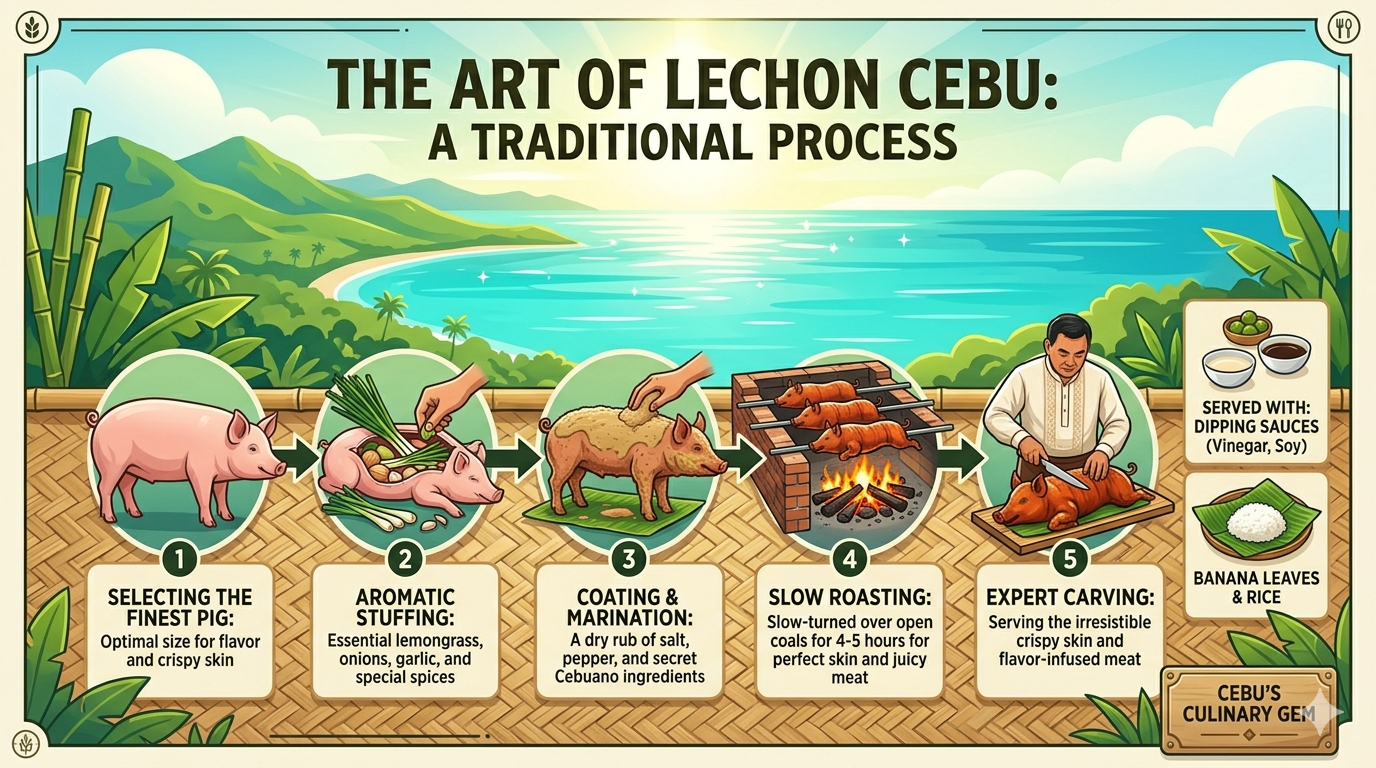
Infographic illustrating Lechon Cebu preparation and cultural context.
Disclaimer
This article is for general informational and educational purposes only. It does not constitute professional medical, nutrition, or dietary advice. References to Lechon Cebu or other foods do not imply endorsement or guarantee of health outcomes. Readers are encouraged to consult licensed nutritionists, dietitians, or medical professionals for personalized guidance.

by Ramil Villar | Apr 2, 2026 | Food & Nutrition Basics
Fresh Seafood and Native Coconut Dishes: Educational Overview of Nutritional Principles
A neutral guide to understanding the nutritional composition and dietary considerations of seafood and coconut-based foods in the Philippines.
This article provides an informational overview of fresh seafood and native coconut dishes commonly found in the Philippines. It discusses their nutritional characteristics, macronutrient and micronutrient content, and hypothetical meal planning examples. References are aligned with Department of Health (DOH) and Food and Drug Administration (FDA Philippines) guidelines to ensure consumer safety and factual accuracy.
Nutritional Overview of Fresh Seafood
Fresh seafood, such as fish, shrimp, and shellfish, contains varying levels of protein, fat, and essential micronutrients:
- Protein: Seafood is a source of high-quality protein, important for cellular function and tissue maintenance.
- Omega-3 Fatty Acids: Certain fish, such as mackerel and tuna, provide polyunsaturated fats that contribute to nutrient balance.
- Vitamins and Minerals: Seafood contains vitamins B12 and D, iodine, selenium, and zinc. These nutrients play roles in metabolic and immune processes.
- Considerations: Freshness, safe handling, and proper cooking methods reduce microbial contamination risks.
Nutritional Overview of Native Coconut Dishes
Coconut-based foods are widely used in Filipino cuisine, including coconut milk (gata), coconut oil, and grated coconut (niyog):
- Macronutrients: Coconut milk contains saturated fat and moderate calories. Grated coconut is higher in fiber compared to processed forms.
- Micronutrients: Coconut provides potassium, magnesium, and small amounts of iron.
- Dietary Role: Coconut ingredients can add flavor and texture to meals; portion awareness helps maintain balanced macronutrient intake.
- Considerations: Cooking techniques and combined ingredients (e.g., coconut milk with meats or seafood) influence overall calorie and fat content.
Hypothetical Meal Planning Example
This example illustrates a neutral, hypothetical daily meal including seafood and coconut dishes:
| Meal |
Example Foods |
Nutritional Notes |
| Breakfast |
Oatmeal with grated coconut and banana |
Fiber, potassium, and moderate energy contribution |
| Lunch |
Fish sinigang with vegetables |
Protein-rich seafood, micronutrients from vegetables, low saturated fat |
| Snack |
Coconut water with sliced mango |
Hydration, electrolytes, vitamins A & C |
| Dinner |
Shrimp sautéed in light coconut milk with steamed rice |
Protein, healthy fats, and energy balance; portion control emphasized |
Note: Nutrient amounts vary depending on ingredient sizes, preparation methods, and individual dietary needs.
Consumer Awareness and Safe Practices
- Seafood Handling: Store at proper refrigeration temperatures and cook thoroughly to reduce contamination risk.
- Coconut Product Labels: Check for additives, preservatives, and expiration dates.
- Balanced Diet Planning: Incorporate vegetables, fruits, grains, and proteins alongside seafood and coconut dishes for overall nutrient balance.
- Supplement Awareness: Avoid assumptions that seafood or coconut consumption alone meets all nutrient requirements.
Context
In nutrition science studies, seafood and coconut foods are recognized for their macronutrient and micronutrient contributions but do not guarantee specific health outcomes. Under Philippine consumer protection and labeling standards, safe storage, handling, and accurate ingredient disclosure are emphasized. Dietary results vary individually, and consultation with licensed nutrition or medical professionals is recommended for personalized guidance.
FAQs
Q1: What nutrients are found in seafood?
Seafood provides protein, omega-3 fatty acids, vitamins B12 and D, and minerals such as iodine and selenium. Nutrient content varies by species.
Q2: What is the nutritional role of coconut in meals?
Coconut contributes dietary fat, fiber, and minerals like potassium and magnesium. Nutrient levels depend on the form used (milk, oil, grated).
Q3: How can seafood and coconut be incorporated safely in meals?
In nutrition planning, these foods can be part of balanced meals with vegetables, grains, and other protein sources. Safe storage, handling, and portion awareness are key.
Trusted Sources
- Department of Health (DOH Philippines) nutrition advisories
- Food and Drug Administration (FDA Philippines) food labeling guidelines
- Philippine Nutrition Foundation (PhilNut) educational materials
- Peer-reviewed journals on food science and dietetics
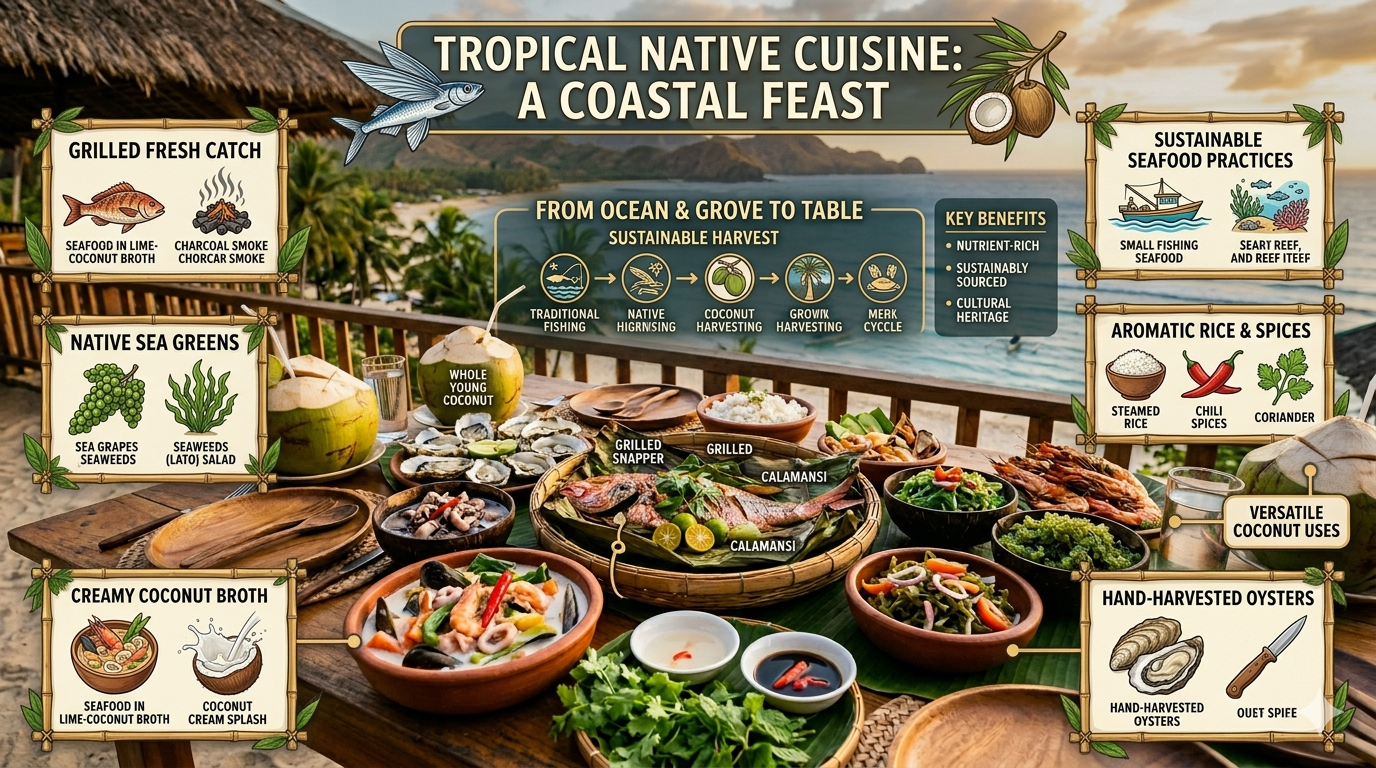
Illustration of various seafood and coconut ingredients with descriptive labels.
Disclaimer
This article is for general informational and educational purposes only. It does not constitute professional medical, nutrition, or dietary advice. References to seafood, coconut, or recipes do not imply endorsement or guarantee of health outcomes. Readers are encouraged to consult licensed nutritionists, dietitians, or medical professionals for personalized guidance.

by Ramil Villar | Apr 2, 2026 | Food & Nutrition Basics
Binakol: Traditional Filipino Chicken Soup
A neutral overview of ingredients, nutritional aspects, and food preparation practices.
Binakol is a traditional Filipino chicken soup, commonly associated with the Visayan region. It typically uses chicken cooked with coconut water, vegetables, and native seasonings. This article provides an educational overview of Binakol, including its nutritional components, typical ingredients, and considerations for safe preparation, in line with Philippine food safety and labeling standards.
Ingredients and Food Groups
A standard Binakol recipe includes:
- Protein: Chicken, often with bones for flavor and nutrients
- Vegetables: Chayote, green papaya, and leafy greens
- Liquids: Coconut water and sometimes a small amount of coconut meat
- Seasonings: Onion, garlic, ginger, and salt
From a nutritional perspective:
- Chicken provides protein and essential amino acids.
- Vegetables contribute fiber, vitamins (such as vitamin C), and minerals.
- Coconut water contains electrolytes like potassium and magnesium.
Hypothetical Nutritional Composition
A typical serving (approx. 250–300 ml) may include:
- Calories: ~120–150 kcal
- Protein: ~10–15 g
- Carbohydrates: ~8–12 g (from vegetables)
- Fat: ~5–7 g (mostly from coconut water and chicken fat)
- Sodium: Variable, depending on added salt
This is an illustrative estimate; actual nutrient content varies based on ingredient amounts and preparation methods.
Safe Preparation Practices
- Use fresh, properly stored chicken to minimize microbial contamination.
- Wash vegetables thoroughly under running water.
- Cook the soup to reach a safe internal temperature (minimum 74°C / 165°F for chicken).
- Maintain clean utensils and surfaces during preparation to comply with DOH and FDA Philippines food safety recommendations.
Context
In nutrition science studies, soups like Binakol are considered nutrient-dense, low-calorie meals, especially when paired with vegetables. Under consumer protection and labeling standards, foods prepared at home or commercially must follow safe handling practices and accurate ingredient disclosures. Dietary results and nutrient intake may vary individually based on portion size and overall diet. Licensed nutrition professionals can provide guidance for specific dietary needs.
FAQs
What is Binakol?
Binakol is a Filipino chicken soup cooked in coconut water with vegetables and seasonings, commonly prepared in the Visayas region.
What nutrients does Binakol provide?
It provides protein from chicken, vitamins and fiber from vegetables, and electrolytes from coconut water.
Is Binakol suitable for daily consumption?
As a traditional soup, it can be part of a balanced diet, though nutrient intake varies individually depending on portion size and overall diet.
Trusted Sources
- Department of Health Philippines – Food Safety Guidelines
- FDA Philippines – Safe Food Handling and Labeling
- Academic journals on Philippine culinary practices and nutrition

Infographic detailing Binakol ingredients and cooking process.
Mandatory Disclaimer
This article is for general informational and educational purposes only. It does not constitute professional medical, nutrition, or dietary advice. References to foods or recipes do not imply endorsement or guarantee of health outcomes. Readers are encouraged to consult licensed nutritionists, dietitians, or medical professionals for personalized guidance.

by Ramil Villar | Apr 2, 2026 | Food & Nutrition Basics
Inubarang Manok: Nutritional Overview of a Filipino Chicken Stew
A neutral look at ingredients, macronutrients, and meal planning considerations for Inubarang Manok.
Inubarang Manok is a traditional Filipino chicken stew originating from the Bicol region. The dish typically combines chicken, local vegetables, coconut milk, garlic, onions, ginger, and chili peppers. This article provides a neutral overview of its nutritional components, macronutrient contributions, and considerations for meal planning under Philippine food safety and consumer protection standards.
Ingredients and Nutrient Highlights:
- Chicken: Source of protein and essential amino acids. Skin-on portions contain fat; skinless portions reduce saturated fat content.
- Coconut Milk: Provides calories from fat, primarily saturated fat, along with small amounts of micronutrients such as manganese.
- Vegetables (e.g., winged beans, chili peppers): Contribute dietary fiber, vitamins (such as vitamin C), and minerals (like potassium).
- Spices (garlic, onions, ginger): Low-calorie flavor enhancers with phytochemicals but minimal macronutrient impact.
Dietary Considerations:
- Macronutrient Balance: A typical serving includes protein (from chicken), fat (from coconut milk), and some carbohydrates (from vegetables).
- Portion Awareness: The dish can be incorporated into a balanced meal when paired with moderate servings of rice or other staple grains.
- Hypothetical Meal Example:
- 1 cup cooked Inubarang Manok
- 1/2 cup steamed rice
- 1 small serving of fresh fruit
This combination illustrates nutrient variety without implying specific health or weight outcomes.
Context
In nutrition science studies, traditional Filipino dishes like Inubarang Manok are considered nutrient-dense sources of protein and micronutrients, but the fat content from coconut milk may be significant. Under Philippine consumer protection and labeling standards, it is important to read ingredient lists when using pre-packaged coconut milk or seasoning products. Dietary results vary individually, and portion control can help maintain a balanced intake of calories and nutrients.
FAQs
What is Inubarang Manok?
It is a Filipino chicken stew from the Bicol region, typically made with chicken, coconut milk, and local vegetables.
What nutrients does it provide?
It provides protein, dietary fat (mostly from coconut milk), fiber, vitamins, and minerals depending on the vegetables used.
Can it be included in meal planning?
Yes, it can be part of a balanced meal when paired with other foods to provide macronutrient variety.
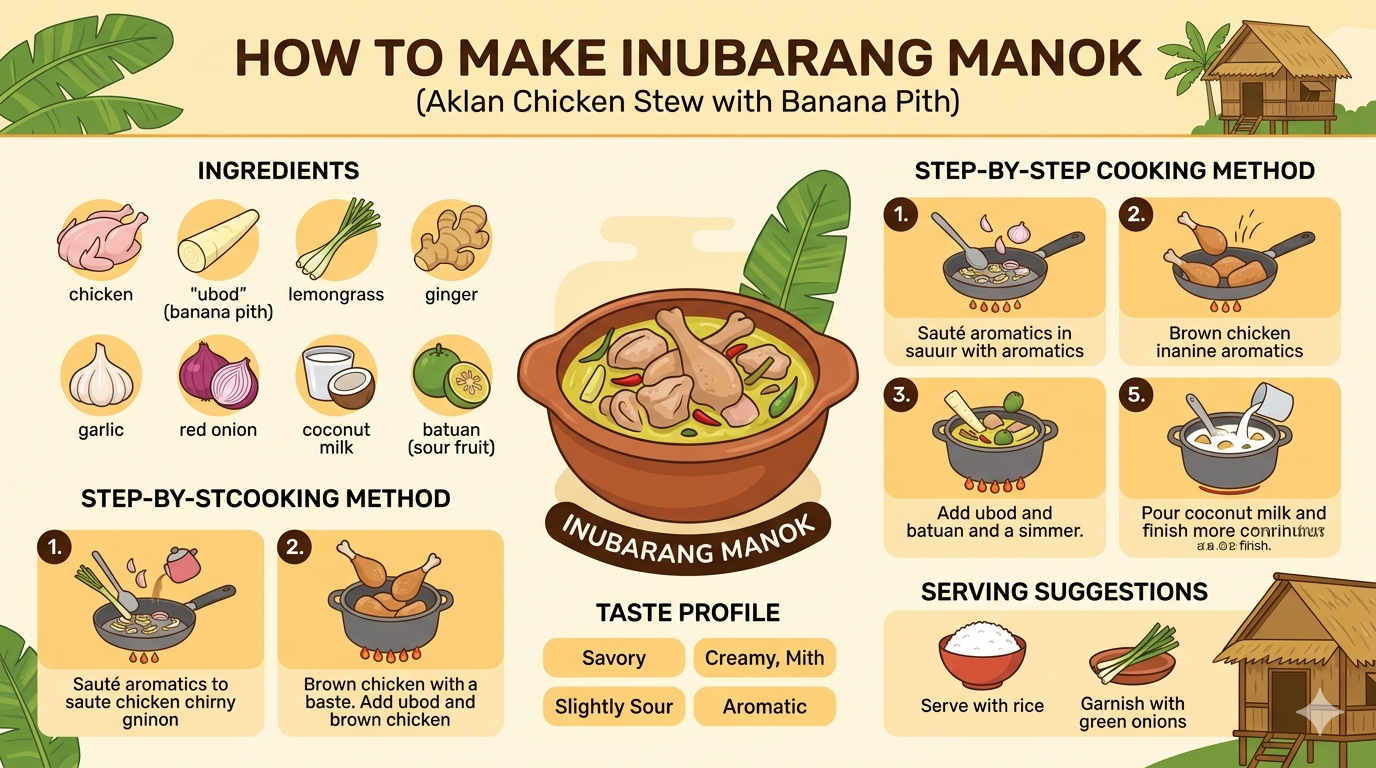
Infographic detailing ingredients and cooking steps for Inubarang Manok
Trusted Sources
- Department of Health Philippines: Nutrition Guidelines
- Food and Drug Administration Philippines: Food Safety Advisory
- Peer-reviewed journals on traditional Filipino diets
Mandatory Disclaimer
This article is for general informational and educational purposes only. It does not constitute professional medical, nutrition, or dietary advice. References to dishes, ingredients, or meal ideas do not imply endorsement or guarantee of health outcomes. Readers are encouraged to consult licensed nutritionists, dietitians, or medical professionals for personalized guidance.

by Ramil Villar | Apr 2, 2026 | Food & Nutrition Basics
Kansi Soup: Nutritional Overview and Culinary Insights
A neutral look at Kansi soup, its ingredients, and nutritional aspects.
Kansi is a traditional Filipino soup known for its savory flavor, often prepared with beef, vegetables, and souring agents like batwan or kalamansi. This article explores the nutritional components of Kansi, its food group contributions, and considerations for safe consumption. Information aligns with Philippine food safety and labeling standards from the Department of Health (DOH) and the Food and Drug Administration (FDA Philippines).
Ingredients and Macronutrient Content
Typical Kansi recipes include beef shank, bone marrow, lemongrass, vegetables (e.g., eggplant, string beans), and souring agents.
- Protein: Beef provides high-quality protein necessary for tissue maintenance.
- Fat: Fat content varies with the cut of meat; marrow and beef trimmings increase saturated and unsaturated fats.
- Carbohydrates: Vegetables and any rice or corn-based thickeners contribute minimal carbohydrates.
- Micronutrients: Kansi ingredients supply iron, zinc, vitamin C (from souring agents), and potassium.
Dietary Considerations
- Kansi can be part of a balanced diet when portioned appropriately and paired with whole grains and vegetables.
- Sodium content may be elevated if salt or fish sauce is added. Moderation is recommended, especially for individuals monitoring sodium intake.
- Bone marrow provides additional fat-soluble nutrients but may be calorie-dense.
Hypothetical Meal Planning Example (Illustrative Only)
A neutral daily meal including Kansi:
- Breakfast: Brown rice, boiled egg, tomato slices
- Lunch: 1 cup Kansi soup with beef shank and vegetables, small serving of steamed rice
- Snack: Fresh fruit (e.g., papaya)
- Dinner: Grilled fish, sautéed vegetables, small serving of rice
This is an illustrative example for understanding nutrient distribution and does not imply dietary recommendations or guaranteed outcomes.
Context
In nutrition science studies, traditional soups like Kansi contribute both macronutrients and micronutrients. Under consumer protection and labeling standards, nutrient composition depends on ingredient selection, portion size, and preparation methods. Dietary results vary individually, and Kansi may be included safely as part of a varied diet. Licensed nutritionists or medical professionals can provide individualized guidance.
FAQs
What is Kansi?
Kansi is a Filipino sour beef soup, often cooked with bone marrow, vegetables, and souring agents such as batwan or kalamansi.
What nutrients does Kansi provide?
Kansi can supply protein, iron, zinc, vitamin C, and other micronutrients depending on its ingredients.
Is Kansi suitable for balanced meals?
Kansi may be included as part of meals that combine protein, vegetables, and grains. Nutrient intake varies based on preparation and portion sizes.
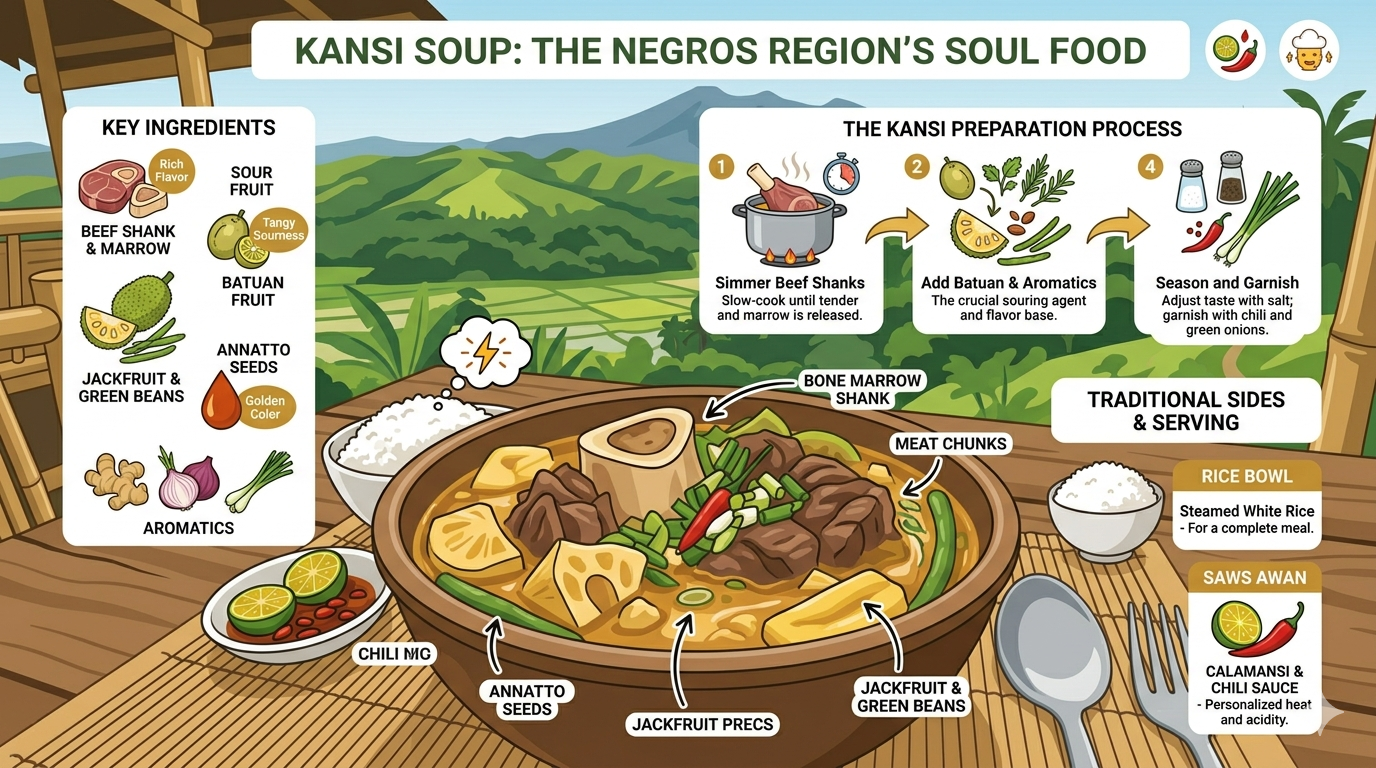
Illustrative infographic displaying Kansi soup ingredients and preparation components
Trusted Sources
- Department of Health (DOH) Philippines: Nutrition Guidelines
- FDA Philippines: Food Safety and Labeling Advisories
- Philippine Food Composition Tables, Food and Nutrition Research Institute (FNRI)
Mandatory Disclaimer
This article is for general informational and educational purposes only. It does not constitute professional medical, nutrition, or dietary advice. References to foods, ingredients, or meals do not imply endorsement or guarantee of health outcomes. Readers are encouraged to consult licensed nutritionists, dietitians, or medical professionals for personalized guidance.