Fresh Seafood and Native Coconut Dishes: Educational Overview of Nutritional Principles
A neutral guide to understanding the nutritional composition and dietary considerations of seafood and coconut-based foods in the Philippines.
This article provides an informational overview of fresh seafood and native coconut dishes commonly found in the Philippines. It discusses their nutritional characteristics, macronutrient and micronutrient content, and hypothetical meal planning examples. References are aligned with Department of Health (DOH) and Food and Drug Administration (FDA Philippines) guidelines to ensure consumer safety and factual accuracy.
Nutritional Overview of Fresh Seafood
Fresh seafood, such as fish, shrimp, and shellfish, contains varying levels of protein, fat, and essential micronutrients:
- Protein: Seafood is a source of high-quality protein, important for cellular function and tissue maintenance.
- Omega-3 Fatty Acids: Certain fish, such as mackerel and tuna, provide polyunsaturated fats that contribute to nutrient balance.
- Vitamins and Minerals: Seafood contains vitamins B12 and D, iodine, selenium, and zinc. These nutrients play roles in metabolic and immune processes.
- Considerations: Freshness, safe handling, and proper cooking methods reduce microbial contamination risks.
Nutritional Overview of Native Coconut Dishes
Coconut-based foods are widely used in Filipino cuisine, including coconut milk (gata), coconut oil, and grated coconut (niyog):
- Macronutrients: Coconut milk contains saturated fat and moderate calories. Grated coconut is higher in fiber compared to processed forms.
- Micronutrients: Coconut provides potassium, magnesium, and small amounts of iron.
- Dietary Role: Coconut ingredients can add flavor and texture to meals; portion awareness helps maintain balanced macronutrient intake.
- Considerations: Cooking techniques and combined ingredients (e.g., coconut milk with meats or seafood) influence overall calorie and fat content.
Hypothetical Meal Planning Example
This example illustrates a neutral, hypothetical daily meal including seafood and coconut dishes:
| Meal | Example Foods | Nutritional Notes |
|---|---|---|
| Breakfast | Oatmeal with grated coconut and banana | Fiber, potassium, and moderate energy contribution |
| Lunch | Fish sinigang with vegetables | Protein-rich seafood, micronutrients from vegetables, low saturated fat |
| Snack | Coconut water with sliced mango | Hydration, electrolytes, vitamins A & C |
| Dinner | Shrimp sautéed in light coconut milk with steamed rice | Protein, healthy fats, and energy balance; portion control emphasized |
Note: Nutrient amounts vary depending on ingredient sizes, preparation methods, and individual dietary needs.
Consumer Awareness and Safe Practices
- Seafood Handling: Store at proper refrigeration temperatures and cook thoroughly to reduce contamination risk.
- Coconut Product Labels: Check for additives, preservatives, and expiration dates.
- Balanced Diet Planning: Incorporate vegetables, fruits, grains, and proteins alongside seafood and coconut dishes for overall nutrient balance.
- Supplement Awareness: Avoid assumptions that seafood or coconut consumption alone meets all nutrient requirements.
Context
In nutrition science studies, seafood and coconut foods are recognized for their macronutrient and micronutrient contributions but do not guarantee specific health outcomes. Under Philippine consumer protection and labeling standards, safe storage, handling, and accurate ingredient disclosure are emphasized. Dietary results vary individually, and consultation with licensed nutrition or medical professionals is recommended for personalized guidance.
FAQs
Q1: What nutrients are found in seafood?
Seafood provides protein, omega-3 fatty acids, vitamins B12 and D, and minerals such as iodine and selenium. Nutrient content varies by species.
Q2: What is the nutritional role of coconut in meals?
Coconut contributes dietary fat, fiber, and minerals like potassium and magnesium. Nutrient levels depend on the form used (milk, oil, grated).
Q3: How can seafood and coconut be incorporated safely in meals?
In nutrition planning, these foods can be part of balanced meals with vegetables, grains, and other protein sources. Safe storage, handling, and portion awareness are key.
Trusted Sources
- Department of Health (DOH Philippines) nutrition advisories
- Food and Drug Administration (FDA Philippines) food labeling guidelines
- Philippine Nutrition Foundation (PhilNut) educational materials
- Peer-reviewed journals on food science and dietetics
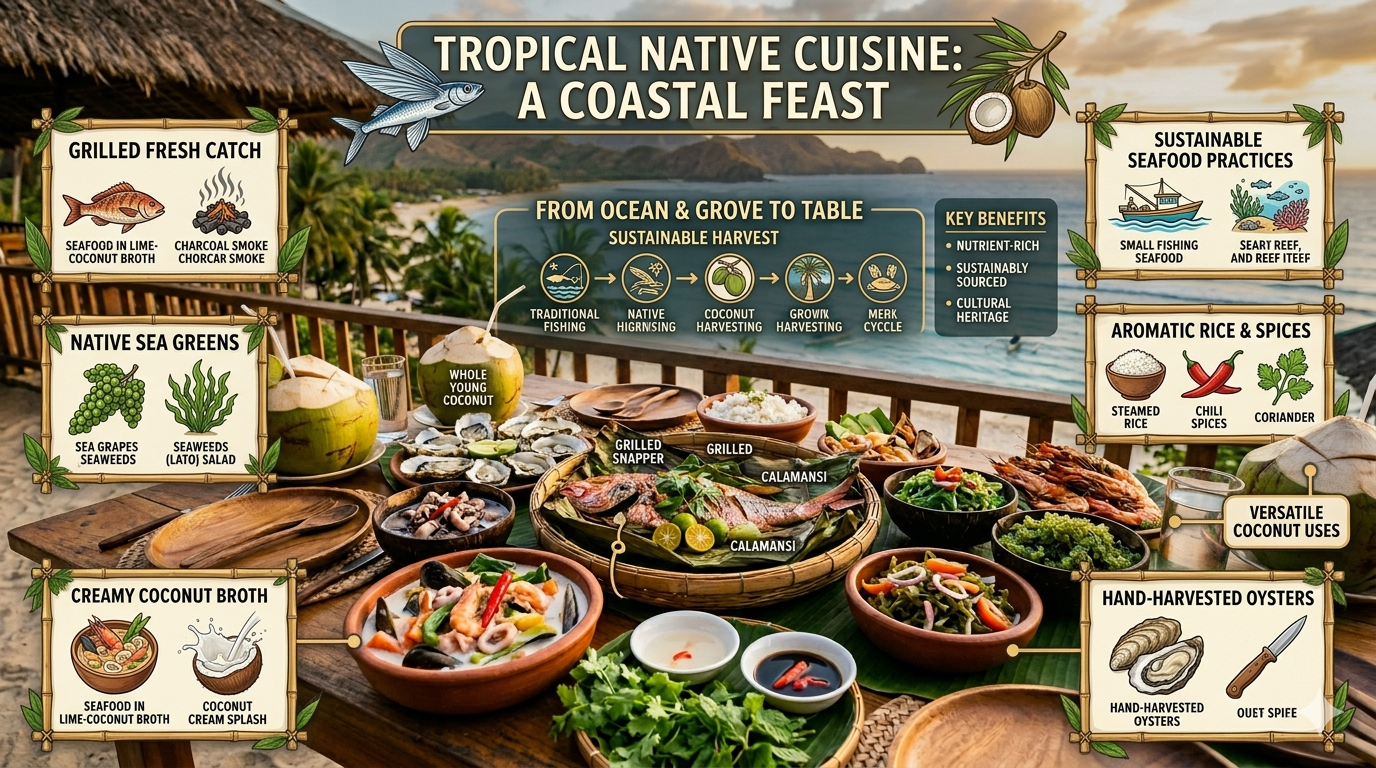
Illustration of various seafood and coconut ingredients with descriptive labels.
Disclaimer
This article is for general informational and educational purposes only. It does not constitute professional medical, nutrition, or dietary advice. References to seafood, coconut, or recipes do not imply endorsement or guarantee of health outcomes. Readers are encouraged to consult licensed nutritionists, dietitians, or medical professionals for personalized guidance.