Understanding Tapsilog: Nutritional Overview and Meal Composition
A neutral exploration of this popular Filipino breakfast dish and its macronutrient considerations
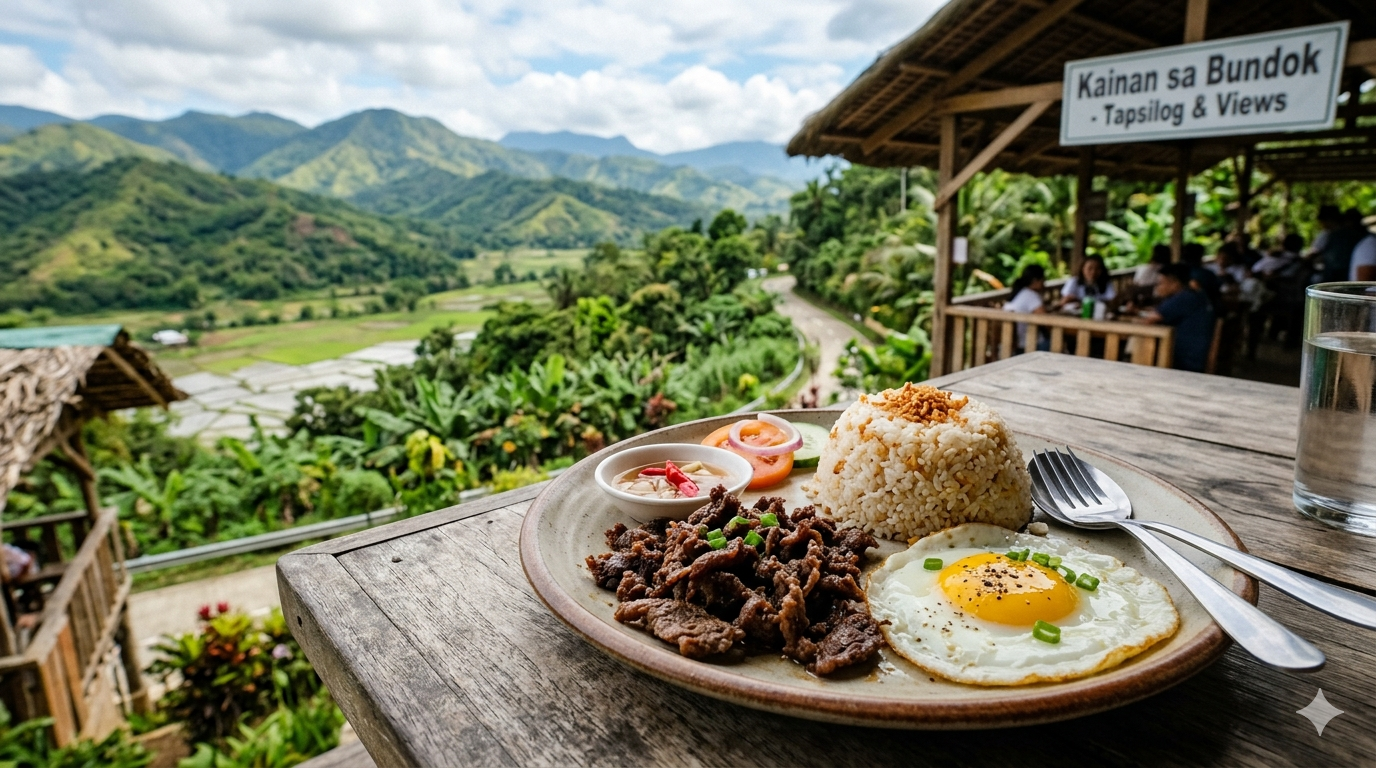
Tapsilog is a traditional Filipino breakfast meal typically composed of tapa (cured beef), sinangag (garlic fried rice), and itlog (fried egg). This article provides an educational look at Tapsilog’s nutritional components, macronutrient balance, and considerations for meal planning under safe dietary practices. References to DOH and FDA guidelines are included to support consumer awareness. Readers will gain insight into how this meal fits into general nutrition principles and hypothetical meal planning scenarios.
1. Components of Tapsilog
- Tapa (Beef Cured Meat):
Tapa is a source of protein and essential minerals such as iron and zinc. Sodium content may be elevated due to curing and seasoning methods. - Sinangag (Garlic Fried Rice):
Provides carbohydrates as the primary energy source. The use of oil for frying increases the fat content and contributes to overall calorie intake. - Itlog (Egg):
Eggs offer high-quality protein and micronutrients such as vitamin B12, choline, and selenium. Cooking method (fried vs boiled) affects fat content and caloric value.
2. Nutritional Considerations
- A standard Tapsilog portion generally includes moderate protein, carbohydrate, and fat content.
- Meal composition can be adjusted for portion control or to include vegetables or fruits to enhance fiber, vitamins, and minerals.
- Consumers are advised to consider sodium intake from cured meats and added salts.
3. Hypothetical Meal Planning Example (Educational Only)
| Component | Portion | Nutritional Focus |
|---|---|---|
| Tapa | 75 g | Protein, Iron |
| Sinangag | 1 cup | Carbohydrates, Energy |
| Egg | 1 large | Protein, B12, Choline |
| Sliced tomatoes | 50 g | Fiber, Vitamin C |
| Water | 250 mL | Hydration |
This table is a neutral example for educational purposes and does not imply health outcomes.
Context
In nutrition science, meal planning involves balancing macronutrients and including a variety of foods to meet daily nutritional needs. Under consumer protection and labeling standards in the Philippines, awareness of sodium, saturated fat, and portion sizes supports informed dietary choices. Individual nutritional needs vary; consultation with a licensed dietitian or medical professional is recommended for personalized guidance.
FAQs
Q1: What is Tapsilog?
Tapsilog is a Filipino breakfast meal consisting of tapa (cured beef), sinangag (garlic fried rice), and itlog (egg).
Q2: What are the main nutrients in Tapsilog?
It provides protein, carbohydrates, fats, and micronutrients such as iron, vitamin B12, and choline, depending on portion sizes and preparation methods.
Q3: How can Tapsilog fit into meal planning?
Tapsilog can be included as part of a meal that balances macronutrients and fiber, while considering sodium and fat content for overall dietary balance.
Trusted Sources
- Department of Health, Philippines – Nutrition Guidelines
- Food and Drug Administration, Philippines – Food Labeling Standards
- Academy of Nutrition and Dietetics – Nutrition and Meal Planning Overview
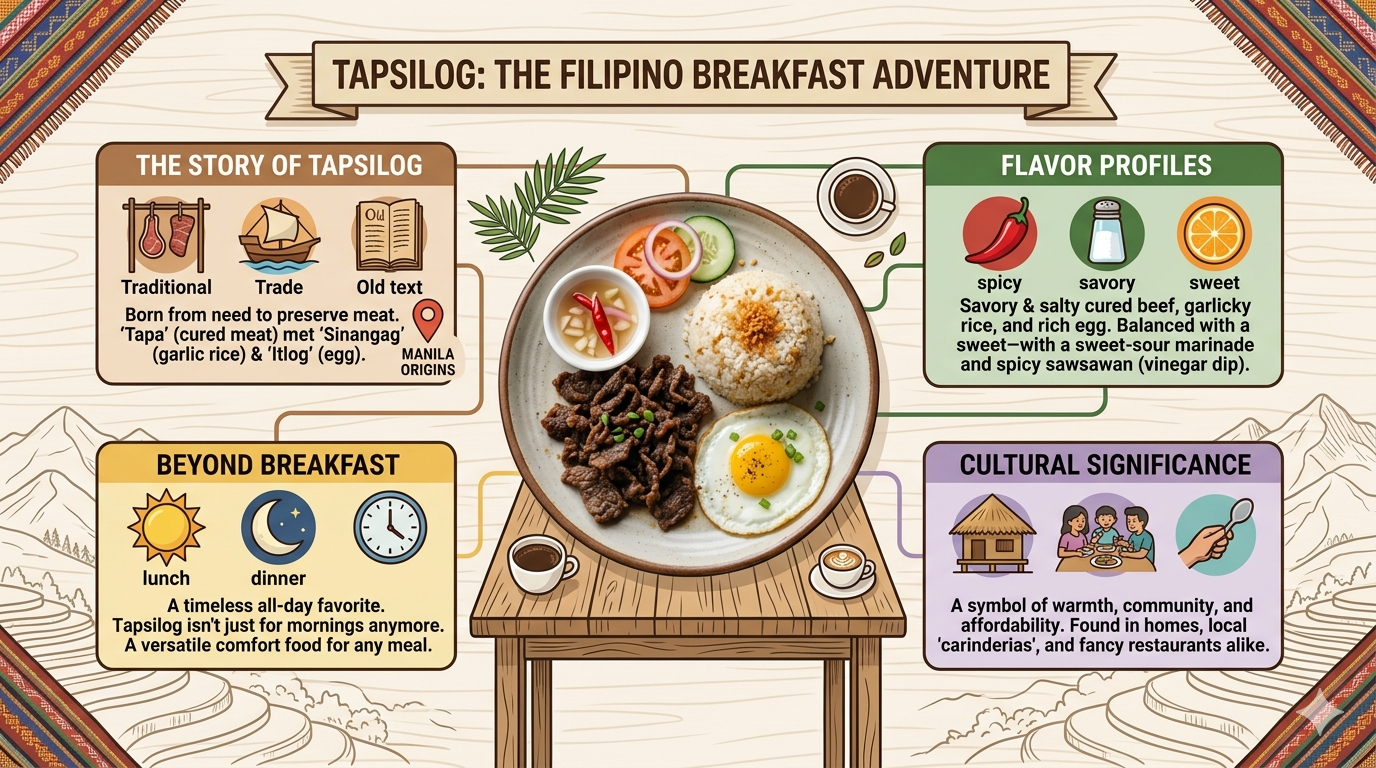
Infographic visually displaying Tapsilog’s main components and nutritional overview.
Mandatory Disclaimer
This article is for general informational and educational purposes only. It does not constitute professional medical, nutrition, or dietary advice. References to foods or meal components do not imply endorsement or guarantee of health outcomes. Readers are encouraged to consult licensed nutritionists, dietitians, or medical professionals for personalized guidance.