Understanding Kinilaw: Nutritional and Food Safety Insights
A neutral overview of preparation, ingredients, and safe consumption practices
Kinilaw is a traditional Filipino dish typically made with raw seafood, vinegar, and various seasonings. This article provides a neutral, educational overview of kinilaw, including its common ingredients, macronutrient components, and food safety considerations. Readers will learn about the nutritional aspects of raw seafood, the importance of safe handling, and general dietary awareness under Philippine food safety regulations.
1. Ingredients and Macronutrients
Kinilaw commonly uses raw fish such as tuna, tanigue, or mackerel, combined with vinegar, citrus juice, onions, ginger, and chili. From a nutritional perspective:
- Proteins: Raw fish provides high-quality protein, which supports general body functions such as tissue maintenance.
- Fats: Some fish varieties contribute omega-3 fatty acids, beneficial for cellular functions.
- Carbohydrates: Minimal, mainly from added vegetables like onions or tomatoes.
- Micronutrients: Fish is a source of vitamins (e.g., B-complex) and minerals (e.g., selenium, iodine).
2. Food Safety Considerations
Under Philippine FDA and DOH guidance, consuming raw seafood requires careful handling:
- Ensure seafood is fresh and sourced from reliable suppliers.
- Store at proper temperatures (≤4°C) to reduce bacterial growth.
- Use clean utensils and surfaces to avoid cross-contamination.
- Acidic marinades like vinegar or citrus juice may reduce microbial activity but do not guarantee complete pathogen elimination.
3. Hypothetical Meal Planning Example
A sample kinilaw-based meal could include:
- 100g of tuna kinilaw
- 50g sliced tomatoes and onions
- 1 cup of brown rice
- 1 serving of fresh fruit (e.g., mango)
This provides an illustrative balance of protein, carbohydrates, fiber, and micronutrients. Portion sizes can be adjusted according to individual dietary needs.
4. Consumer Awareness Tips
- Read labels if using pre-marinated kinilaw kits to check for preservatives or added sodium.
- Verify product authenticity from certified seafood suppliers.
- Avoid unverified “instant kinilaw” claims that promise health outcomes.
Context
In nutrition science, raw seafood dishes like kinilaw are sources of high-quality protein and micronutrients but carry inherent food safety considerations. Under Philippine consumer protection and labeling standards, individuals are advised to practice safe handling and preparation techniques. Dietary results, such as nutrient absorption, vary individually and depend on overall diet and health status. Consultation with licensed nutritionists or medical professionals is recommended for personalized guidance.
FAQs
Q: What is kinilaw?
A traditional Filipino dish made with raw seafood, vinegar or citrus, and vegetables.
Q: Is kinilaw nutritious?
Kinilaw provides protein, healthy fats, and micronutrients depending on the seafood and ingredients used.
Q: How can I ensure kinilaw is safe to eat?
Proper storage, clean preparation surfaces, and sourcing seafood from reputable suppliers reduce food safety risks.
Trusted Sources
- Department of Health Philippines: Food Safety Guidelines
- FDA Philippines: Seafood Safety and Labeling
- Philippine Nutrition Foundation: Peer-reviewed publications on seafood nutrition
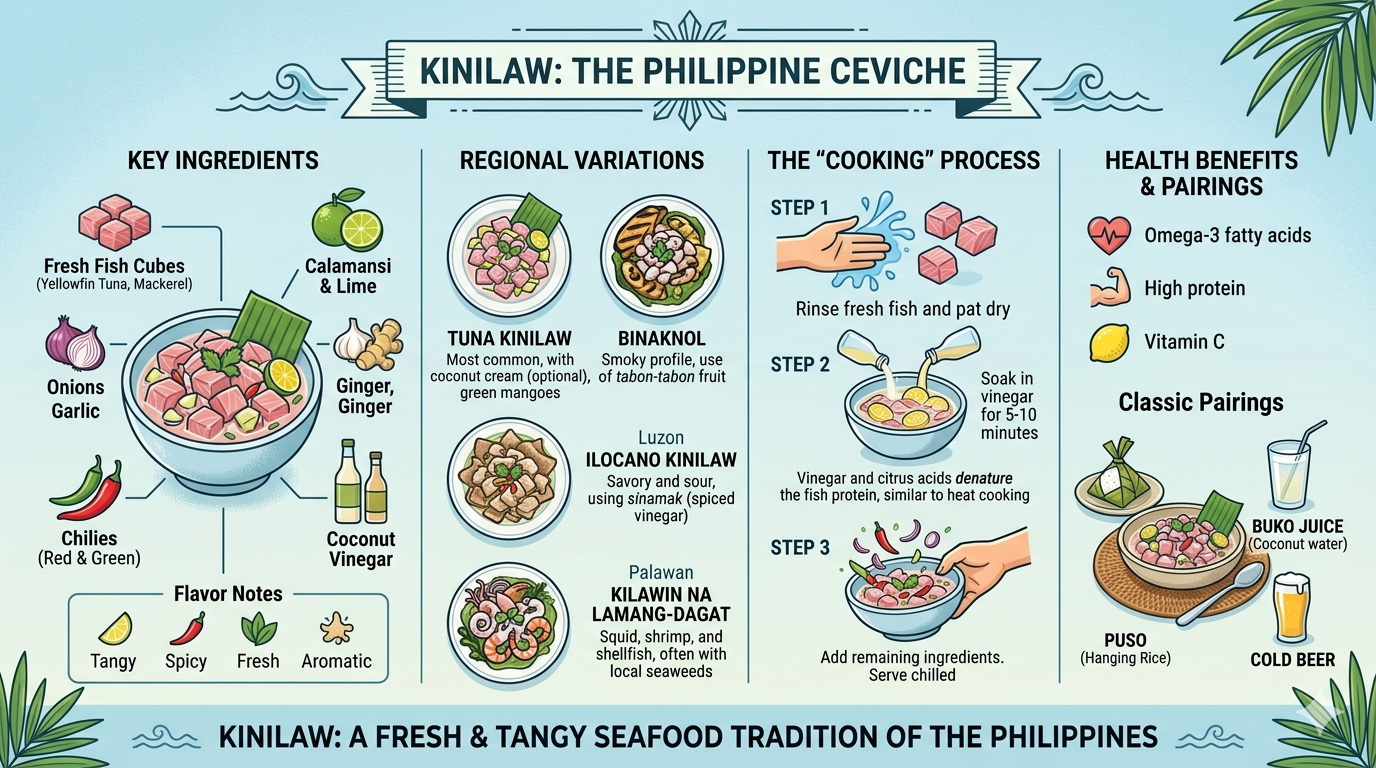
Diagram showing common ingredients in kinilaw
Disclaimer
This article is for general informational and educational purposes only. It does not constitute professional medical, nutrition, or dietary advice. References to foods or preparation methods do not imply endorsement or guarantee of health outcomes. Readers are encouraged to consult licensed nutritionists, dietitians, or medical professionals for personalized guidance.