Understanding Longganisa Varieties in the Philippines: Vigan and Lucban
A Neutral Overview of Regional Filipino Sausages and Their Nutritional Aspects
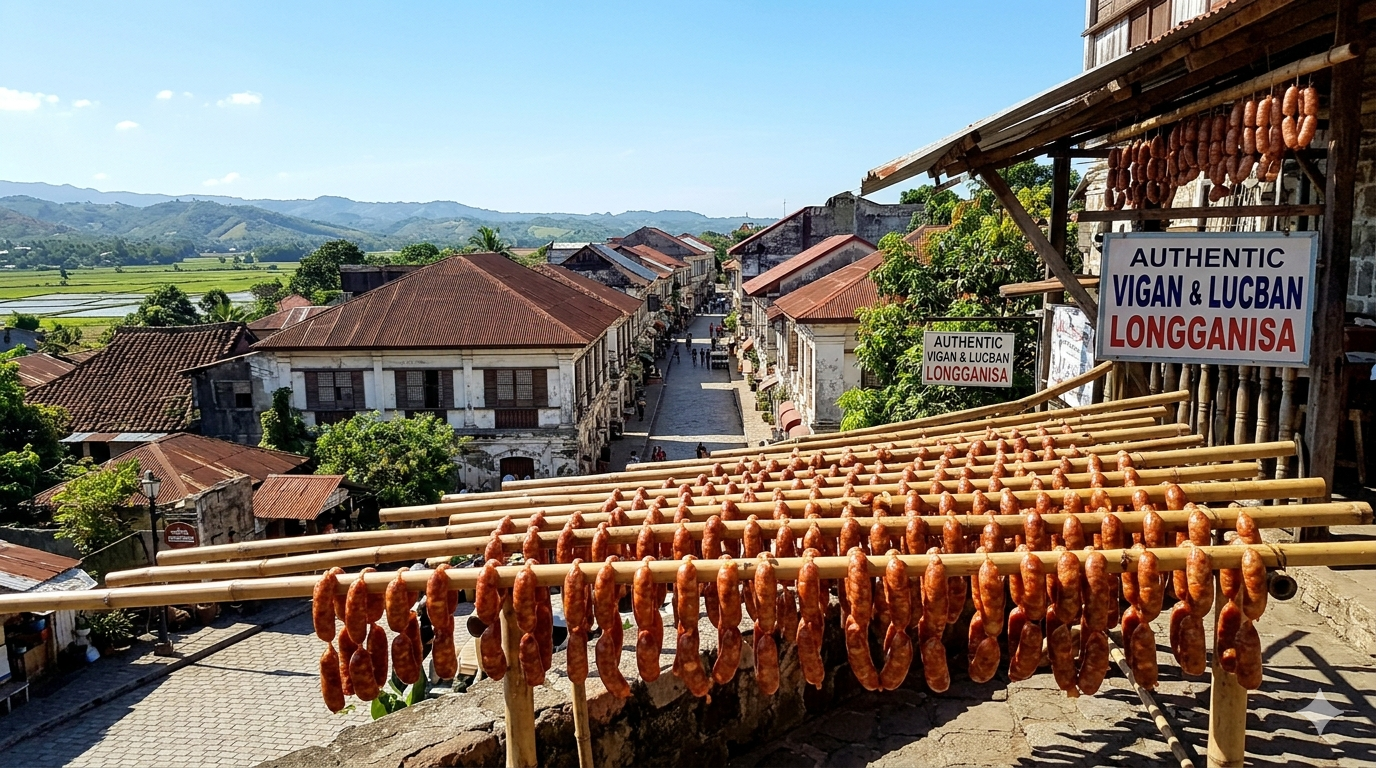
Longganisa is a traditional Filipino sausage with regional variations, often characterized by different flavor profiles and ingredient compositions. Two widely recognized types are Vigan longganisa from Ilocos Sur and Lucban longganisa from Quezon province. This article provides an educational overview of these varieties, their typical ingredients, and considerations for balanced consumption.
Nutritional and Food Composition Details
Vigan Longganisa
- Typically garlicky and slightly sweet.
- Made from ground pork, vinegar, garlic, sugar, salt, and spices.
- Often pan-fried or simmered before frying.
Lucban Longganisa
- Known for its garlicky and salty flavor.
- Made with ground pork, garlic, salt, pepper, sugar, and sometimes paprika.
- Commonly cooked by frying or boiling first.
Nutritional Considerations
- Longganisa is primarily a source of protein and fat, depending on the meat-to-fat ratio.
- Sodium content may be relatively high due to salt and curing ingredients.
- Caloric content can vary based on preparation method (frying vs. boiling).
- While it contains protein and iron from pork, portion control is recommended to manage overall intake of saturated fat and sodium.
Safe Consumption and Meal Planning
- Including longganisa occasionally as part of a balanced diet can contribute to protein intake.
- Pairing with vegetables, fruits, and whole grains supports nutrient balance.
- Cooking methods affect nutrient retention; boiling before lightly frying can reduce added fat.
- Reading labels for packaged longganisa helps monitor sodium and preservative content.
Hypothetical Serving Example (Informational Only)
- 2 links of Vigan longganisa (approximately 100g)
- 1 cup steamed vegetables
- ½ cup cooked brown rice
This combination illustrates balanced portioning of protein, carbohydrates, and vegetables, without implying any weight or health outcomes.
Context
In nutrition science studies, processed meats are a recognized source of protein, iron, and certain B vitamins. Under Philippine food safety and labeling standards, consumers are advised to check for ingredient lists, sodium content, and proper handling to prevent foodborne illness. Dietary results vary individually, and personal health conditions may influence appropriate intake. Consulting licensed nutritionists or dietitians is recommended for personalized guidance.
FAQs
What is longganisa?
Longganisa is a Filipino sausage made from ground pork, spices, and other ingredients, with regional variations in flavor and preparation.
How do Vigan and Lucban longganisa differ?
Vigan longganisa is slightly sweet and garlicky, while Lucban longganisa is typically salty and garlicky. Ingredients and seasoning proportions vary regionally.
Can longganisa be part of a balanced meal?
Yes. Including moderate portions alongside vegetables, grains, and fruits supports nutrient balance. Cooking method and portion size influence overall dietary considerations.
Trusted Sources
- Department of Health Philippines (DOH) – Food Safety and Nutrition Guidelines
- FDA Philippines – Processed Meat Labeling and Standards
- Academic journals on Philippine regional foods and nutritional content (e.g., Philippine Journal of Science)
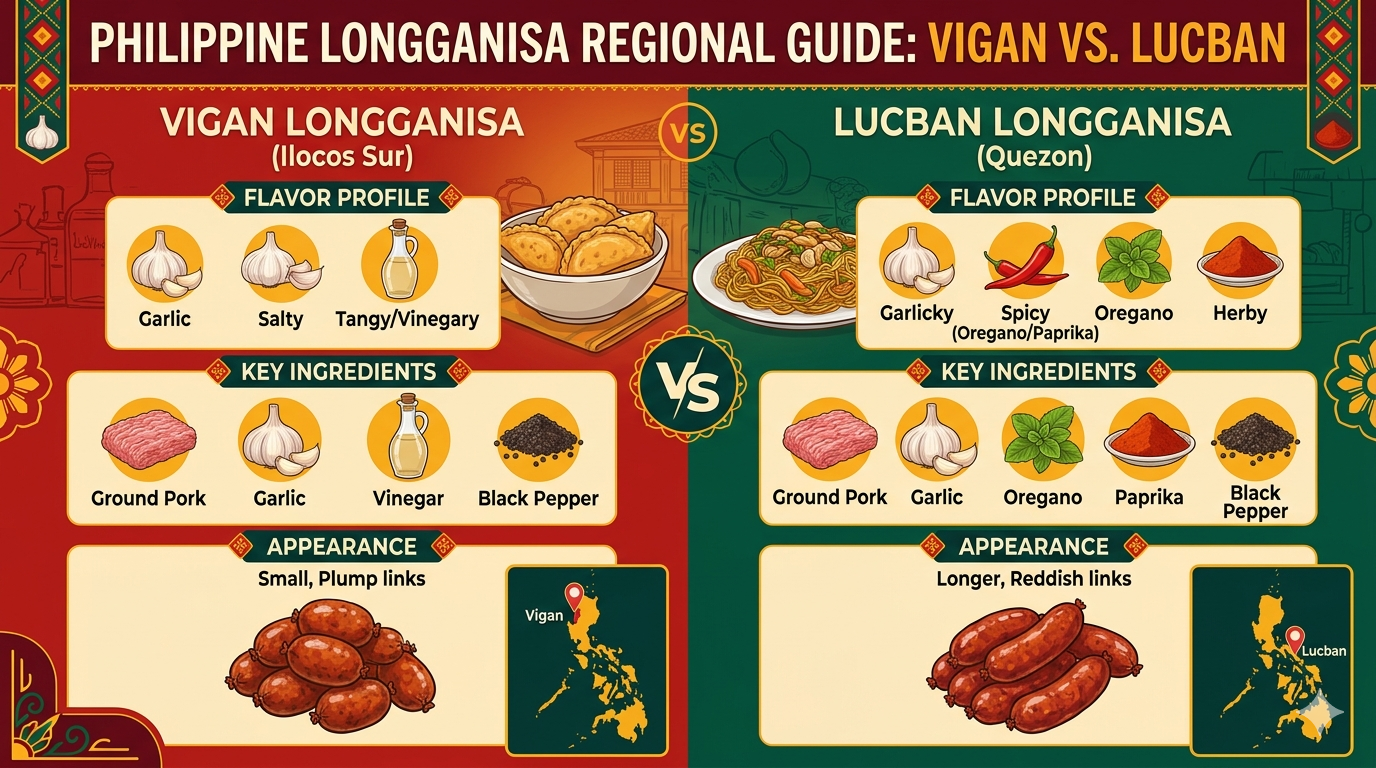
Visual comparison of ingredients used in Vigan and Lucban longganisa.
Disclaimer
This article is for general informational and educational purposes only. It does not constitute professional medical, nutrition, or dietary advice. References to foods or preparation methods do not imply endorsement or guarantee of health outcomes. Readers are encouraged to consult licensed nutritionists, dietitians, or medical professionals for personalized guidance.