Tinuktok (Bicol Influence): A Neutral Overview of a Regional Dish
Understanding its ingredients, preparation, and nutritional context
This article provides an educational overview of Tinuktok, a traditional dish associated with the Bicol region of the Philippines. It explains its typical ingredients, preparation methods, and general nutritional components. The discussion aligns with food safety and consumer awareness principles referenced by agencies such as the Department of Health (DOH) and the Food and Drug Administration (FDA) Philippines.
What Is Tinuktok?
Tinuktok is a Filipino dish commonly prepared with finely shredded or chopped vegetables mixed with grated coconut and seasonings. Variations may include ingredients such as malunggay (moringa leaves), squash, or string beans. Some versions incorporate small amounts of fish, shrimp, or ground meat.
The dish is traditionally associated with Bicolano cuisine, which often features coconut-based ingredients.
Common Ingredients
Typical components of Tinuktok may include:
- Grated coconut (fresh or dried)
- Leafy vegetables such as malunggay
- Vegetables like squash or green beans
- Protein additions (optional): dried fish, shrimp, or ground meat
- Aromatics: garlic, onion, ginger
- Seasonings: salt or fish sauce
Ingredient combinations may vary depending on local practices and household preferences.
Preparation Overview
Tinuktok is generally prepared by:
- Mixing grated coconut with chopped vegetables
- Adding aromatics and optional protein ingredients
- Wrapping the mixture in leaves (such as banana leaves) or shaping it
- Cooking through steaming or simmering until fully cooked
Cooking methods may differ, but they typically involve moist heat to soften ingredients and blend flavors.
Nutritional Components
The nutritional profile of Tinuktok depends on the ingredients used:
- Coconut contributes fats and calories
- Vegetables provide dietary fiber, vitamins, and minerals
- Protein sources (if included) add protein content
As with many mixed dishes, nutrient composition varies based on portion size and preparation method.
Food Safety and Handling Considerations
Under Philippine food safety standards, proper handling of ingredients is important:
- Wash vegetables thoroughly
- Store coconut and seafood properly to reduce spoilage risk
- Cook thoroughly to appropriate temperatures
These practices are consistent with general food safety guidance from regulatory authorities.
Context
In nutrition science discussions, traditional dishes like Tinuktok are often examined in terms of ingredient diversity and preparation methods rather than fixed nutritional values.
Under consumer protection and food safety regulations in the Philippines, proper food handling and accurate ingredient labeling (for packaged variations) are emphasized to support public health.
Dietary needs and responses to specific foods vary among individuals. For personalized nutrition guidance, consultation with licensed nutrition professionals is generally recommended.
FAQs
What is Tinuktok made of?
Tinuktok typically consists of grated coconut mixed with vegetables and seasonings. Some versions include small amounts of fish, shrimp, or meat.
Is Tinuktok always wrapped in leaves?
Some traditional preparations use banana leaves for wrapping, but this is not required. Cooking methods may vary by region or household.
What food group does Tinuktok belong to?
Tinuktok is a mixed dish that may include vegetables, fats (from coconut), and optional protein sources, depending on its ingredients.
Trusted Sources
- Department of Health (DOH) Philippines – Food Safety and Nutrition Materials
- Food and Drug Administration (FDA) Philippines – Food Safety Guidelines
- Philippine Food Composition Tables (FNRI-DOST)
- Academic publications on Filipino cuisine and nutrition
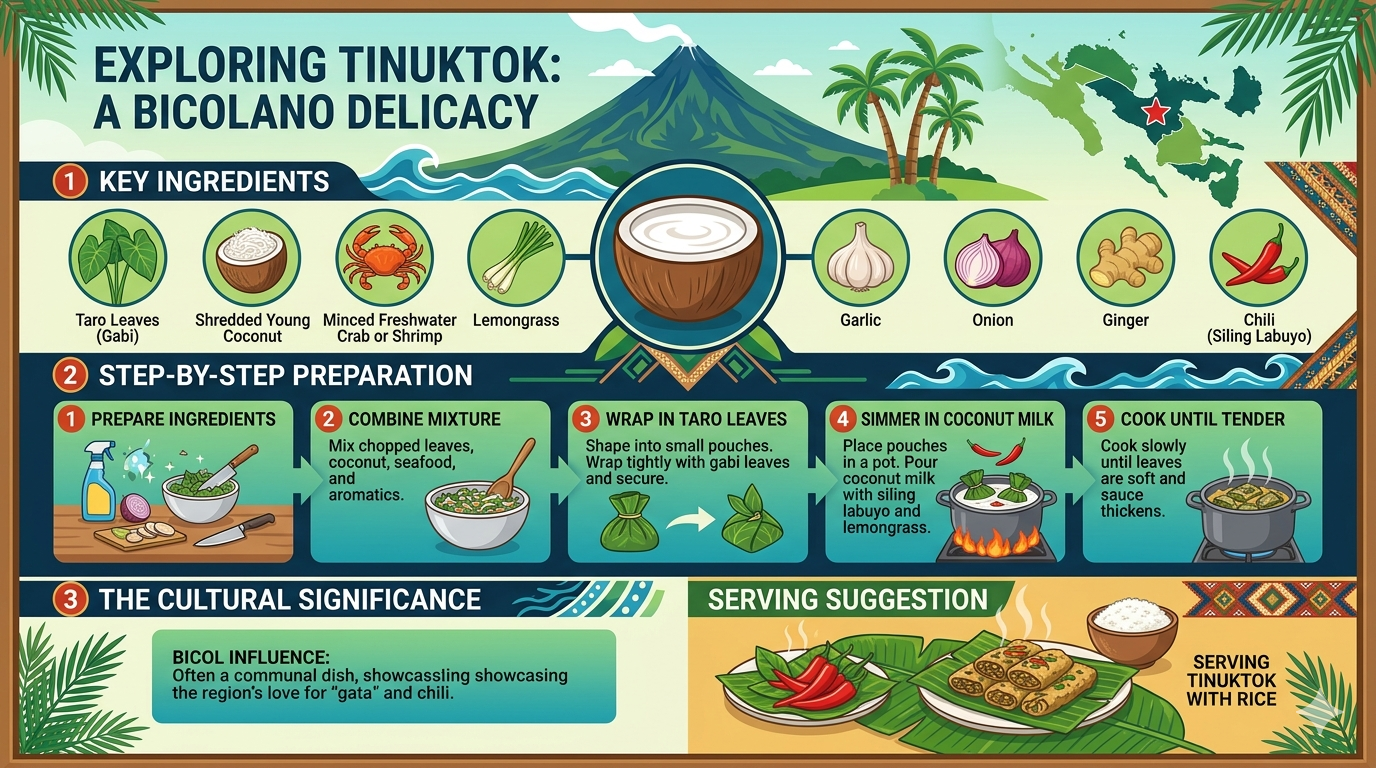
Visual summary of common ingredients and cooking steps for Tinuktok.
Disclaimer
This article is for general informational and educational purposes only. It does not constitute professional medical, nutrition, or dietary advice. References to foods or dishes do not imply endorsement or guarantee of health outcomes. Readers are encouraged to consult licensed nutritionists, dietitians, or medical professionals for personalized guidance.