Understanding Piyaya: A Neutral Overview of a Traditional Filipino Pastry
A neutral look at ingredients, nutrition, and cultural context
Piyaya is a traditional Filipino pastry commonly made in Negros Occidental. This article provides an informational overview of its ingredients, preparation, and nutritional considerations, aligned with Philippine food safety standards under the Department of Health (DOH) and Food and Drug Administration (FDA). Readers will learn about its basic composition, common variations, and how it fits into a neutral dietary context.
Ingredients and Composition
Piyaya is typically made from a thin layer of unleavened dough filled with muscovado sugar (unrefined cane sugar) and sometimes mixed with other natural flavors, such as ube or sesame seeds. The dough is often made from all-purpose flour, water, and a small amount of oil. It is traditionally pan-grilled or baked, giving the pastry a caramelized texture.
Macronutrient Overview (Informational Only)
- Carbohydrates: The primary macronutrient, mostly from flour and sugar.
- Fat: Small amounts, usually from added oil in the dough.
- Protein: Minor contribution from flour.
Micronutrients
- Trace minerals such as iron may be present in small amounts due to the flour and muscovado sugar.
- Vitamins are limited, as piyaya is not typically fortified.
Dietary Context
- Piyaya can be considered an energy-dense snack due to its carbohydrate and sugar content.
- It can be included occasionally as part of a varied diet, recognizing that portion control is key in maintaining overall nutrient balance.
- There are no inherent claims of health improvement, weight change, or therapeutic benefits associated with consuming piyaya.
Food Safety Considerations
- Ensure proper food handling, storage, and hygiene when preparing or purchasing piyaya.
- Homemade or commercially produced versions should comply with FDA labeling and DOH food safety guidelines.
Context
In nutrition science studies, foods high in sugar and refined flour are considered energy-dense but low in micronutrients. Under consumer protection and labeling standards, processed pastries like piyaya should be clearly labeled with ingredient lists and allergen information. Dietary results vary individually, and inclusion of traditional foods is part of overall dietary variety rather than a measure of health improvement. Licensed nutritionists or dietitians can provide personalized guidance for integrating pastries into balanced meal planning.
FAQs
What is piyaya?
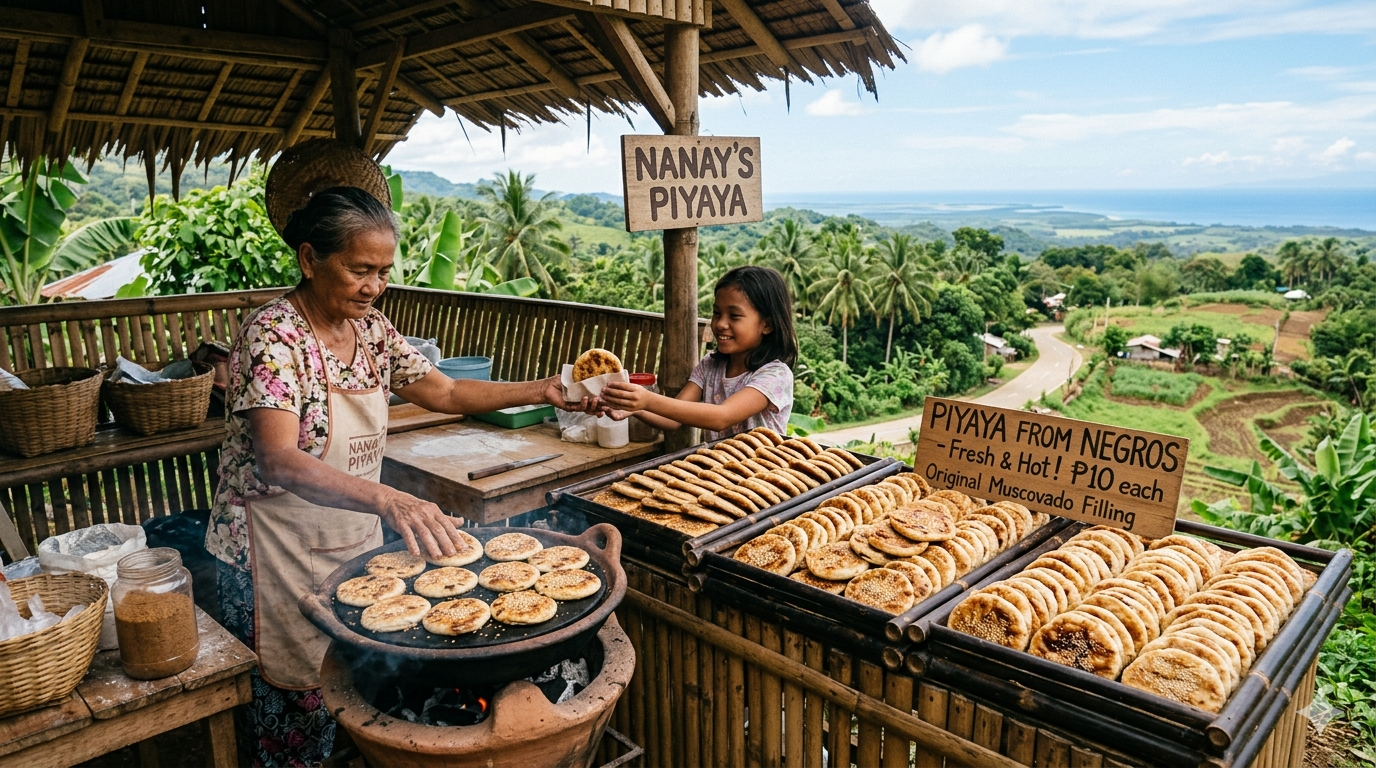
Piyaya is a Filipino flat pastry filled with muscovado sugar, often pan-grilled or baked. It is a traditional snack in Negros Occidental.
What are the main nutrients in piyaya?
Piyaya contains mostly carbohydrates, small amounts of fat, and minor protein, with trace minerals from flour and sugar.
Can piyaya be part of a balanced diet?
It can be included occasionally as part of a varied diet. Portion control and overall nutrient balance are important considerations.
Trusted Sources
- Department of Health (DOH Philippines) – Food Safety Guidelines
- Food and Drug Administration (FDA Philippines) – Labeling and Processing Standards
- Academic literature on traditional Filipino pastries and carbohydrate-based snacks
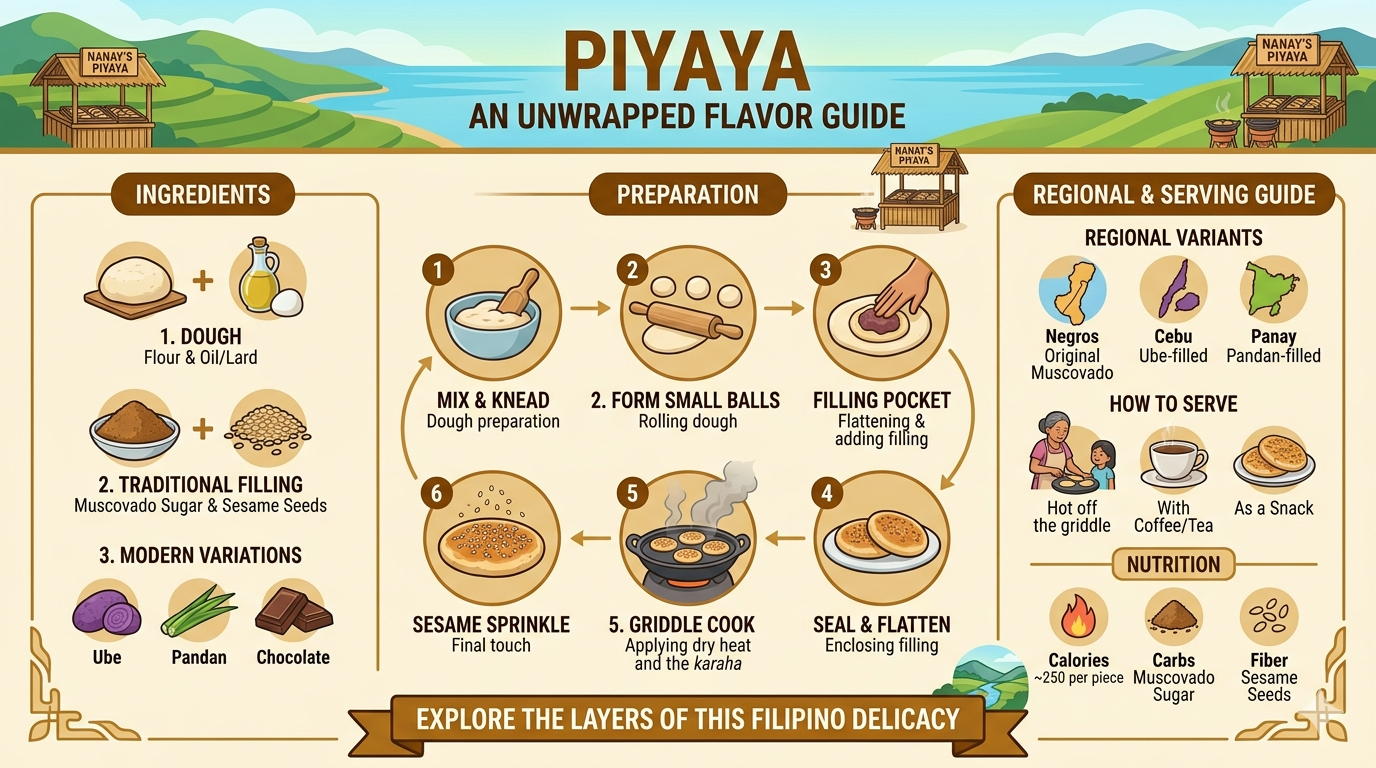
Diagram of ingredients and layered structure of a traditional piyaya pastry.
Disclaimer
This article is for general informational and educational purposes only. It does not constitute professional medical, nutrition, or dietary advice. References to foods like piyaya do not imply endorsement or guarantee of health outcomes. Readers are encouraged to consult licensed nutritionists, dietitians, or medical professionals for personalized guidance.