Exploring Pineapple Delicacies: Nutritional Insights and Educational Overview
A neutral guide to pineapple-based foods, nutrient content, and safe consumption practices.
Pineapple is a tropical fruit widely used in Filipino cuisine and desserts. This article provides an educational overview of pineapple-based delicacies, highlighting their nutritional composition, typical macronutrients and micronutrients, and safe dietary considerations. It also discusses how these foods fit into balanced meal planning without implying specific health outcomes. References are aligned with the Department of Health (DOH), Food and Drug Administration (FDA Philippines), and other official nutrition standards.
Nutritional Profile of Pineapple
Pineapple contains natural sugars, dietary fiber, vitamin C, manganese, and small amounts of B-vitamins. Its water content contributes to hydration, while antioxidants in the fruit support general nutrition. Pineapple is generally consumed fresh, canned, or incorporated into desserts and cooked dishes.
Common Pineapple-Based Delicacies in the Philippines
- Pineapple Upside-Down Cake – Typically made with pineapple slices, sugar, butter, and flour. Provides carbohydrates, small amounts of protein, and added sugars.
- Pineapple Tarts / Baked Pastries – Often include pineapple jam and dough. They are energy-dense due to sugar and fat content.
- Fresh Fruit Salads – Pineapple is combined with other fruits. Offers a balance of carbohydrates, fiber, and vitamin C.
- Pineapple-Infused Drinks / Smoothies – Contain fruit juice or puree. Nutrient content varies with added ingredients such as milk, yogurt, or sugar.
Hypothetical Nutrient Breakdown Example
A simple serving of fresh pineapple (1 cup, ~165 g) contains approximately:
- Calories: 82 kcal
- Carbohydrates: 22 g
- Sugars: 16 g (naturally occurring)
- Protein: 0.9 g
- Fat: 0.2 g
- Fiber: 2.3 g
- Vitamin C: 79 mg (88% of RDA for adults)
- Manganese: 1.5 mg (76% of RDA for adults)
This breakdown is illustrative only and does not imply specific health benefits or dietary outcomes.
Safe Consumption and Dietary Considerations
- Pineapple delicacies often contain added sugars or fats. Moderation is advisable as part of balanced meal planning.
- Consumers should review packaged ingredients and labels to verify sugar, fat, and preservative content in processed pineapple products.
- Individuals with specific dietary restrictions, such as diabetes or allergies, may consider portion control and ingredient composition.
Context
In nutrition science studies, fruit-based desserts provide energy primarily from carbohydrates and added sugars. Under consumer protection and labeling standards in the Philippines, processed pineapple products must display ingredients, nutritional content, and expiration dates per FDA regulations. Diet planning typically involves balancing fruit intake with other macronutrients and considering overall energy needs. Nutritional outcomes vary individually, and personalized guidance from licensed nutrition or medical professionals is recommended for dietary adjustments.
FAQs
What nutrients are in pineapple?
Pineapple contains carbohydrates, dietary fiber, vitamin C, manganese, and small amounts of B-vitamins.
Are pineapple-based desserts considered healthy?
These foods provide energy and nutrients but may include added sugars and fats. Nutritional content varies by recipe.
How can I include pineapple in balanced meal planning?
Pineapple can be part of meals or snacks alongside protein, healthy fats, and other fruits or vegetables for nutrient variety.
Trusted Sources
- Department of Health Philippines – Nutrition Facts and Dietary Guidelines
- FDA Philippines – Food Labeling Guidelines
- Food and Nutrition Research Journal, peer-reviewed studies on tropical fruits
- Academy of Nutrition and Dietetics – Fruit and Dietary Fiber Facts
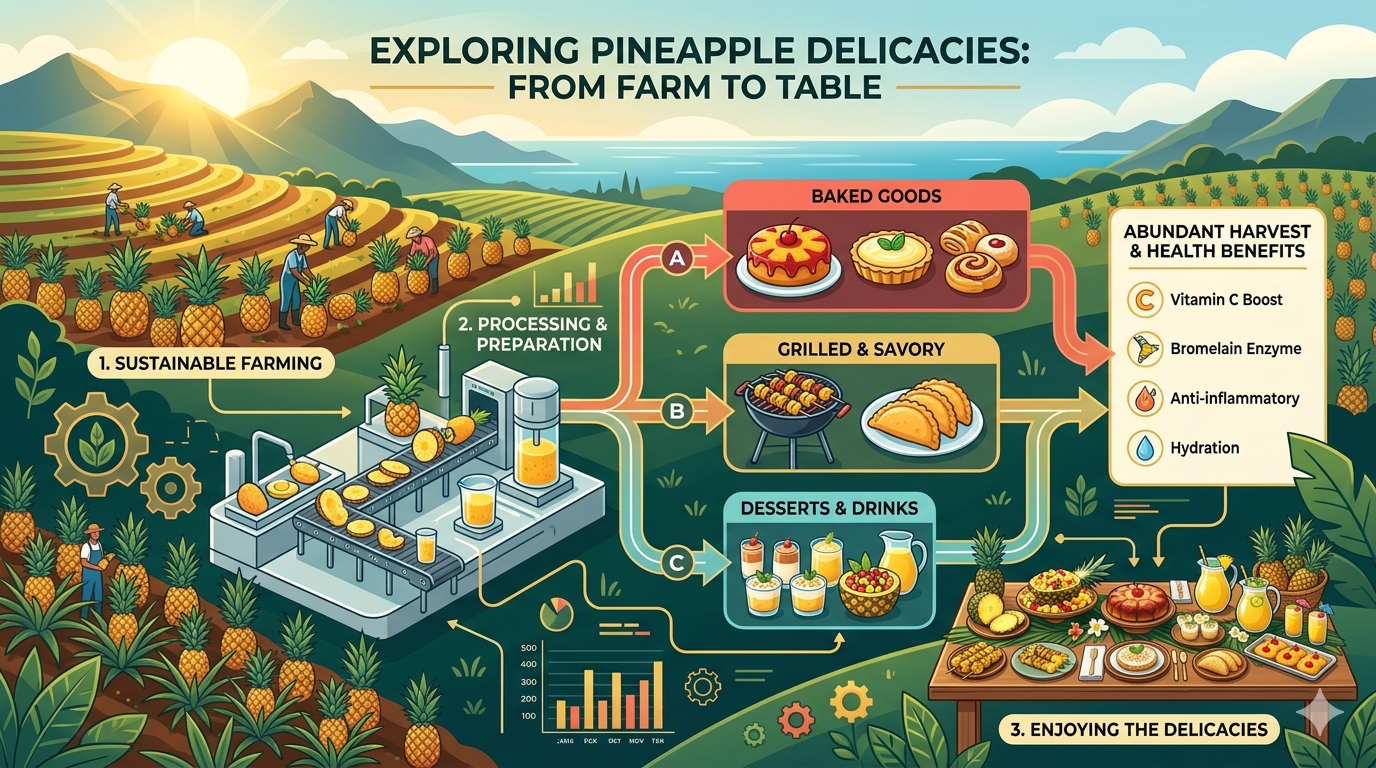
Infographic illustrating types of pineapple-based foods and typical ingredients
Disclaimer
This article is for general informational and educational purposes only. It does not constitute professional medical, nutrition, or dietary advice. References to pineapple foods or recipes do not imply endorsement or guarantee of health outcomes. Readers are encouraged to consult licensed nutritionists, dietitians, or medical professionals for personalized guidance.