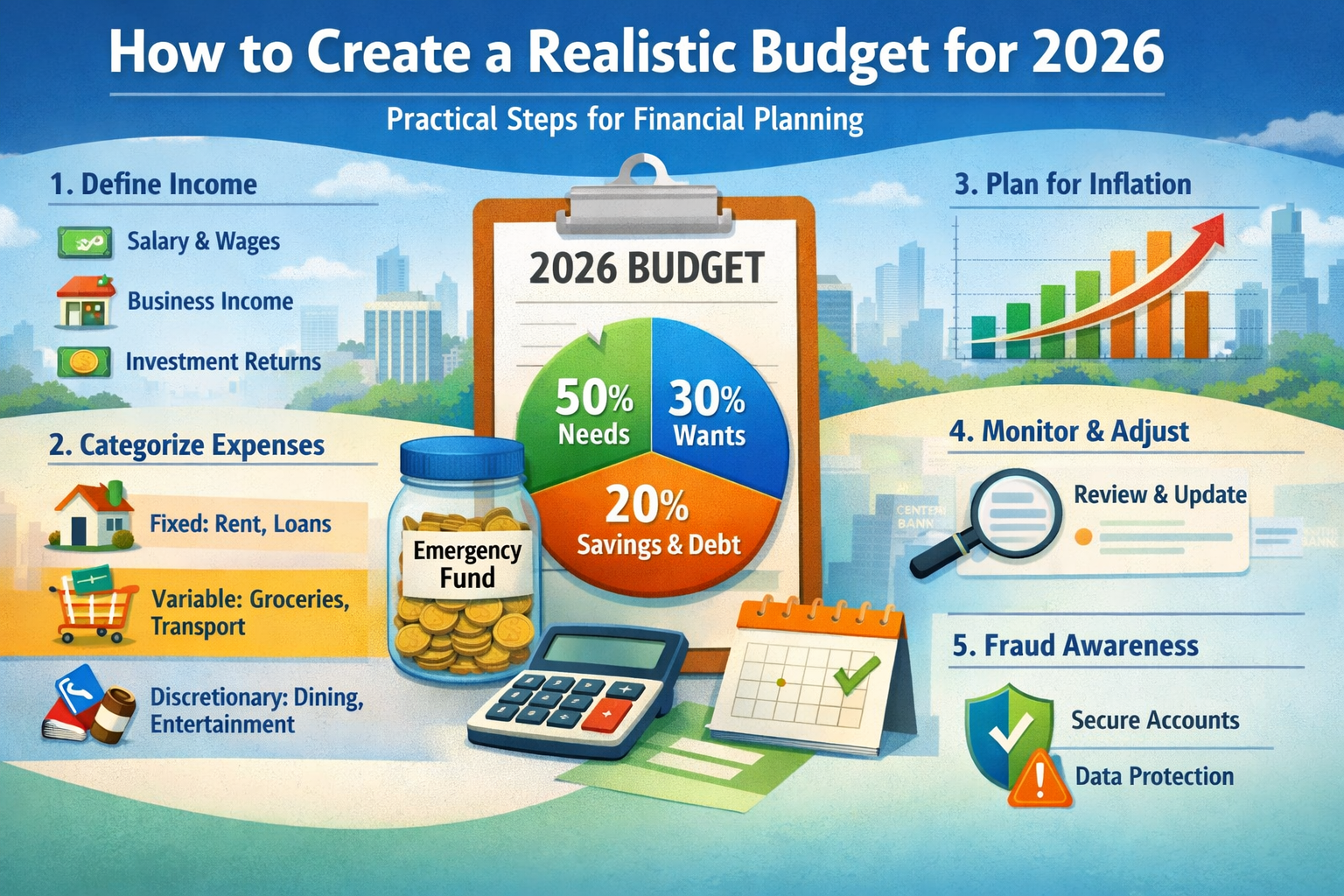
A neutral, informational guide to structuring personal budgets using standard financial planning principles
Creating a realistic budget involves documenting income, categorizing expenses, and monitoring spending patterns over a defined period. Under applicable central banking and consumer protection regulations, financial institutions are required to provide transparent account statements and fee disclosures, which can assist individuals in organizing accurate financial records. This article explains budgeting fundamentals, commonly used methods, and consumer awareness considerations for 2026.
1. Define Net Income
A realistic budget begins with calculating net income, which is income received after taxes and mandatory deductions. Sources may include:
-
Employment wages or salary
-
Business income
-
Government benefits (where applicable)
-
Investment income (variable and not guaranteed)
Using documented amounts from bank statements or payroll summaries can improve accuracy.
2. Categorize Expenses
Expenses are generally grouped into three categories:
Fixed Expenses
Costs that remain relatively stable each month:
-
Rent or mortgage payments
-
Insurance premiums
-
Loan repayments
-
Subscription services
Variable Expenses
Costs that fluctuate:
-
Utilities
-
Groceries
-
Transportation
-
Medical expenses
Discretionary Spending
Non-essential spending:
-
Dining out
-
Entertainment
-
Non-essential retail purchases
Clear categorization helps identify patterns and potential adjustments.
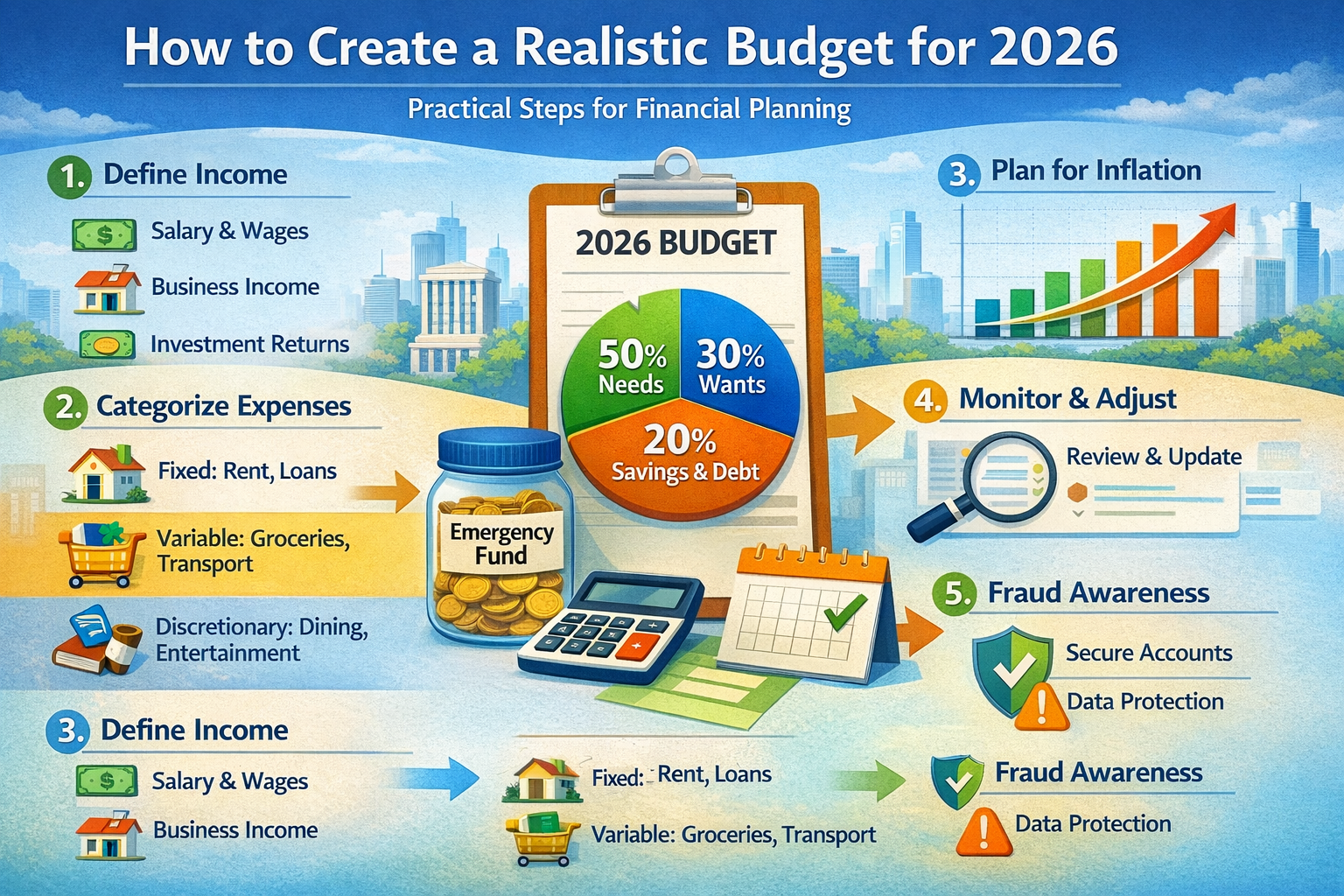
Structured visual summary of budgeting categories, allocation examples, and monitoring elements for 2026.
3. Apply a Budgeting Framework
Several structured budgeting approaches are commonly referenced in financial education materials.
Percentage-Based Model (Illustrative Example)
A commonly discussed structure allocates income across categories. For example (hypothetical illustration only):
-
50% essentials
-
30% discretionary
-
20% savings or debt repayment
This is not a requirement and may not fit all circumstances. Allocation percentages vary depending on income level, location, and household structure.
Zero-Based Budgeting
Every unit of income is assigned a category so that income minus expenses equals zero at the end of the planning period. This method emphasizes detailed tracking.
Envelope or Category Caps
Spending limits are assigned to categories. When the allocated amount is used, additional spending in that category stops until the next period.
4. Include Savings and Emergency Planning
Savings are typically structured for:
-
Emergency funds
-
Short-term goals
-
Long-term objectives
Interest earned on savings accounts depends on institutional policies and prevailing rates set within the broader monetary environment. Returns are variable and not guaranteed.
Under many national regulatory systems, deposits may be protected up to a statutory limit by deposit insurance schemes administered by central banks or designated authorities.
5. Account for Inflation and 2026 Economic Conditions
Budgeting for 2026 may require reviewing:
-
Current inflation rates
-
Changes in utility costs
-
Adjustments to tax policies
-
Interest rate environments
Central banks regularly publish monetary policy updates that may influence borrowing costs and savings yields.
6. Monitor and Adjust Periodically
Budgets are operational tools rather than fixed contracts. Monthly or quarterly review may help identify:
-
Overspending trends
-
Irregular expenses
-
Changes in income
-
Fee increases on financial accounts
Many digital banking systems provide transaction tracking tools to support expense monitoring.
7. Consumer Protection and Fraud Awareness
When using digital tools or financial apps:
-
Verify that institutions are licensed by appropriate regulatory authorities
-
Avoid sharing personal identification details through unsecured channels
-
Review privacy policies and data protection disclosures
Applicable consumer protection regulations and data protection frameworks typically require transparent disclosure of fees and secure handling of personal information.
FAQ
What is an emergency fund?
An emergency fund is a reserve of money set aside for unexpected expenses such as medical costs or urgent repairs. The size varies by household and financial obligations.
How often should a budget be reviewed?
Review frequency varies. Many financial education sources suggest monthly or quarterly review to reflect changes in income or expenses.
Are budgeting apps regulated?
Regulation depends on the jurisdiction and whether the provider qualifies as a financial institution. Data protection laws and consumer protection rules may apply.
Trusted Sources for Further Reference
-
National central banks
-
Government consumer protection agencies
-
Financial literacy divisions of monetary authorities
-
Accredited academic institutions offering personal finance education
Disclaimer
This article is for general informational and educational purposes only. It does not constitute financial, banking, legal, or investment advice. References to institutions, account types, or financial structures do not imply endorsement or guarantee results. Readers should consult official regulatory sources and licensed professionals for decisions specific to their jurisdiction.
#FinancialLiteracy, #BudgetPlanning2026, #MoneyManagement, #PersonalFinanceEducation, #ExpenseTracking, #IncomeAllocation, #SavingsStructure, #HouseholdPlanning, #EconomicAwareness, #FinanceConcepts
Explore the full article to review the budgeting structures, allocation models, and financial planning concepts outlined for 2026.