
Understanding Halo-halo: Ingredients and Nutritional Context
A neutral overview of a traditional Philippine dessert and its typical components.
Halo-halo is a well-known cold dessert commonly found in the Philippines. It typically combines shaved ice, milk, sweetened fruits, and various toppings. Articles about foods like halo-halo often focus on cultural significance, ingredient composition, and nutritional context rather than making health or diet claims. Philippine food safety and labeling practices are generally overseen by institutions such as the Department of Health (DOH) and the Food and Drug Administration (FDA Philippines).
What Halo-halo Typically Contains
Halo-halo is assembled by layering multiple ingredients in a tall glass or bowl and mixing them before eating. The name “halo-halo” literally means “mix-mix” in Filipino, referring to this method of combining ingredients.
Common components may include:
- Shaved ice – forms the base of the dessert
- Evaporated or fresh milk – poured over the ice
- Sweetened beans such as red mung beans
- Sweetened fruits like banana or jackfruit
- Jellies or gelatin cubes
- Sweetened coconut strips (macapuno)
- Leche flan or custard topping
- Ube (purple yam) halaya
- Ice cream (sometimes included)
The exact combination varies by region, restaurant, or household preparation.
Nutritional Components
Because halo-halo contains multiple ingredients, its nutritional profile varies depending on the portion size and ingredients used. In general, desserts of this type may include:
Carbohydrates
- Present in sweetened fruits, syrups, beans, and ice cream
- Provide dietary energy
Fats
- May come from milk, custard toppings, or ice cream
Protein
- Small amounts may come from dairy components and beans
Micronutrients
- Fruits and beans may contain vitamins and minerals such as potassium, folate, or vitamin C
Ingredient quantities determine the overall nutrient composition.
Portion and Preparation Variations
Halo-halo preparation is flexible. Some establishments emphasize fruit ingredients, while others include more dairy or custard-based toppings.
Variations may involve:
- Different fruit combinations
- Alternative milk options
- Reduced or increased sweeteners
- Different toppings such as crushed nuts or rice crisps
Because recipes vary widely, nutritional values cannot be generalized for all halo-halo servings.
Desserts Within Balanced Diets
In nutrition science discussions, desserts are generally categorized as energy-dense foods due to added sugars or fats in many recipes. Balanced dietary patterns typically consider:
- overall food variety
- portion size awareness
- combination with nutrient-dense foods such as vegetables, fruits, grains, and protein sources
Dietary needs and preferences vary between individuals. Licensed nutrition professionals may provide personalized dietary guidance when necessary.
FAQs
What does “halo-halo” mean?
The Filipino term “halo-halo” translates to “mix-mix.” The name refers to the process of combining the layered ingredients before eating the dessert.
Is halo-halo always prepared the same way?
No. Ingredient combinations vary across regions, restaurants, and home recipes. Some versions emphasize fruit, while others include additional dairy or dessert toppings.
Does halo-halo contain multiple food groups?
Many versions include fruits, dairy ingredients, and sweetened beans. The nutrient profile depends on ingredient choice and portion size.
Trusted Sources
- Department of Health (DOH) Philippines – nutrition and food safety advisories
- Food and Drug Administration Philippines – food labeling and safety guidelines
- Peer-reviewed nutrition and food science journals discussing dietary composition and food groups
- Academic dietetics references on balanced diet principles
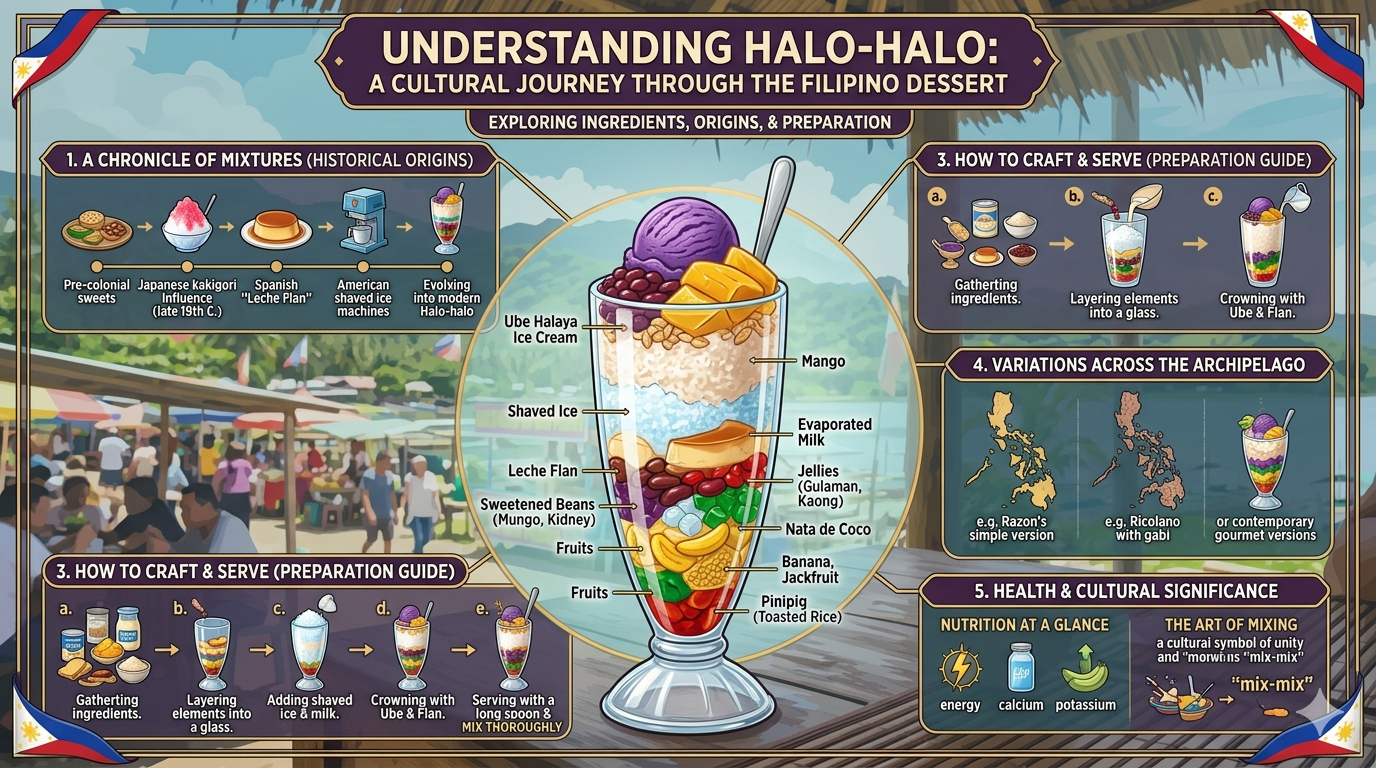
Infographic illustrating common ingredient layers used in halo-halo preparation.
Disclaimer
This article is for general informational and educational purposes only. It does not constitute professional medical, nutrition, or dietary advice. References to diets, foods, or supplements do not imply endorsement or guarantee of health outcomes. Readers are encouraged to consult licensed nutritionists, dietitians, or medical professionals for personalized guidance.