Understanding Chicken Inasal: An Educational Overview of a Traditional Filipino Grilled Dish
A neutral look at ingredients, cooking methods, and nutritional considerations related to a well-known Filipino grilled chicken preparation.
Chicken Inasal is a grilled chicken dish commonly associated with the Philippines, particularly the city of Bacolod City. The dish is recognized for its marinade, which typically includes vinegar, citrus, garlic, and annatto oil. This article provides an educational overview of the dish’s ingredients, preparation style, and general nutrition considerations, within the context of food awareness and consumer safety standards recognized by agencies such as the Department of Health and Food and Drug Administration Philippines.
What Is Chicken Inasal?
Chicken Inasal is a grilled chicken preparation traditionally marinated before cooking over charcoal. The marinade often includes ingredients such as:
- Vinegar or calamansi juice
- Garlic and ginger
- Lemongrass (in some recipes)
- Soy sauce or salt
- Annatto oil for color and flavor
After marination, the chicken is grilled and sometimes basted during cooking. The dish may be served with rice and condiments such as vinegar mixtures or citrus-based sauces.
This preparation method highlights several culinary techniques commonly used in Filipino cooking, including marination, charcoal grilling, and flavor layering.
Ingredients and Typical Food Components
The ingredients used in Chicken Inasal contribute different nutritional components. These components vary depending on portion size, preparation style, and additional side dishes.
Chicken
Chicken provides several macronutrients and micronutrients.
Typical nutritional components may include:
- Protein – contributes to the body’s structural and functional processes
- Fat – varies depending on the cut and whether skin is included
- B vitamins – commonly found in poultry
- Minerals such as phosphorus and selenium
The exact nutrient content depends on factors such as the chicken cut (breast, thigh, or leg) and cooking method.
Marinade Ingredients
The marinade used for Chicken Inasal contributes flavor and acidity.
Examples include:
- Vinegar or citrus juice – commonly used for acidity and flavor balance
- Garlic and ginger – widely used culinary ingredients in many cuisines
- Annatto oil – often used for color and mild flavor
These ingredients typically contribute small amounts of micronutrients or plant compounds depending on quantity used.
Cooking Method: Grilling
Grilling is a cooking technique that uses direct heat from charcoal or other sources.
Characteristics of grilled dishes include:
- exposure to high heat
- surface browning of food
- potential flavor changes caused by caramelization and smoke
Cooking methods can influence the final fat content and texture of the dish.
Typical Serving Context in Filipino Meals
Chicken Inasal is commonly served in meal settings that may include:
- steamed rice
- vinegar or citrus dipping sauces
- grilled side dishes
- vegetables or salads
In meal planning discussions, dishes like Chicken Inasal are often considered alongside other food groups to illustrate how meals can include:
- protein-rich foods
- carbohydrate sources
- vegetables or fruits
- hydration from water or other beverages
Meal composition varies widely based on individual preferences and dietary needs.
Consumer Awareness: Food Preparation and Safety
Food preparation practices play an important role in safe consumption. Under general food safety guidance associated with agencies such as the Food and Drug Administration Philippines, consumers and food establishments may consider the following principles:
- ensuring poultry is cooked thoroughly
- maintaining clean cooking surfaces and utensils
- storing raw poultry separately from ready-to-eat foods
- observing proper refrigeration practices before cooking
These practices are commonly included in public health guidance for handling poultry products.
Cultural and Culinary Background
Chicken Inasal is widely associated with the culinary traditions of Western Visayas. Food historians and culinary sources often reference the dish as a regional specialty originating from Bacolod City.
From a nutrition education perspective, traditional dishes like Chicken Inasal can be examined as examples of how:
- local ingredients influence meal preparation
- cultural cooking techniques shape flavor profiles
- dietary patterns vary across regions
In nutrition science discussions, meal planning typically involves balancing different food groups and portion sizes. Individual dietary needs vary, and dietary planning is often guided by licensed nutrition professionals.
FAQs
What is Chicken Inasal?
Chicken Inasal is a Filipino grilled chicken dish that is typically marinated in vinegar, citrus, garlic, and other seasonings before being cooked over charcoal. It is widely associated with culinary traditions from Western Visayas.
What ingredients are commonly used in Chicken Inasal?
Common ingredients include chicken, vinegar or calamansi juice, garlic, ginger, and annatto oil. Recipes vary depending on household or restaurant preparation styles.
How does grilling affect food preparation?
Grilling exposes food to direct heat, which can create browning and smoke-related flavor changes. The final nutritional profile may vary depending on ingredients, portion sizes, and cooking techniques.
Trusted Sources
- Department of Health — Public health and nutrition advisories
- Food and Drug Administration Philippines — Food safety and labeling guidance
- Food and Nutrition Research Institute — Philippine Food Composition Tables
- Peer-reviewed journals in food science and nutrition
- Academic references on Filipino culinary traditions
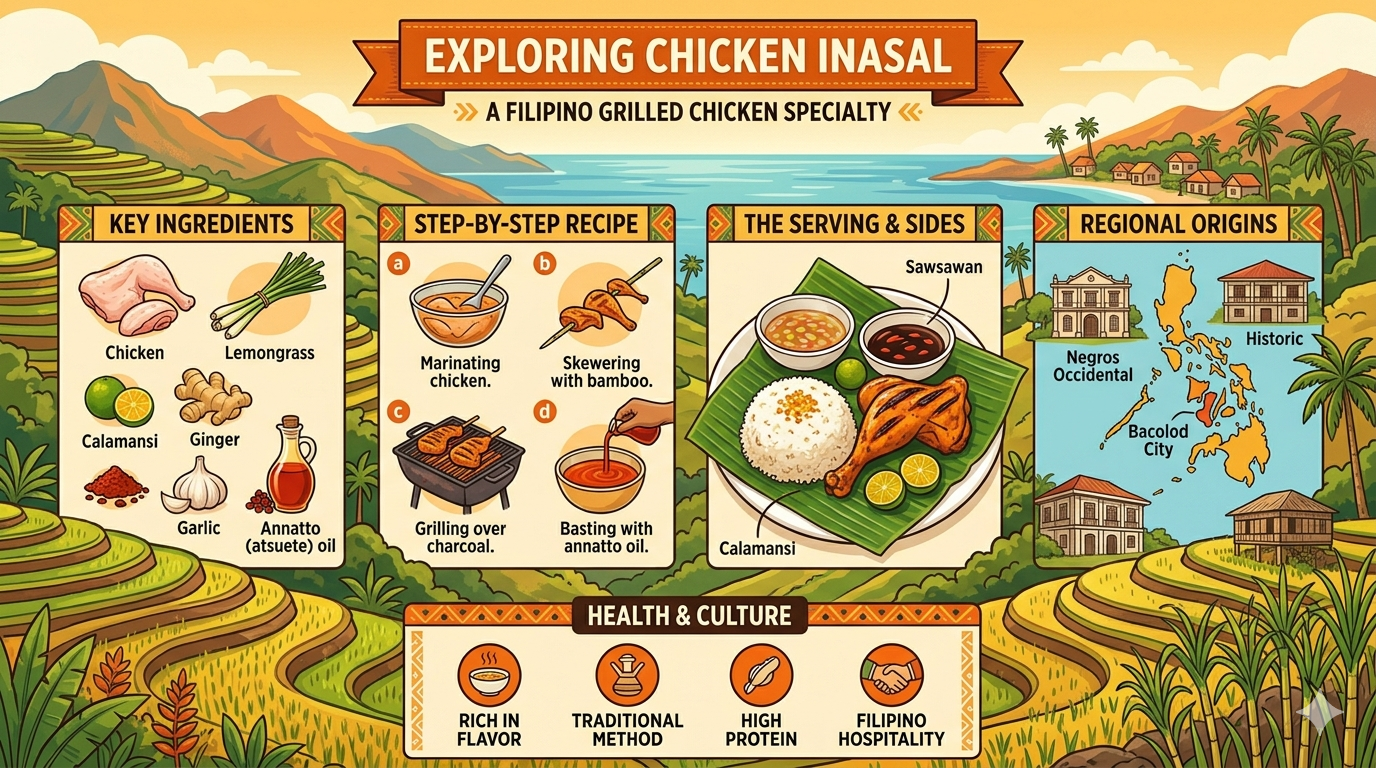
Illustrated overview of ingredients and preparation elements associated with Chicken Inasal.
Disclaimer
This article is for general informational and educational purposes only. It does not constitute professional medical, nutrition, or dietary advice. References to diets, foods, or supplements do not imply endorsement or guarantee of health outcomes. Readers are encouraged to consult licensed nutritionists, dietitians, or medical professionals for personalized guidance.