Understanding Chicken Inasal: A Regional Filipino Grilled Chicken Dish
A neutral overview of its culinary background, ingredients, and preparation methods.
Chicken Inasal is a grilled chicken dish associated with the culinary traditions of the Western Visayas region of the Philippines, particularly the city of Bacolod in Negros Occidental. The dish is commonly recognized for its marinade made with vinegar, citrus, garlic, and annatto oil, which contributes to its distinctive color and aroma. This article provides an educational overview of the dish’s culinary background, ingredients, and typical preparation methods within the context of Filipino food culture.
Culinary Background
Chicken Inasal developed as a regional grilled chicken preparation that reflects common cooking practices in many parts of the Philippines, including charcoal grilling and the use of sour and savory marinades. The term inasal is derived from a Hiligaynon word that refers to meat grilled over charcoal.
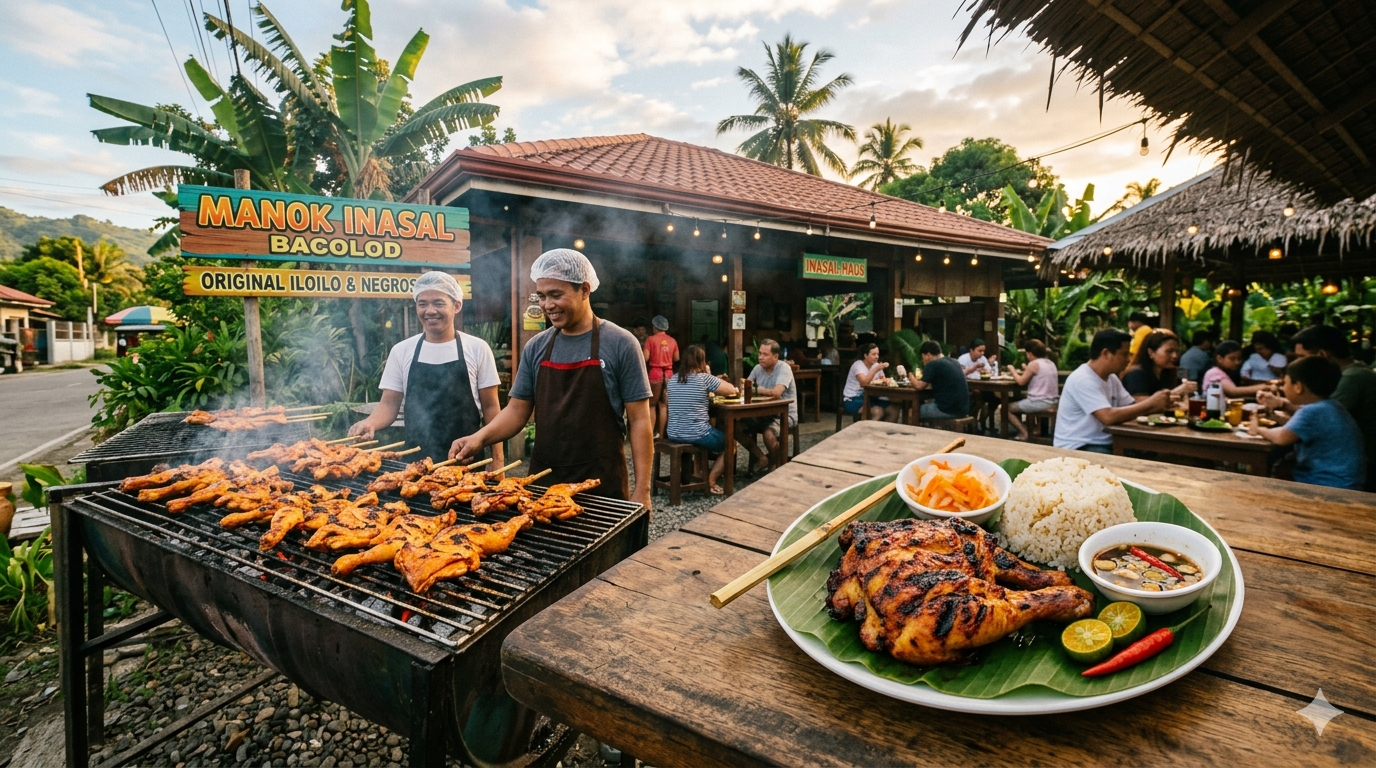
Restaurants and roadside eateries in and around Bacolod helped popularize the dish across the country. Over time, it became widely served in different regions, including urban areas such as Manila, where variations may appear in restaurants and household kitchens.
Typical Ingredients
Traditional preparations of Chicken Inasal commonly include:
- Chicken pieces (often leg quarters or thighs)
- Vinegar for acidity
- Calamansi or citrus juice
- Garlic and ginger
- Lemongrass
- Salt or soy-based seasoning
- Annatto (atsuete) oil for color and aroma
These ingredients are usually combined into a marinade that coats the chicken before grilling.
Preparation Method
Preparation methods can vary between households and restaurants, but a typical process may include the following steps:
- Marination:
Chicken pieces are soaked in a mixture of vinegar, citrus juice, garlic, and other seasonings for several hours. - Grilling:
The chicken is grilled over charcoal, which contributes to a smoky aroma. - Basting:
During grilling, the chicken may be brushed with annatto oil or marinade to maintain moisture and color. - Serving:
The dish is commonly served with rice and condiments such as citrus wedges or vinegar-based dipping sauces.
Nutritional Context
Chicken-based dishes are generally considered a source of dietary protein. The overall nutritional profile of Chicken Inasal depends on several factors, including:
- portion size
- marinade ingredients
- cooking method
- accompaniments such as rice or sauces
Balanced meal planning often considers a variety of food groups, including protein sources, vegetables, grains, and adequate hydration.
Filipino Food Culture and Consumer Awareness
In Filipino cuisine, grilled dishes such as Chicken Inasal illustrate regional diversity in flavoring techniques and cooking styles. Food preparation methods may differ across households, restaurants, and regions.
Under food safety and labeling frameworks in the Philippines—administered by agencies such as the Department of Health and the Food and Drug Administration Philippines—commercial food establishments are expected to follow hygiene and food handling standards designed to protect consumers.
Dietary preferences and nutritional needs can vary among individuals. Nutrition planning typically considers overall dietary balance rather than relying on any single dish.
FAQs
What is Chicken Inasal?
Chicken Inasal is a Filipino grilled chicken dish associated with Bacolod and the Western Visayas region. It is typically marinated with vinegar, citrus, garlic, and spices before being grilled over charcoal.
What gives Chicken Inasal its yellow color?
The yellow-orange color commonly comes from annatto oil (atsuete), which is used during marination or basting.
How is Chicken Inasal usually served?
It is often served with rice and condiments such as citrus wedges or vinegar-based dipping sauces. Serving styles can vary between restaurants and households.
Trusted Sources
- Department of Health Philippines — Food and nutrition advisories
- Food and Drug Administration Philippines — Food safety and labeling guidance
- Academic references in food science and Southeast Asian culinary studies
- Philippine culinary heritage publications
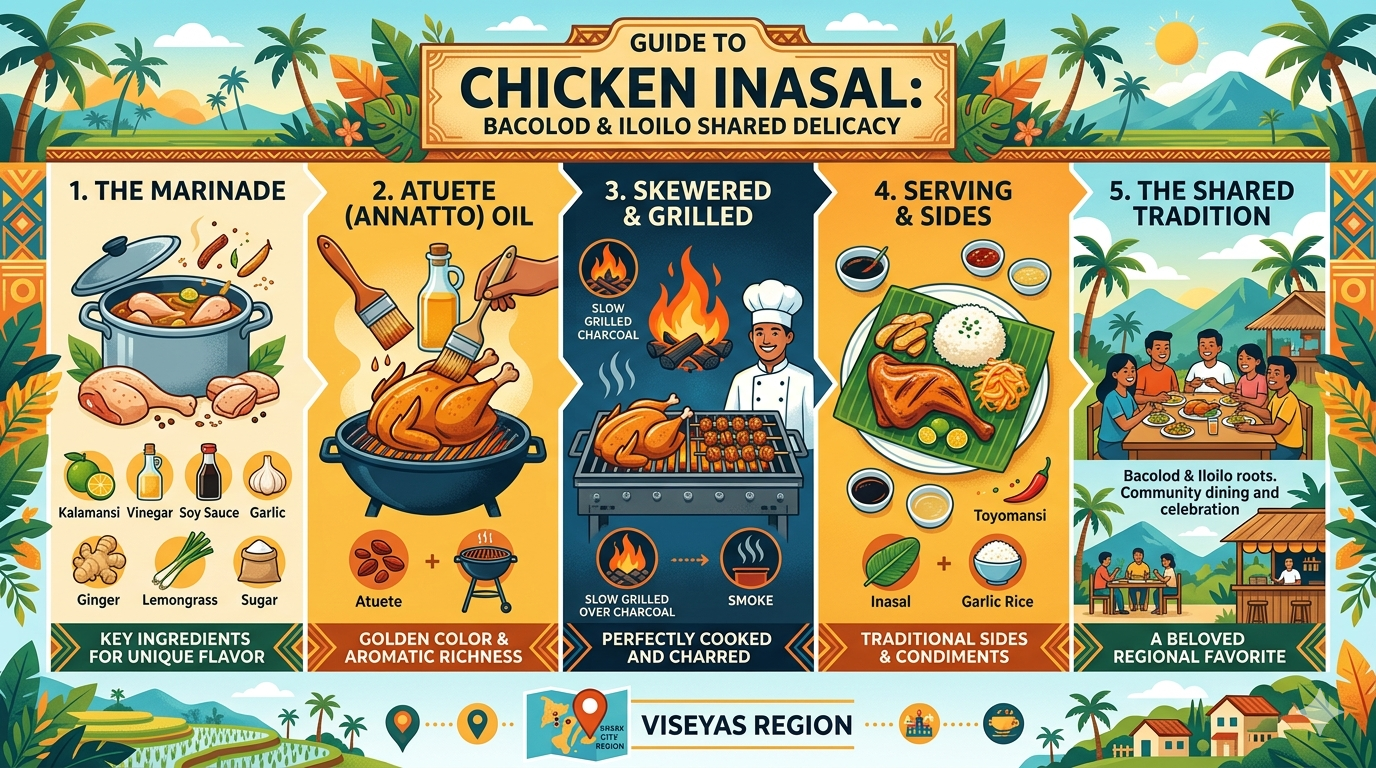
Illustrated overview of ingredients and preparation stages associated with Chicken Inasal.
Disclaimer
This article is for general informational and educational purposes only. It does not constitute professional medical, nutrition, or dietary advice. References to diets, foods, or supplements do not imply endorsement or guarantee of health outcomes. Readers are encouraged to consult licensed nutritionists, dietitians, or medical professionals for personalized guidance.