Budin (Cassava Cake)
A Neutral Guide to Ingredients, Nutrient Content, and Preparation Practices
Budin, commonly known as cassava cake, is a traditional Filipino food made primarily from grated cassava root. It is often prepared for gatherings and everyday meals. This article provides an educational overview of its ingredients, general nutritional components, and food safety considerations, in line with guidance from the Department of Health and the Food and Drug Administration.
What Is Budin (Cassava Cake)?
Budin is a baked or steamed dish made from cassava (kamoteng kahoy), a starchy root crop widely consumed in tropical regions. It is typically combined with ingredients such as:
- Coconut milk
- Sugar
- Eggs
- Butter or margarine
- Condensed or evaporated milk (in some variations)
Preparation methods and ingredients may vary by region and household.
Nutritional Components
The nutritional profile of budin depends on the specific ingredients used and portion size. Common components include:
Carbohydrates
Cassava is primarily composed of carbohydrates, which provide energy. Added sugar increases total carbohydrate content.
Fats
Coconut milk and butter contribute dietary fats. These may include saturated fats, depending on the ingredient source.
Protein
Eggs and milk products provide small to moderate amounts of protein.
Micronutrients
Cassava contains small amounts of vitamins and minerals such as vitamin C and potassium. Coconut milk and eggs may also contribute micronutrients.
Food Groups Representation
Budin can be categorized as:
- Energy-dense food due to carbohydrate and fat content
- A mixed dish containing elements from root crops, fats, and sometimes dairy and protein sources
It is generally not considered a complete meal but may be included as part of a varied diet.
Preparation and Food Safety Considerations
Cassava requires proper preparation before consumption:
- Raw cassava contains naturally occurring compounds that should be reduced through peeling, grating, soaking, and cooking
- Thorough cooking is necessary for safe consumption
Under Philippine food safety standards, proper handling and cooking practices are important to reduce potential risks associated with improperly prepared cassava.
Context
Budin is commonly consumed in small portions:
- As a snack or dessert
- Occasionally as part of meals alongside other food groups
Portion sizes vary depending on individual dietary patterns and cultural practices.
Consumer Awareness
When purchasing commercially prepared cassava cake:
- Check the nutrition label if available
- Review the ingredient list for added sugars, fats, and additives
- Ensure the product complies with labeling standards under the Department of Trade and Industry and FDA Philippines
Traditional Foods and Dietary Balance
In nutrition science discussions, traditional foods like budin are often included as part of cultural dietary patterns. Balance and variety across different food groups are commonly emphasized rather than exclusion of specific foods.
Individual dietary needs differ, and food choices may vary based on personal, cultural, and nutritional considerations.
FAQs
What is cassava used in budin?
Cassava is a root crop that provides carbohydrates and is commonly grated and cooked as the base ingredient in cassava cake.
Is budin considered a main meal?
Budin is typically classified as a snack or dessert rather than a main meal due to its nutrient composition.
Why does cassava need proper preparation?
Cassava contains naturally occurring compounds that are reduced through proper peeling and cooking, making it safe for consumption.
Trusted Sources
- Department of Health — Food and nutrition guidance
- Food and Drug Administration — Food safety standards
- Food and Agriculture Organization — Root crop and cassava information
- Peer-reviewed food science and nutrition journals
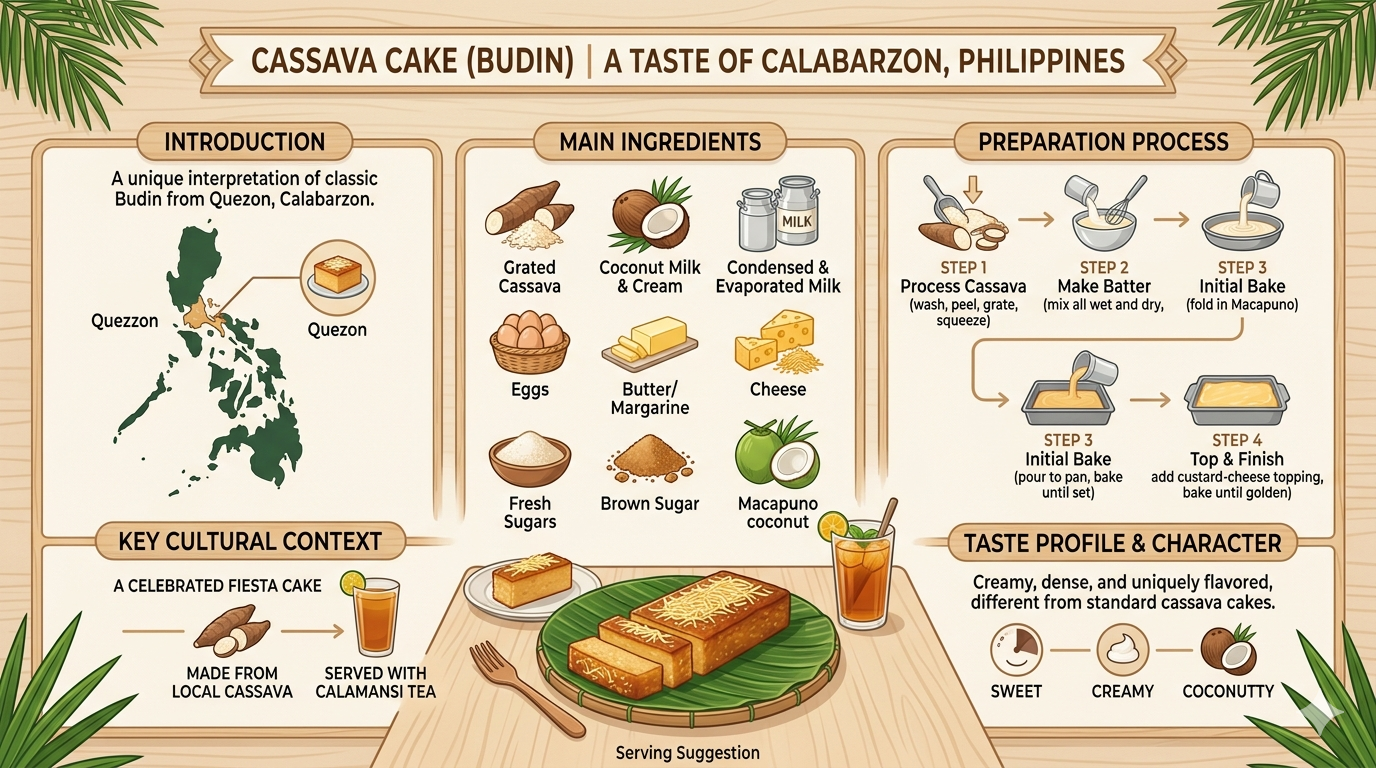
Ingredients commonly used in cassava cake displayed in a visual layout
Disclaimer
This article is for general informational and educational purposes only. It does not constitute professional medical, nutrition, or dietary advice. References to foods or ingredients do not imply endorsement or guarantee of health outcomes. Readers are encouraged to consult licensed nutritionists, dietitians, or medical professionals for personalized guidance.