
Understanding Oral Hygiene Practices During Warmer Months: An Educational Overview
General information about oral hygiene habits and environmental factors that may affect dental care routines.
Warmer weather can influence daily routines, including hydration, food choices, and outdoor activities. These changes may also affect oral hygiene practices. This article provides a neutral overview of common dental hygiene habits that people maintain during warmer months, along with general information about oral health structures and preventive care. Regulatory bodies such as the Department of Health and the Food and Drug Administration provide public guidance on consumer safety and health information, including dental care awareness.
Tooth and Oral Anatomy: Basic Overview
Human teeth and oral tissues perform several functions, including chewing food, supporting speech, and maintaining oral structure.
A typical tooth consists of several layers:
- Enamel – The outer mineralized surface that protects the tooth.
- Dentin – A layer beneath enamel that contains microscopic tubules.
- Pulp – The inner soft tissue that contains nerves and blood vessels.
- Cementum – A layer covering the root surface that helps anchor the tooth.
Other oral structures include the gums (gingiva), tongue, and salivary glands. Saliva helps moisten the mouth and assists with digestion.
Environmental and Routine Factors During Warmer Months
Changes in daily habits during warm seasons may influence oral hygiene routines. These factors vary among individuals and environments.
Examples include:
- Increased hydration: Higher temperatures may lead people to drink more fluids. Some beverages contain sugars or acids, which can interact with tooth surfaces.
- Dietary changes: Seasonal fruits and cold drinks may become more common in daily meals.
- Outdoor activities: Travel or outdoor events may change brushing schedules or access to oral hygiene tools.
These factors do not affect everyone in the same way, but they can influence how individuals manage daily oral care.
Common Oral Hygiene Practices
Dental health organizations generally describe oral hygiene routines as a combination of daily habits and periodic professional care.
Examples of commonly discussed practices include:
- Tooth brushing: Often performed using a soft-bristled toothbrush and toothpaste to remove food particles and plaque.
- Flossing or interdental cleaning: Tools designed to clean spaces between teeth where toothbrush bristles may not reach.
- Rinsing: Some people use mouth rinses as part of their hygiene routine.
- Professional dental cleaning: Dental professionals may perform procedures such as prophylaxis to remove hardened deposits.
These practices are widely referenced in educational materials from dental associations and health agencies.
Hypothetical Example
Consider a hypothetical situation in which an individual spends more time outdoors during warmer weather. Because of travel or changes in daily schedules, the person may carry portable oral hygiene items such as a travel toothbrush or floss. In this example, the adjustment reflects a routine change rather than a specific treatment or health outcome.
Context
In dental research and public health education, preventive care refers to practices that aim to maintain oral health and monitor potential issues. Preventive approaches often include routine hygiene habits, dental checkups, and awareness of factors that may influence oral conditions.
Consumer protection laws, such as the Consumer Act of the Philippines, also address the accuracy of health-related advertising and information presented to the public. These regulations aim to reduce misleading claims about health products or treatments.
FAQs
What is oral hygiene?
Oral hygiene refers to daily practices intended to maintain cleanliness of the teeth, gums, and mouth. These practices commonly include brushing, interdental cleaning, and routine monitoring of oral conditions.
What is dental prophylaxis?
Dental prophylaxis is a professional cleaning procedure performed by a licensed dental professional. It generally involves removing plaque, stains, and hardened deposits from tooth surfaces.
What tools are commonly used for oral hygiene?
Commonly referenced tools include toothbrushes, dental floss, interdental brushes, and mouth rinses. These items are designed to assist with cleaning teeth and maintaining oral hygiene routines.
Trusted Sources
- Department of Health — Public health advisories and oral health awareness materials
- Food and Drug Administration — Consumer safety guidance for health products
- World Health Organization — Oral health information and research publications
- FDI World Dental Federation — Global dental education resources
Disclaimer
This article is for general informational and educational purposes only. It does not constitute professional medical, dental, or consumer purchasing advice. References to procedures, products, or clinics do not imply endorsement or guarantee of results. Readers are encouraged to consult licensed dental professionals and verified resources for oral health decisions.
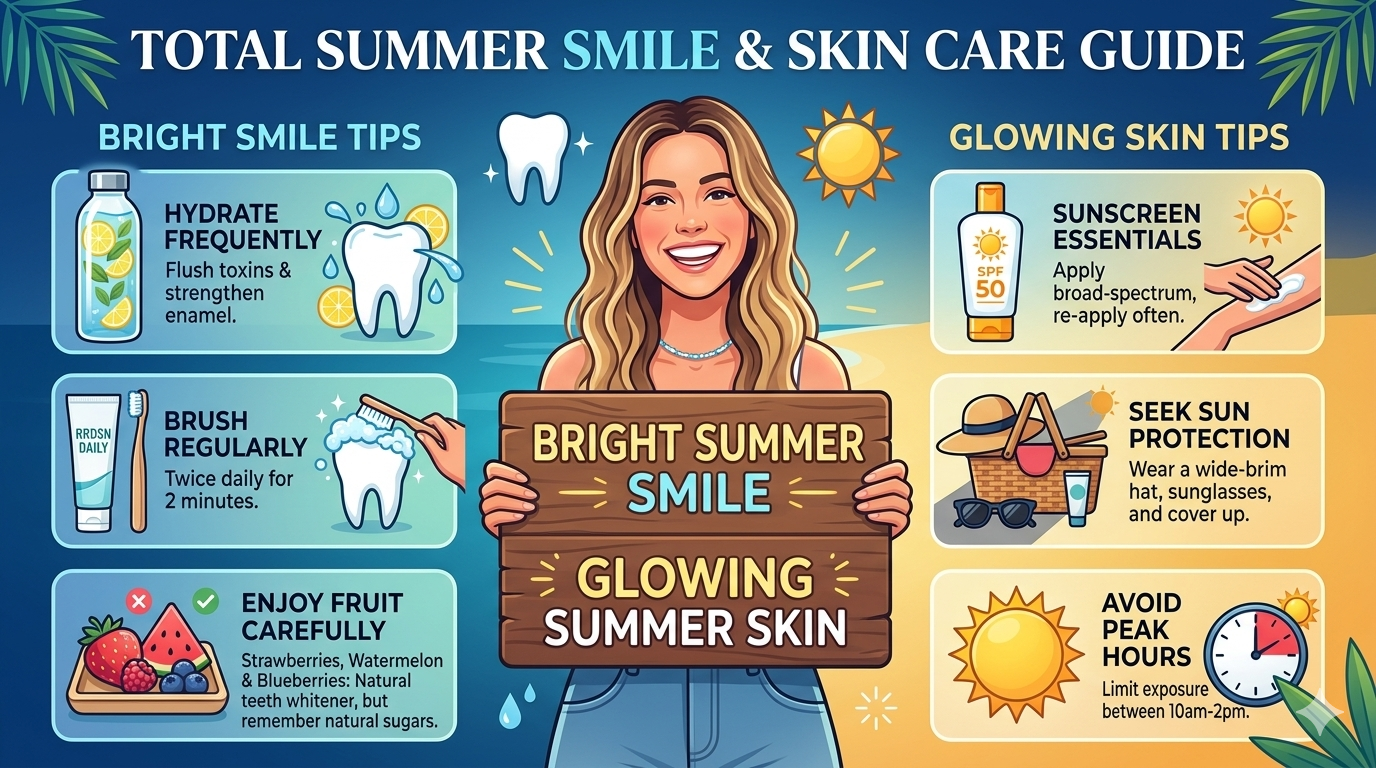
Visual layout presenting oral hygiene routines and seasonal lifestyle patterns during summer.