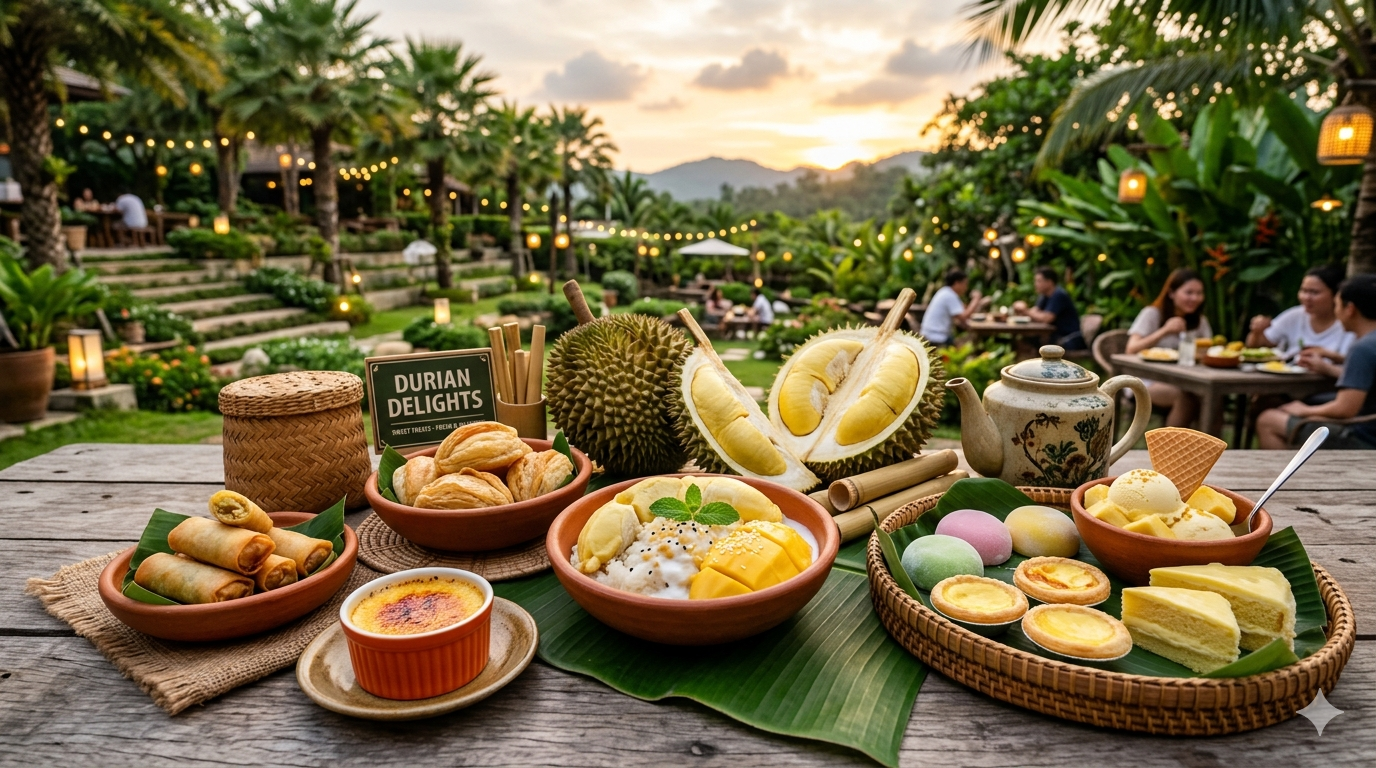
Exploring Durian Treats: Nutritional Overview and Considerations
A neutral guide to durian-based foods, nutrient content, and safe consumption.
Durian, often called the “king of fruits” in Southeast Asia, is known for its distinctive aroma and creamy texture. This article provides an educational overview of durian-based treats, their nutritional components, and considerations for balanced inclusion in diets. It aligns with Philippine food safety and labeling standards from the Department of Health (DOH) and Food and Drug Administration (FDA Philippines).
Nutritional Profile of Durian
Durian contains carbohydrates, dietary fiber, fats, and protein. It also provides vitamins, including vitamin C and some B-complex vitamins, as well as minerals such as potassium, magnesium, and iron. Nutrient content can vary depending on ripeness and preparation methods.
Common Durian Treats
- Durian Candy or Toffee – Often made with durian puree and sugar; these are higher in added sugars and calories compared to raw fruit.
- Durian Ice Cream – Combines durian pulp with dairy or non-dairy bases; nutrient content depends on added ingredients.
- Durian Pancakes or Pastries – Typically use flour, sugar, and durian filling; portions may influence calorie and carbohydrate intake.
- Durian Chips – Sliced durian, sometimes fried or baked; may be higher in fats depending on preparation.
Safe Consumption Considerations
- Portion awareness is key since durian-based treats often contain additional sugars or fats.
- Individuals with specific dietary restrictions, such as diabetes, may want to monitor intake due to naturally occurring and added sugars.
- Fresh durian should be handled and stored according to standard food safety practices to prevent spoilage.
Context
In nutrition science studies, durian is recognized as an energy-dense fruit with unique macronutrient composition. Under consumer protection and labeling standards, packaged durian treats must indicate ingredients, nutritional information, and potential allergens. Nutrient intake from durian treats varies individually based on age, activity level, and overall diet. Licensed nutrition or medical professionals provide individualized guidance if needed.
FAQs
What nutrients are found in durian?
Durian contains carbohydrates, fats, protein, dietary fiber, vitamin C, B vitamins, potassium, magnesium, and iron. Nutrient amounts vary by ripeness and preparation.
Are durian treats high in calories?
Many durian-based candies, pastries, and ice creams include added sugars or fats, making them higher in calories than raw durian.
How should durian be stored?
Fresh durian should be stored in cool, dry conditions. Packaged treats should follow manufacturer storage instructions to maintain safety and freshness.
Trusted Sources
- Department of Health (DOH) Philippines — Food Safety Advisories
- Food and Drug Administration (FDA Philippines) — Labeling Guidelines
- Peer-reviewed journals on tropical fruit nutrition and dietary composition
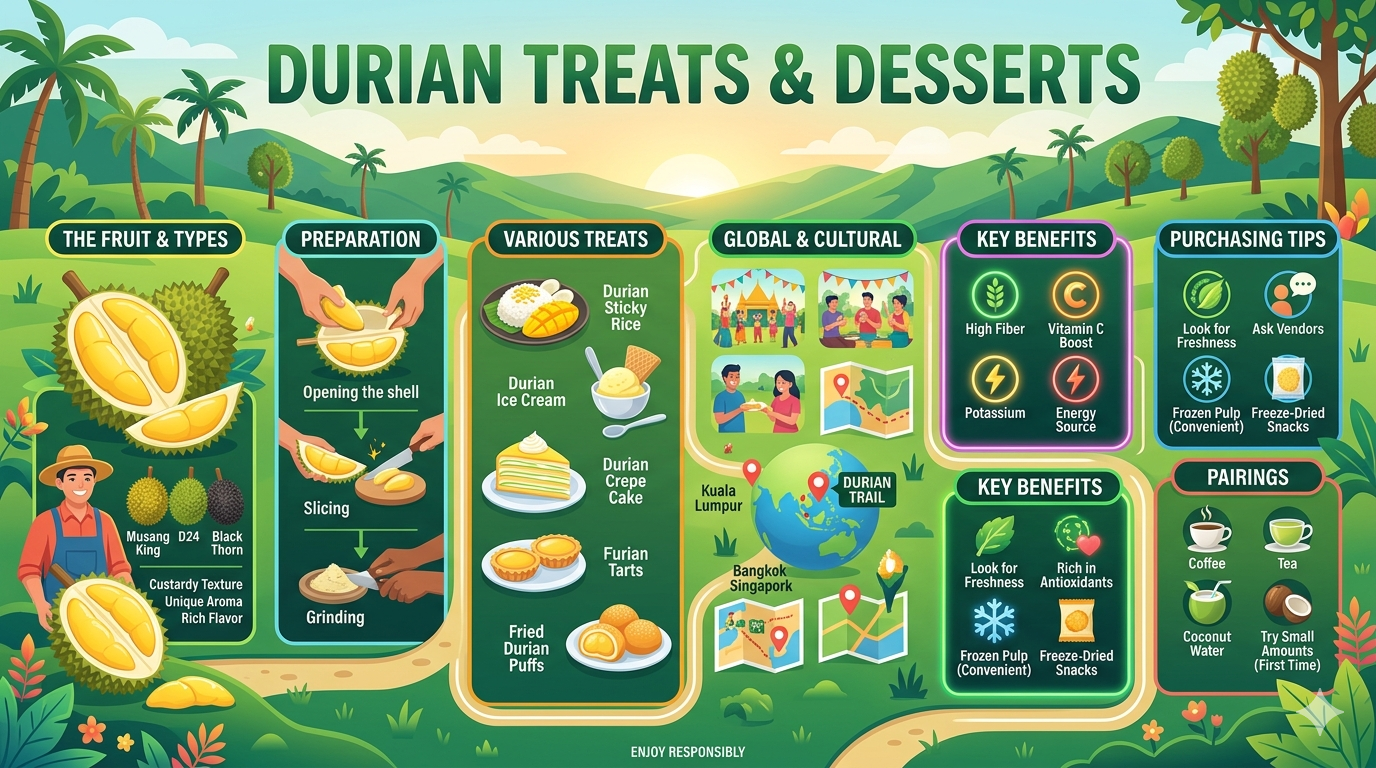
Illustration showing nutrient composition of durian snacks and desserts.
Disclaimer
This article is for general informational and educational purposes only. It does not constitute professional medical, nutrition, or dietary advice. References to durian, foods, or treats do not imply endorsement or guarantee of health outcomes. Readers are encouraged to consult licensed nutritionists, dietitians, or medical professionals for personalized guidance.