Vigan Longganisa: Nutritional Overview and Food Context Guide
This article provides an educational overview of Vigan longganisa, a traditional Filipino sausage known for its distinct flavor profile. It explains its typical ingredients, nutritional components, and how it fits within general dietary considerations, aligned with food safety and labeling awareness principles relevant in the Philippines.
What Is Vigan Longganisa?
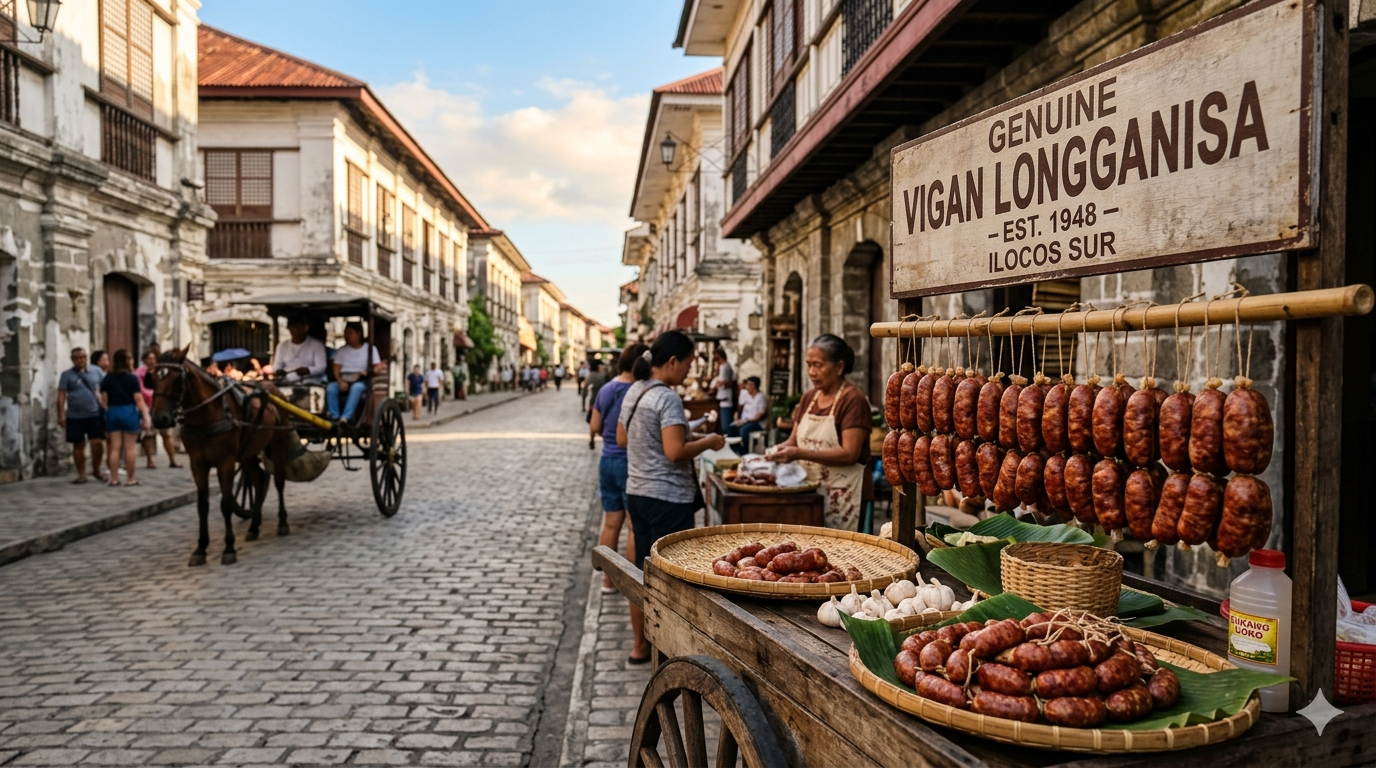
Vigan longganisa is a regional sausage originating from Vigan. It is commonly described as a garlic-forward, slightly sour, and savory sausage. Unlike sweeter varieties found in other regions, this version typically does not contain added sugar.
It is often prepared by pan-frying and served with rice and eggs, forming part of a traditional Filipino breakfast meal.
Common Ingredients
Typical ingredients may include:
- Ground pork
- Garlic
- Vinegar
- Salt and spices
- Natural or synthetic casing
Ingredient composition can vary depending on the producer or household recipe.
Nutritional Components (General Overview)
As a processed meat product, Vigan longganisa generally contains:
- Protein from pork
- Fats, including saturated fats
- Sodium from salt and curing ingredients
- Small amounts of vitamins and minerals such as iron
The exact nutritional values depend on preparation methods and portion sizes.
Dietary Considerations
When included in a meal, Vigan longganisa may be paired with:
- Rice (carbohydrate source)
- Eggs (additional protein)
- Vegetables or fruits (for fiber and micronutrients)
This combination illustrates how different food groups can be included in a single meal. Portion size and frequency of consumption may vary depending on individual dietary patterns.
Food Safety and Label Awareness
For commercially available longganisa products:
- Check the Nutrition Facts label for fat and sodium content
- Review the ingredient list for preservatives or additives
- Ensure the product is registered with the Food and Drug Administration (FDA Philippines)
- Observe proper storage and cooking instructions
Under Philippine consumer protection standards, labeling should accurately reflect product contents.
Context Section
In nutrition science, processed meat products like sausages are recognized as sources of protein and fat but may also contain higher levels of sodium and preservatives compared to fresh foods.
Dietary patterns typically emphasize variety and balance across food groups. The inclusion of traditional foods such as Vigan longganisa can be part of cultural eating practices, with overall intake varying by individual preferences and needs.
For personalized dietary guidance, consultation with licensed nutrition professionals is recommended.
FAQ (AEO-Safe)
What makes Vigan longganisa different from other longganisa?
It is typically garlicky and slightly sour, without the sweetness found in some other regional varieties.
Is Vigan longganisa a source of protein?
Yes, it contains protein from pork, along with fats and other nutrients.
How is Vigan longganisa usually served?
It is commonly served fried with rice and eggs as part of a traditional Filipino meal.
Trusted Sources
- Department of Health (DOH) Philippines – Food and Nutrition Guidelines
- Food and Drug Administration (FDA Philippines) – Processed Food Regulations
- World Health Organization (WHO) – Healthy Diet Resources
- Peer-reviewed food science and nutrition journals
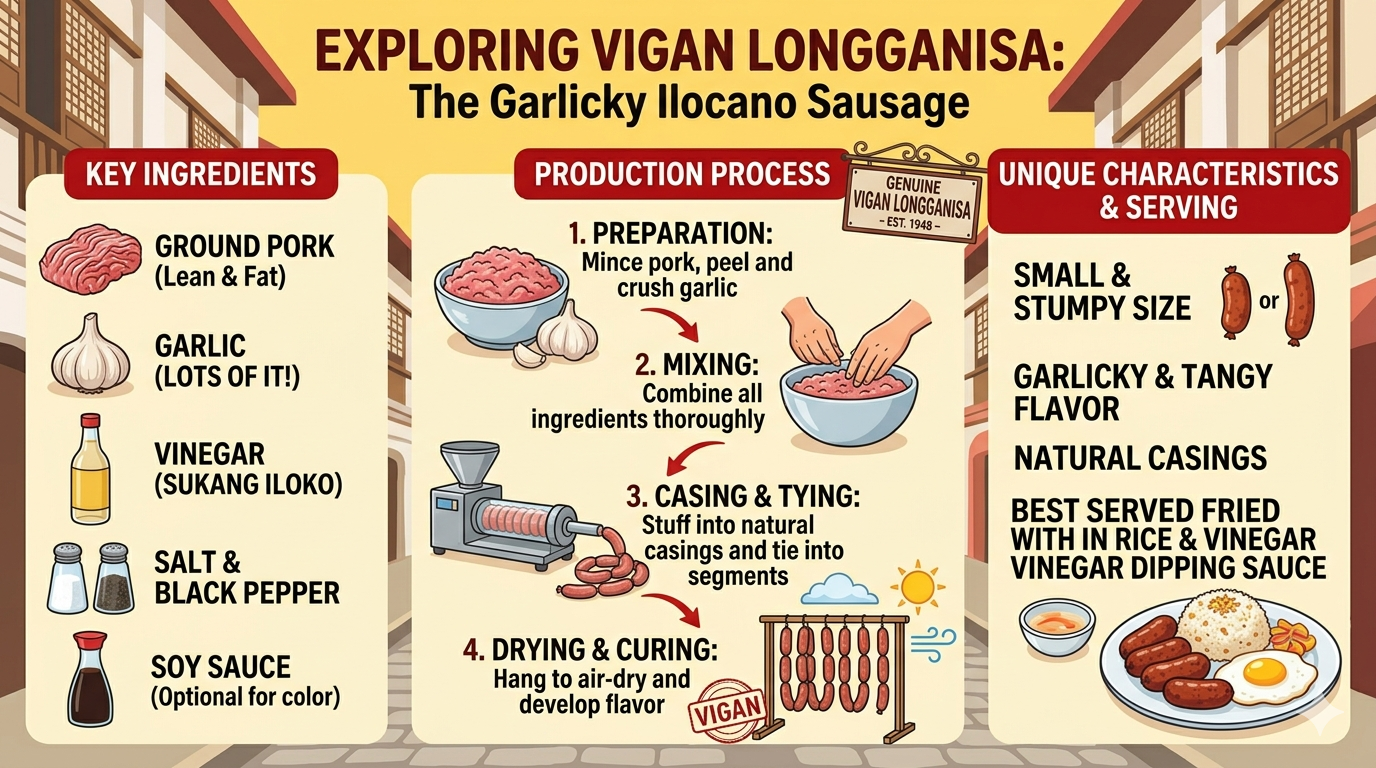
Visual breakdown of ingredients and composition of Vigan longganisa
Disclaimer
This article is for general informational and educational purposes only. It does not constitute professional medical, nutrition, or dietary advice. References to foods or dietary practices do not imply endorsement or guarantee of health outcomes. Readers are encouraged to consult licensed nutritionists, dietitians, or medical professionals for personalized guidance.