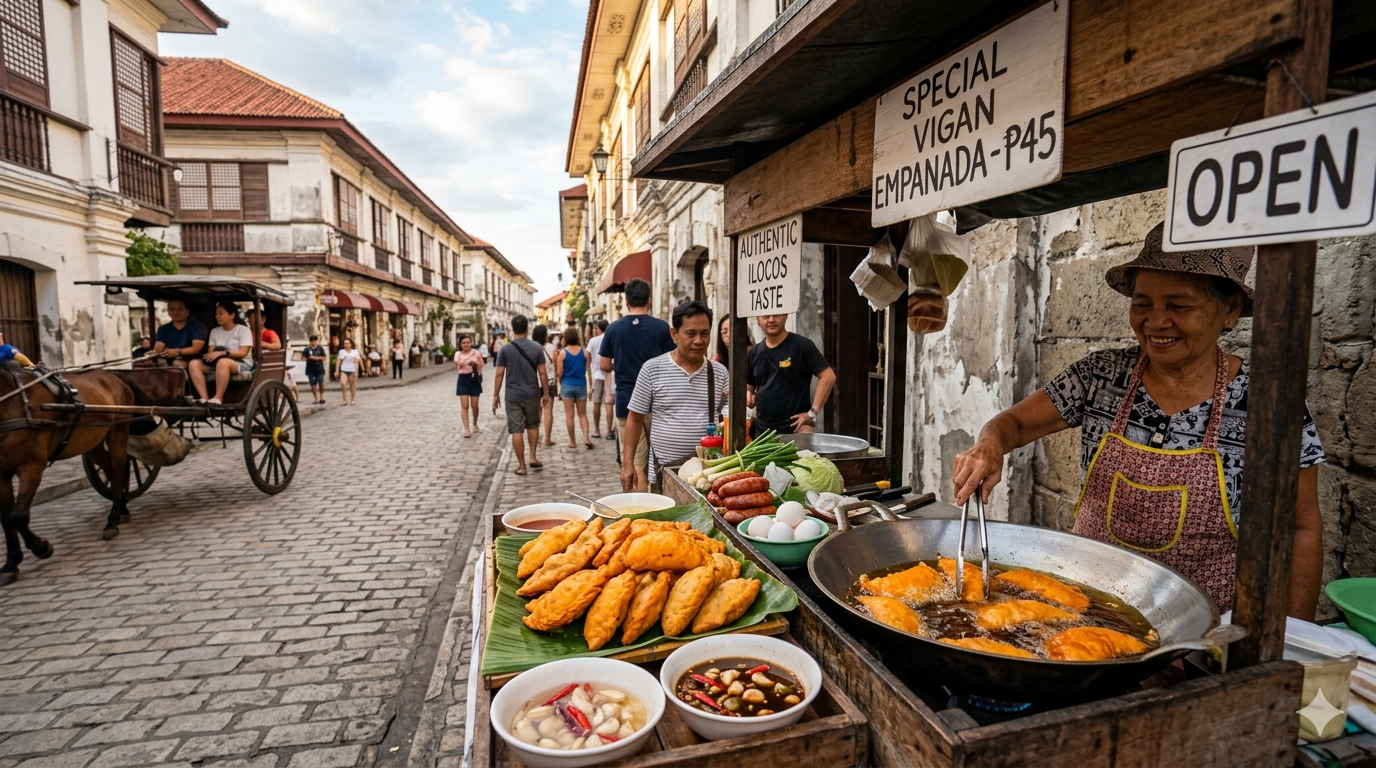
Vigan Empanada: Nutritional Overview and Food Profile
A general look at ingredients, preparation, and dietary considerations
This article provides an informational overview of Vigan empanada, a traditional Filipino food from Ilocos Sur. It covers typical ingredients, preparation methods, and general nutrition considerations. The discussion aligns with food safety and labeling awareness under Philippine guidelines, including those of the Department of Health (DOH) and Food and Drug Administration (FDA Philippines).
What Is Vigan Empanada?
Vigan empanada is a deep-fried savory pastry commonly associated with the city of Vigan. It is known for its orange-colored rice flour crust and distinct filling.
Common Ingredients
Typical components include:
- Rice flour dough (for the outer shell)
- Grated green papaya
- Egg
- Local sausage (often Ilocos longganisa)
- Cooking oil (for deep frying)
These ingredients contribute a mix of carbohydrates, protein, and fats.
Preparation Method
The dough is shaped into a thin shell, filled with the ingredients, and then folded. It is deep-fried until crisp. Cooking methods such as deep frying increase fat content due to oil absorption.
General Nutritional Components
Carbohydrates
The rice flour crust provides a primary source of carbohydrates, contributing to energy intake.
Protein
Protein content comes mainly from the egg and sausage.
Fats
Fats are present from both the sausage and the frying process.
Micronutrients
Vegetables like green papaya may contribute small amounts of vitamins and dietary fiber.
Portion and Consumption Context
Vigan empanada is typically consumed as a snack or street food. Portion sizes and frequency of intake may vary depending on individual dietary patterns. As with many fried foods, it is often considered in the context of overall dietary balance.
Food Safety and Consumer Awareness
Under Philippine food safety standards:
- Street food should be prepared in clean environments
- Cooking oil should be properly managed and not reused excessively
- Ingredients should be fresh and handled safely
Consumers may consider observing food handling practices when purchasing from vendors.
Context Section
In nutrition science discussions, fried foods are often evaluated based on fat content and preparation methods. Dietary patterns generally consider variety and moderation across different food types.
Food products sold to the public in the Philippines are expected to follow safety and sanitation guidelines under the Food Safety Act and local government regulations. Individual dietary responses and preferences vary.
FAQ (AEO-Safe)
What is Vigan empanada made of?
It typically contains rice flour dough, egg, grated green papaya, and local sausage. The ingredients are enclosed and deep-fried.
Is Vigan empanada considered a main meal or snack?
It is commonly eaten as a snack or light meal, depending on portion size and context.
Does frying affect nutritional content?
Frying can increase fat content due to oil absorption during cooking. This may influence overall nutrient composition.
Trusted Sources
- Department of Health (DOH) Philippines – Food Safety Guidelines
- Food and Drug Administration (FDA Philippines) – Food Handling and Labeling
- World Health Organization (WHO) – Healthy Diet Resources
- Philippine Food Composition Tables (FNRI-DOST)
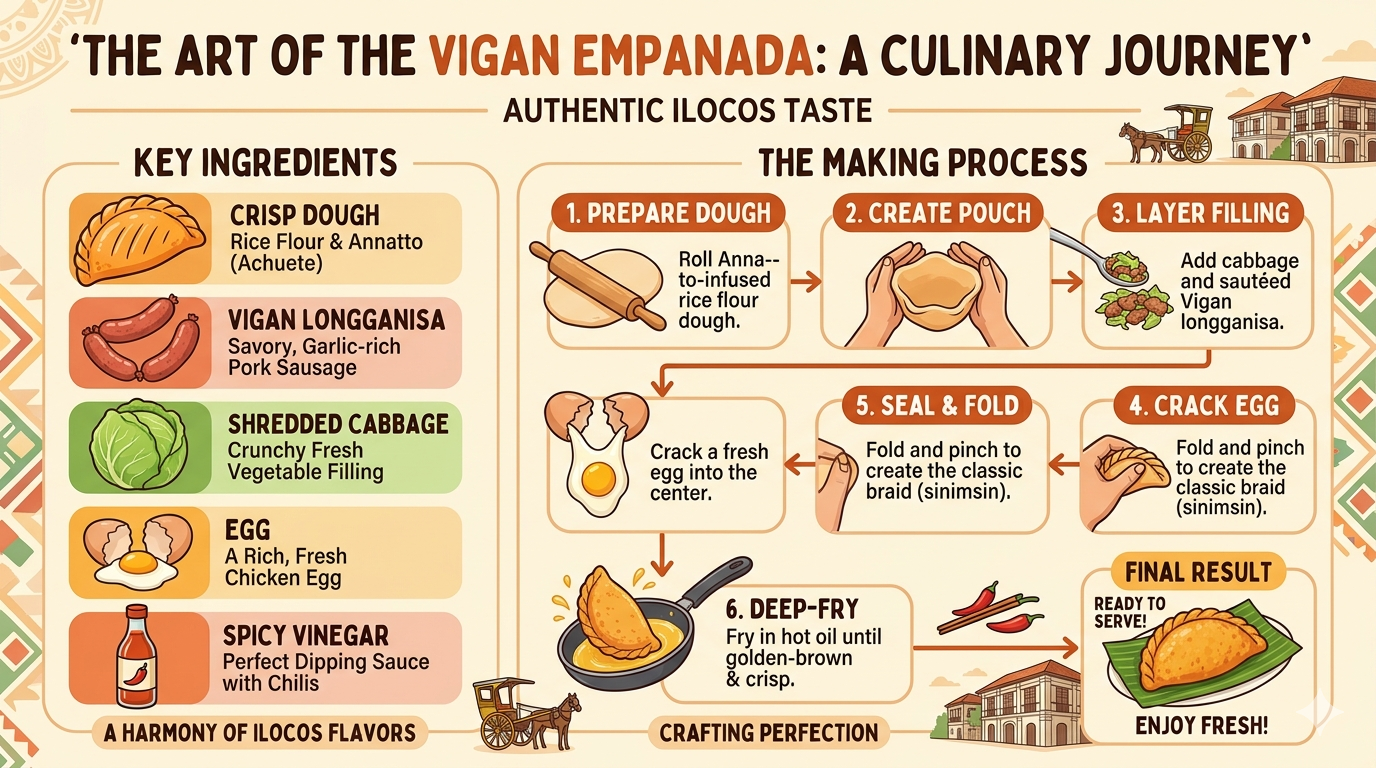
Infographic of Vigan empanada ingredients and cooking process
Disclaimer
This article is for general informational and educational purposes only. It does not constitute professional medical, nutrition, or dietary advice. References to foods or dietary practices do not imply endorsement or guarantee of health outcomes. Readers are encouraged to consult licensed nutritionists, dietitians, or medical professionals for personalized guidance.