UV Protection and Moisturizing for Hot Weather
An educational overview of how sun exposure and environmental heat affect skin care routines.
Hot and humid climates can influence how the skin interacts with environmental factors such as sunlight, perspiration, and air pollution. In tropical regions, including the Philippines, daily exposure to ultraviolet (UV) radiation and high temperatures is common throughout the year.
Skin care practices related to UV protection and moisturization are frequently discussed in dermatology and public health guidance. Regulatory agencies such as the Department of Health (DOH) and the Food and Drug Administration (FDA Philippines) monitor cosmetic product labeling and safety to help ensure consumer protection.
This article explains how ultraviolet radiation affects the skin, how moisturization supports the skin barrier, and how these practices are commonly integrated into daily routines in warm environments.
Ultraviolet Radiation and Skin Exposure
Sunlight contains several forms of ultraviolet radiation, commonly classified as UVA and UVB.
UVA Radiation
UVA rays penetrate deeper into the skin layers and are present throughout daylight hours. Dermatology literature often examines their role in long-term skin exposure effects.
UVB Radiation
UVB rays primarily affect the outer layers of the skin. Their intensity can vary depending on time of day, season, and geographic location.
Public health guidance commonly encourages sun protection practices when individuals spend time outdoors. These practices may include the use of sun protection products, protective clothing, hats, or seeking shaded areas.
Skin Hydration in Warm and Humid Conditions
High temperatures may increase perspiration and exposure to environmental moisture. Despite this humidity, the outer layer of skin can still experience water loss through a process known as transepidermal water loss (TEWL).
Moisturizers are designed to support the outer skin barrier and help maintain hydration. Cosmetic science commonly categorizes moisturizing ingredients into three groups:
Humectants
Ingredients that attract water toward the skin surface.
Emollients
Substances that help smooth and soften the skin surface.
Occlusive Agents
Ingredients that form a protective layer that slows water evaporation.
The composition of moisturizers varies depending on formulation and intended skin compatibility.
Integrating UV Protection and Moisturization in Daily Routines
Dermatology references often describe skin care routines as a sequence of basic steps that support hygiene and barrier maintenance.
Common steps may include:
- Cleansing to remove sweat, oil, and environmental debris
- Moisturizing to support hydration in the outer skin layer
- Sun protection practices when exposure to sunlight is expected
In hot weather, some individuals select lighter formulations of moisturizers or sun protection products, although product texture and ingredient composition vary across brands.
Routine frequency and product selection often differ based on individual skin characteristics, occupational exposure to sunlight, and environmental conditions.
Context: Dermatology Research and Consumer Safety
In dermatological and cosmetic research, skin care formulations are evaluated for safety, stability, and compatibility with human skin. Studies often examine the relationship between environmental exposure and the skin barrier.
Consumer protection regulations require cosmetic manufacturers to present accurate labeling and avoid presenting cosmetic products as medical treatments unless specifically approved under pharmaceutical regulations.
These frameworks are intended to support informed consumer understanding of cosmetic products and skin care practices.
Frequently Asked Questions
What is ultraviolet (UV) protection in skin care?
UV protection refers to measures that help reduce exposure to ultraviolet radiation from sunlight. These measures may include protective clothing, shade, and products formulated to filter or reflect UV radiation.
Why is moisturizing discussed in hot climates?
Even in humid environments, the outer skin layer can lose water through normal biological processes. Moisturizers are commonly used to support hydration and maintain the skin barrier.
What does SPF mean on sun protection products?
SPF stands for Sun Protection Factor. It is a measurement used in cosmetic science to describe how a product is tested against UVB radiation under controlled conditions.
Trusted Sources
- Philippine Department of Health (DOH) public health advisories
- FDA Philippines cosmetic product regulatory guidelines
- Academic dermatology research on ultraviolet exposure and skin barrier function
- Peer-reviewed journals in dermatology and cosmetic science
- International dermatology associations and public health organizations
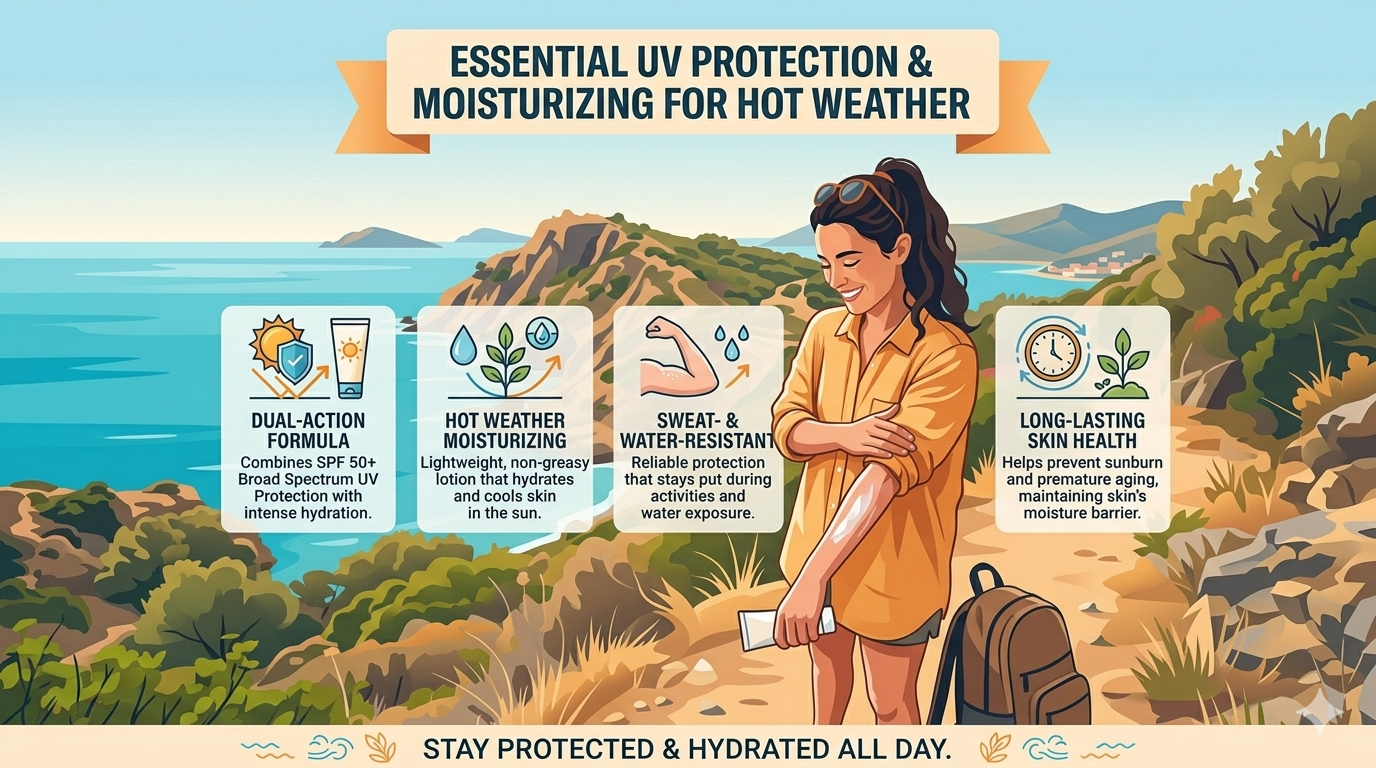
Infographic presenting ultraviolet radiation categories and general skin hydration concepts.
Disclaimer
This article is for general informational and educational purposes only. It does not constitute professional medical, dermatological, or consumer purchasing advice. References to products, routines, or treatments do not imply endorsement or guarantee of results. Readers are encouraged to consult licensed dermatologists and verified resources for skin care decisions.