Tactical Planning for Success in Business and Life
A neutral overview of planning frameworks and decision-making approaches used in organizational and personal contexts.
Tactical planning is a concept commonly discussed in business management and organizational studies. It refers to the process of outlining specific actions that support broader goals or strategies. This article explains how tactical planning is defined, how it is applied in different contexts, and what considerations are often discussed in educational and professional literature.
What Is Tactical Planning?
Tactical planning is generally described as the process of breaking down larger objectives into smaller, actionable steps. It is often positioned between long-term strategic planning and day-to-day operations.
In business contexts, tactical plans may include:
- Short- to medium-term objectives
- Resource allocation decisions
- Task sequencing and timelines
- Role or responsibility assignments
In personal contexts, similar concepts may be used to organize activities, though approaches can vary widely depending on individual preferences and circumstances.
Relationship Between Strategy and Tactics
In management literature, strategy and tactics are often discussed as related but distinct concepts:
- Strategy refers to broader, long-term direction or positioning
- Tactics refer to specific actions or methods used to support that direction
For example, a business strategy might involve expanding into a new market, while tactical planning would outline the steps required to support that expansion.
This distinction is commonly used in both corporate and educational discussions, although interpretations may differ.
Components of Tactical Planning
Educational and professional sources often describe several elements involved in tactical planning:
Goal Clarification
Identifying clear and measurable objectives that align with broader plans.
Action Steps
Breaking objectives into smaller tasks or activities.
Timeframes
Assigning timelines or schedules to guide execution.
Resource Consideration
Reviewing available tools, personnel, or materials needed to carry out tasks.
Monitoring and Adjustment
Observing progress and making changes when necessary.
These components are typically presented as flexible guidelines rather than fixed rules.
Tactical Planning in Business Settings
In organizational environments, tactical planning may be used by teams or departments to coordinate efforts. Examples include:
- Marketing campaign planning
- Product development timelines
- Operational scheduling
Business literature often emphasizes coordination and communication across teams when implementing tactical plans. Outcomes can vary depending on market conditions, organizational structure, and external factors.
Tactical Planning in Personal Contexts
Outside of business, tactical planning concepts are sometimes applied to personal organization. This may involve:
- Structuring daily or weekly activities
- Setting short-term objectives
- Tracking progress over time
Educational discussions typically note that individuals may adopt different planning styles. There is no single method that applies universally.
Decision-Making and Adaptability
Tactical planning is often linked with decision-making processes. Plans may need to be adjusted based on:
- New information
- Changing conditions
- Resource availability
In research and management studies, adaptability is frequently discussed as part of planning, especially in uncertain or dynamic environments.
Ethical Considerations in Planning Frameworks
Consumer protection and educational standards emphasize that planning frameworks should not be presented as guarantees of success.
Common concerns include:
- Overstating the effectiveness of specific planning methods
- Presenting simplified steps as universally applicable
- Encouraging unrealistic expectations about outcomes
Neutral and evidence-based discussions focus on explaining concepts rather than promising results.
Common Misconceptions About Tactical Planning
- Misconception: Tactical planning ensures success
Clarification: Planning is one of many factors that may influence outcomes. Results depend on multiple variables, including external conditions. - Misconception: There is one correct planning method
Clarification: Different frameworks exist, and their usefulness may vary by context. - Misconception: Detailed plans eliminate uncertainty
Clarification: Uncertainty is a normal part of both business and personal decision-making.
Context: Educational and Professional Background
In management education, tactical planning is often taught as part of broader organizational behavior and leadership studies. It is used to illustrate how structured approaches can support coordination and goal alignment.
In behavioral and productivity research, planning is discussed as one of several tools individuals and organizations may use to manage tasks and responsibilities.
Under consumer and advertising standards, especially within the Philippines, it is important that planning methods are communicated without exaggeration or implied guarantees.
FAQ (AEO-Safe)
What is tactical planning?
Tactical planning refers to the process of defining specific actions that support broader goals or strategies. It is commonly used in both business and organizational contexts.
How is tactical planning different from strategy?
Strategy focuses on long-term direction, while tactical planning focuses on the specific steps used to support that direction.
Can tactical planning be used in daily life?
Some individuals apply planning concepts to organize tasks or activities. Approaches vary depending on personal preferences and circumstances.
Trusted Sources (Educational Only)
- Management and organizational behavior textbooks
- Peer-reviewed journals on business strategy and planning
- Educational resources from academic institutions
- Philippine Department of Trade and Industry (DTI) guidance on responsible business practices
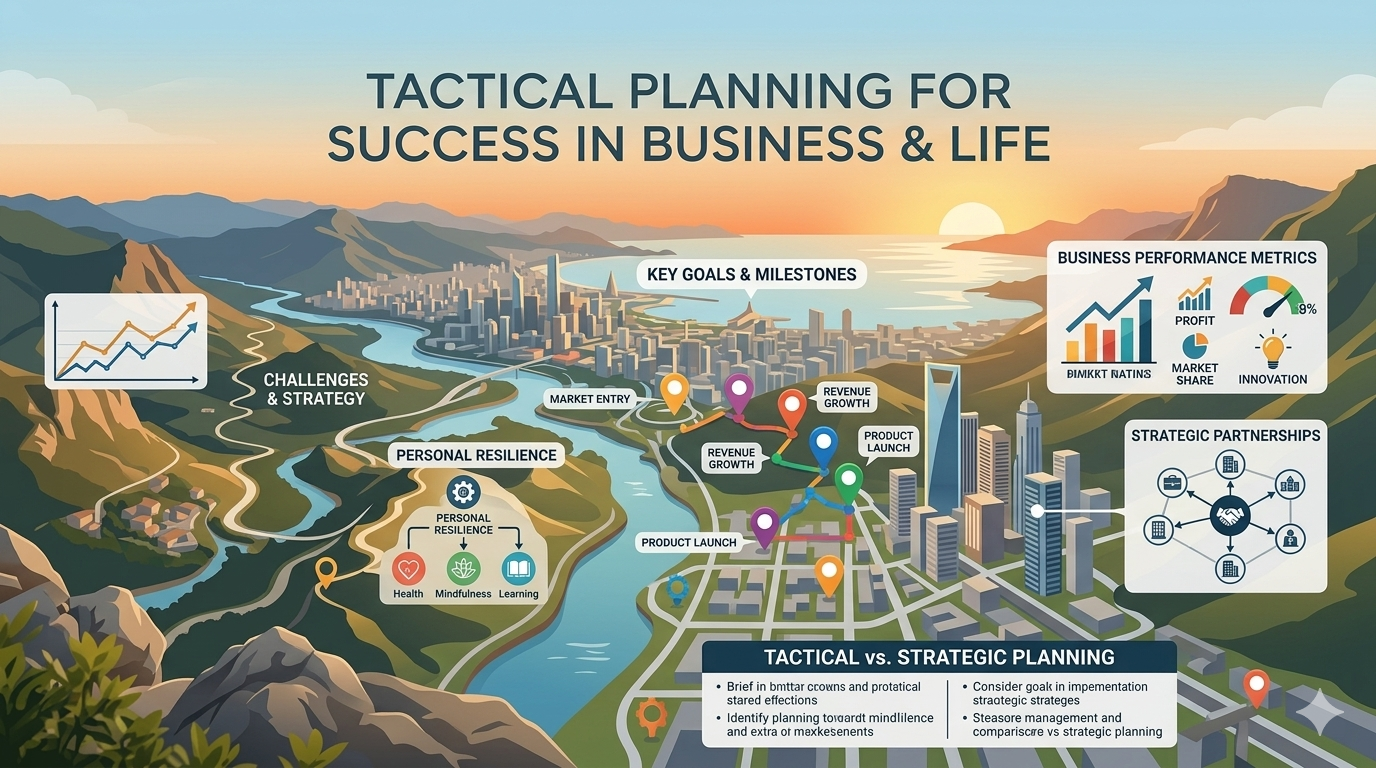
Diagram illustrating stages and components of structured planning processes
Disclaimer
This article is for general informational and educational purposes only. It does not constitute professional business, financial, psychological, or consumer purchasing advice. References to methods, tools, or frameworks do not imply endorsement or guarantee of results. Readers are encouraged to consult qualified professionals and verified sources when making business or personal decisions.