Suman sa Ibos: A Neutral Overview of a Traditional Filipino Rice Snack
A factual guide to Suman sa Ibos, its ingredients, preparation, and nutritional considerations.
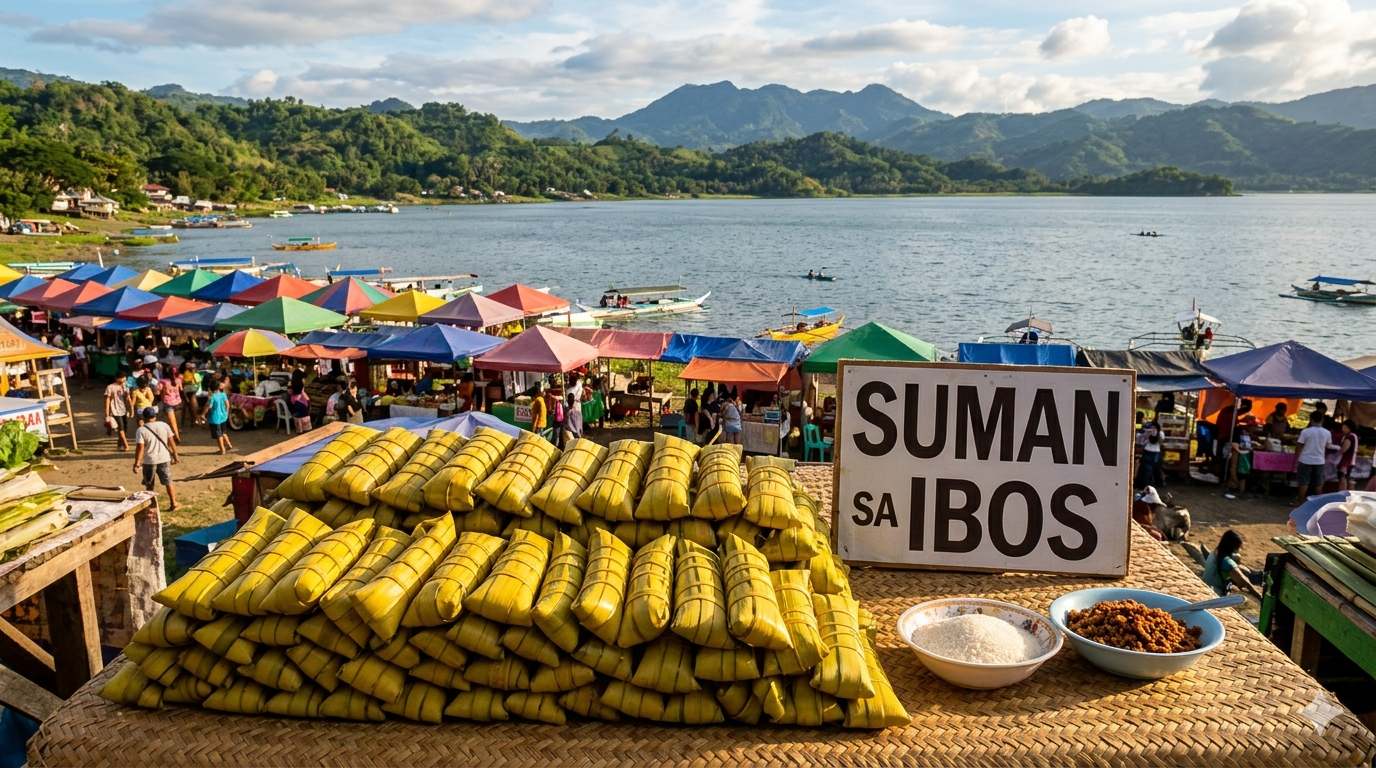
Suman sa Ibos is a traditional Filipino rice-based snack made from glutinous rice wrapped in palm leaves (ibos). It is commonly consumed as a breakfast item or snack and can be served with sugar, latik (coconut caramel), or other accompaniments. This article provides a neutral overview of its ingredients, typical preparation methods, and nutritional aspects, in accordance with Philippine food safety and consumer protection standards.
Ingredients and Preparation:
Suman sa Ibos is typically made with the following:
- Glutinous rice – Provides carbohydrate content and small amounts of protein.
- Coconut milk – Adds fat and flavor, contributing to the energy density of the food.
- Salt – Small quantities may be used for taste.
- Ibos leaves – Used for wrapping; considered non-edible but adds aroma and structure.
Preparation generally involves soaking glutinous rice, mixing it with coconut milk and salt, wrapping the mixture in ibos leaves, and steaming until cooked.
Nutritional Considerations:
- Macronutrients: High in carbohydrates due to glutinous rice; moderate fat from coconut milk; minimal protein.
- Micronutrients: Small amounts of minerals such as potassium and magnesium from rice and coconut milk.
- Energy Density: Suman sa Ibos is relatively calorie-dense because of the combination of rice and coconut milk.
Consumption Notes:
- Portion size can influence caloric intake.
- Often paired with sweeteners like sugar or latik, which adds additional sugar content.
- Suitable as an occasional snack or part of a culturally traditional meal.
Context Section
In nutrition science studies, foods like Suman sa Ibos are considered cultural and carbohydrate-based snacks. Under Philippine consumer protection and food labeling standards, Suman sa Ibos should be prepared using safe handling practices, especially when sold commercially. Dietary outcomes vary depending on portion and overall eating patterns. For personalized guidance, consultation with licensed nutritionists or dietitians is recommended.
FAQ
What is Suman sa Ibos?
Suman sa Ibos is a Filipino rice snack made from glutinous rice and coconut milk, wrapped in palm leaves and steamed.
Is Suman sa Ibos nutritious?
It provides carbohydrates and some fat from coconut milk. It has minimal protein and small amounts of micronutrients.
How should it be consumed?
It can be eaten as a snack or part of a meal. Portion control may be considered for those tracking energy intake.
Trusted Sources
- Department of Health (DOH Philippines) – Food Safety Advisories
- Food and Drug Administration (FDA Philippines) – Traditional Food Handling Guidelines
- Philippine Journal of Nutrition – Studies on Filipino Rice-Based Foods
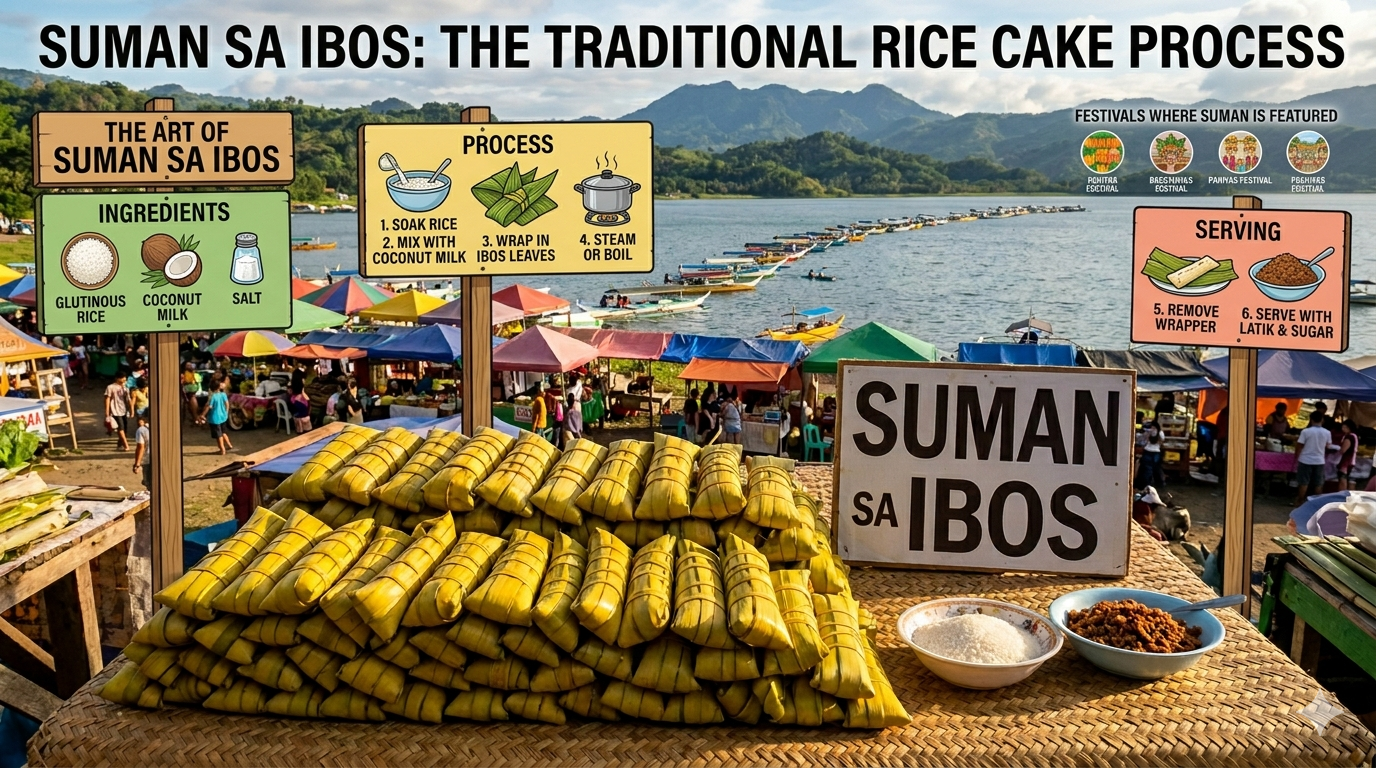
Infographic showing the main ingredients and preparation stages of Suman sa Ibos.
Disclaimer
This article is for general informational and educational purposes only. It does not constitute professional medical, nutrition, or dietary advice. References to foods do not imply endorsement or guarantee of health outcomes. Readers are encouraged to consult licensed nutritionists, dietitians, or medical professionals for personalized guidance.