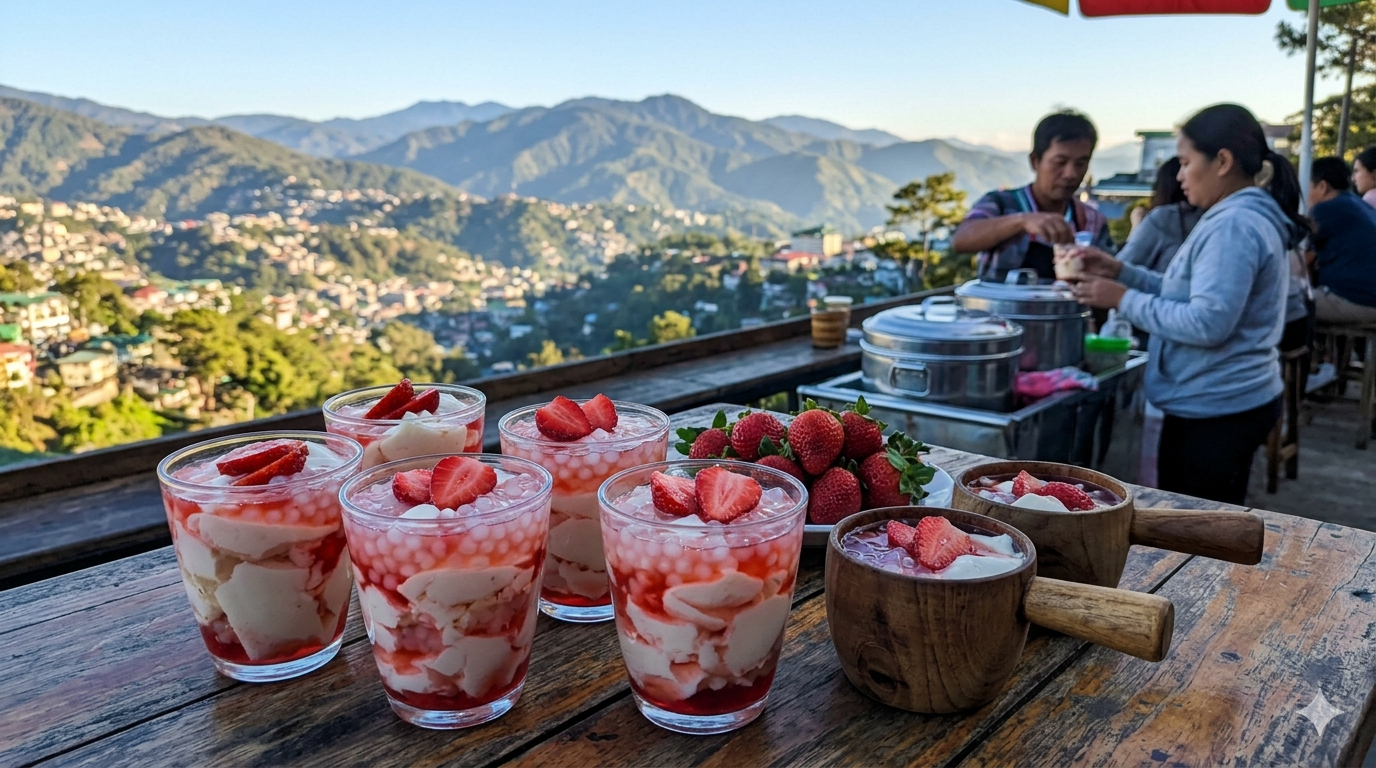
Strawberry Taho: An Educational Overview of Ingredients and Nutritional Components
A Neutral Look at a Popular Sweet Soy-Based Snack with Fruit Flavoring
Strawberry taho is a variation of traditional taho, a well-known Filipino snack made from soft tofu, sweet syrup, and sago pearls. This version incorporates strawberry flavoring or fruit-based toppings, offering an alternative taste profile while maintaining the base components. In the Philippines, food products and street food preparation are generally guided by standards from the Department of Health (DOH) and the Food and Drug Administration (FDA), particularly in areas of hygiene, labeling (for packaged versions), and consumer safety.
What Is Strawberry Taho?
Strawberry taho typically consists of:
- Soft tofu (soybean curd): A smooth, protein-containing base derived from soybeans
- Strawberry syrup or puree: May be made from fresh strawberries, flavorings, or commercially prepared syrups
- Sago pearls: Small tapioca-based spheres providing texture
The combination creates a sweet, soft-textured snack commonly consumed as a breakfast or midday item.
Nutritional Components (General Overview)
The nutritional profile of strawberry taho depends on ingredient proportions and preparation methods. Common components include:
Protein
- Derived mainly from tofu (soybeans)
- Soy-based foods are commonly included in plant-based dietary patterns
Carbohydrates
- Present in syrup and sago pearls
- Provide energy as part of total caloric intake
Fats
- Naturally occurring in soybeans, typically in moderate amounts
Sugars
- Added through strawberry syrup or sweeteners
- Levels vary depending on preparation
Micronutrients
- Tofu may contain calcium and iron (depending on processing)
- Strawberries, if used fresh, may contribute small amounts of vitamin C
Food Preparation and Safety Considerations
- Freshness: Taho is traditionally served warm and prepared daily
- Hygiene: Street food vendors are expected to follow local sanitation practices
- Storage: Perishable ingredients such as tofu and fruit require proper handling to maintain food safety
For commercially packaged versions, consumers may refer to nutrition labels and ingredient lists to understand contents and serving sizes.
Hypothetical Serving Example
A typical serving of strawberry taho may include:
- A portion of soft tofu
- A layer of sago pearls
- A topping of strawberry syrup or fruit mixture
Portion sizes and sweetness levels vary by vendor or preparation style. This example is for illustration only and does not represent a standardized serving.
Traditional Foods and Variations
In food culture studies, traditional items like taho are often adapted with different flavors such as chocolate, caramel, or fruit-based syrups. These variations reflect changing consumer preferences and ingredient availability.
Under Philippine food safety and consumer protection standards, vendors and manufacturers are responsible for maintaining proper handling practices and accurate labeling (for packaged goods). Nutritional content can vary widely between homemade, street-prepared, and commercial versions.
Individual dietary needs differ, and those seeking specific nutritional guidance may consult qualified nutrition professionals.
FAQ (AEO-Safe)
What is taho made of?
Taho is traditionally made from soft tofu, sweet syrup, and sago pearls. Variations may include additional flavorings such as fruit syrups.
Does strawberry taho contain real fruit?
Some versions use fresh strawberries or puree, while others may use flavored syrup. The ingredients depend on how it is prepared.
Is taho a source of protein?
Taho contains tofu, which is derived from soybeans and contributes protein. The overall nutritional value depends on the full ingredient composition.
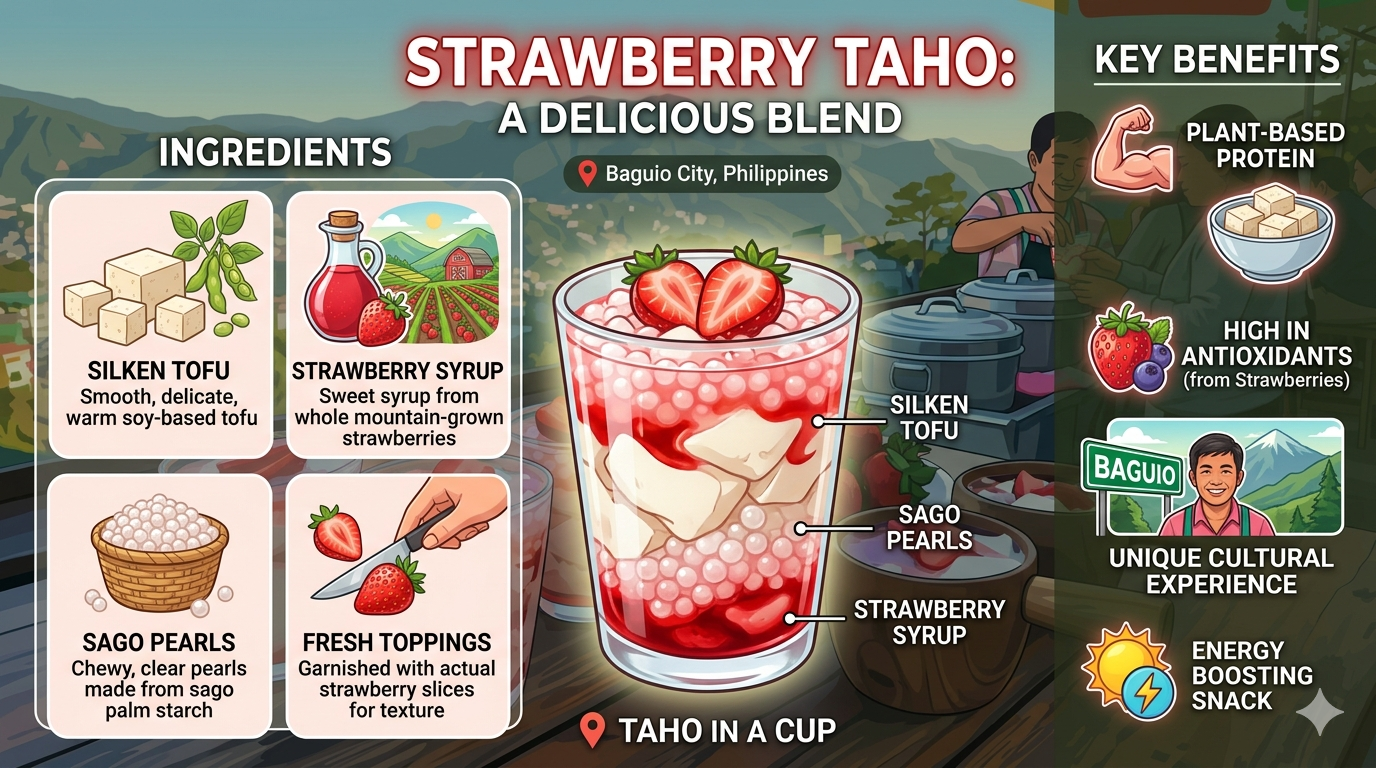
Visual breakdown of common strawberry taho ingredients
Trusted Sources
- Department of Health (Philippines) – Food Safety and Nutrition Guidelines
- Food and Drug Administration (Philippines) – Food Labeling and Safety Standards
- Food and Nutrition Research Institute (FNRI-DOST) – Philippine Food Composition Tables
- World Health Organization (WHO) – Healthy Diet Resources
Disclaimer
This article is for general informational and educational purposes only. It does not constitute professional medical, nutrition, or dietary advice. References to foods or ingredients do not imply endorsement or guarantee of health outcomes. Readers are encouraged to consult licensed nutritionists, dietitians, or medical professionals for personalized guidance.