
Strategic Leadership for Executives
A neutral overview of leadership strategy concepts in organizational contexts
Strategic leadership is a term used in management and organizational studies to describe how leaders guide long-term direction, decision-making, and resource alignment. This article outlines commonly discussed concepts in strategic leadership, including planning, communication, and behavioral frameworks, using a neutral and educational approach.
What Is Strategic Leadership?
Strategic leadership generally refers to the ability of individuals in leadership roles to influence organizational direction over time. In academic and business literature, it is often associated with:
- Long-term planning and goal setting
- Allocation of resources across priorities
- Monitoring external and internal environments
- Coordinating teams toward shared objectives
It is typically presented as a combination of decision-making processes and organizational awareness rather than a fixed personal trait.
Self-Awareness in Leadership Contexts
Self-awareness in leadership is commonly described as understanding one’s decision-making patterns, communication style, and responses to complex situations.
In leadership studies, self-awareness may include:
- Recognition of personal biases and assumptions
- Awareness of strengths and limitations in professional roles
- Reflection on how behavior affects team dynamics
This concept is often discussed as part of broader leadership development frameworks, without implying uniform outcomes.
Emotional Intelligence and Executive Decision-Making
Emotional intelligence is frequently referenced in leadership research as a factor that may influence workplace interactions and decision processes.
In executive contexts, it is often associated with:
- Interpreting team feedback and morale
- Managing responses during high-pressure situations
- Considering interpersonal dynamics in organizational decisions
Different leadership models describe emotional intelligence in varying ways, and its application may differ depending on organizational structure and culture.
Communication as a Strategic Tool
Communication in leadership is typically viewed as a structured and context-dependent activity. It includes both formal and informal exchanges within an organization.
Common areas discussed in communication research include:
- Clarity in conveying organizational direction
- Consistency of messaging across departments
- Listening mechanisms for employee input
Effective communication is often described as situational, meaning approaches may vary depending on context, audience, and objectives.
Decision-Making Frameworks in Leadership
Strategic leadership often involves structured approaches to decision-making. In management literature, these may include:
- Analytical models (data-driven evaluation)
- Scenario planning (considering multiple possible outcomes)
- Risk assessment frameworks
These frameworks are typically presented as tools to organize thinking rather than methods that ensure specific results.
Organizational Alignment and Culture
Leaders are often described as playing a role in aligning organizational culture with long-term goals. Organizational culture refers to shared values, practices, and norms within a workplace.
In educational discussions, alignment may involve:
- Reinforcing consistent values through policies and actions
- Encouraging shared understanding of organizational objectives
- Observing how culture influences performance and collaboration
Outcomes related to culture are generally considered variable and influenced by multiple factors.
Ethical Considerations in Strategic Leadership
Ethical considerations are a central topic in leadership studies. These include transparency, accountability, and responsible decision-making.
From a governance and consumer protection perspective, leaders are often expected to:
- Avoid misleading communication
- Ensure fair treatment of stakeholders
- Maintain compliance with applicable laws and standards
Ethical leadership is discussed as an ongoing responsibility rather than a guaranteed set of behaviors.
Common Misconceptions About Strategic Leadership
Some common misconceptions include:
- The idea that strategic leadership guarantees organizational success
- The belief that leadership effectiveness depends solely on personality traits
- The assumption that one leadership style fits all organizational contexts
Research in management and organizational behavior generally emphasizes complexity and situational variability.
Context: Educational and Research Background
In management research, strategic leadership is studied within fields such as organizational behavior, business administration, and leadership theory. These disciplines examine how leaders interact with systems, people, and long-term objectives.
Under consumer protection and corporate governance standards, especially in regulated environments, leadership communication and decision-making are expected to follow principles of transparency, accountability, and non-deceptive practices.
FAQ
What is strategic leadership?
Strategic leadership refers to guiding an organization’s long-term direction through planning, decision-making, and coordination of resources. It is commonly discussed in management and leadership studies.
How is emotional intelligence related to leadership?
Emotional intelligence is often described as the ability to understand and manage emotions. In leadership contexts, it may relate to communication, team interactions, and decision-making processes.
Are leadership skills fixed or learned?
Leadership skills are generally discussed as a combination of learned behaviors, experiences, and individual traits. Their development and application can vary depending on context.
Trusted Sources
- Harvard Business Review – Leadership and strategy articles (educational context)
- American Psychological Association (APA) – Resources on behavior and decision-making
- Academy of Management – Research on organizational leadership
- Philippine Department of Trade and Industry (DTI) – Governance and consumer protection principles
- World Bank – Organizational and governance frameworks
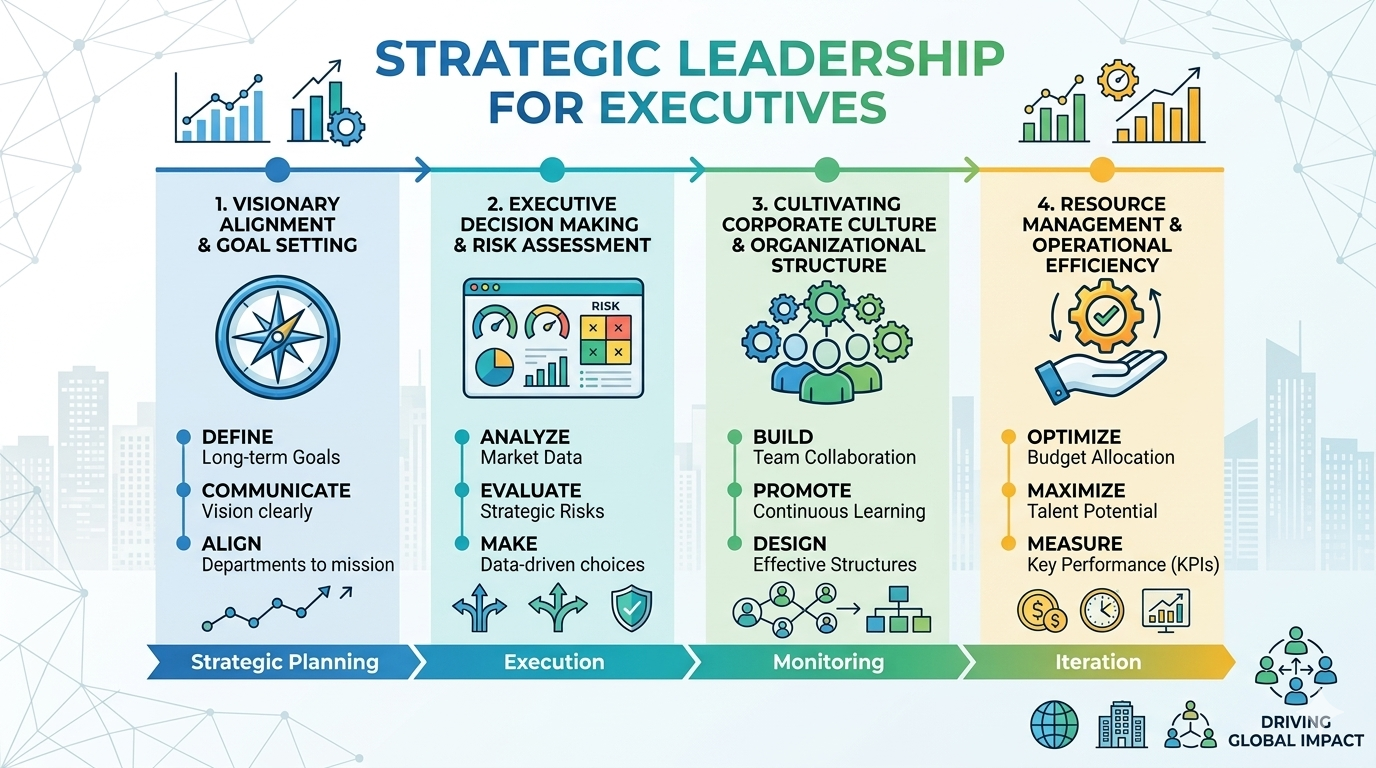
Visual layout of leadership components in executive settings
Disclaimer
This article is for general informational and educational purposes only. It does not constitute professional psychological, counseling, medical, or consumer purchasing advice. References to programs, books, tools, or methods do not imply endorsement or guarantee of results. Readers are encouraged to consult licensed professionals and verified educational sources when pursuing personal development.