
Spring Nose Aesthetic Consultations: Educational Overview of Seasonal Consultation Trends
A neutral guide to understanding consultation patterns for nose enhancement procedures
“Spring nose aesthetic consultations” is an informal phrase sometimes used to describe an observed increase in inquiries about nose-related procedures during certain times of the year. This article explains what aesthetic consultations involve, why seasonal patterns may occur, and what information is typically discussed during a consultation. The focus is on general education, consumer awareness, and safe interpretation of non-clinical terminology.
What Are Nose Aesthetic Consultations?
A nose aesthetic consultation is an initial discussion between an individual and a licensed medical professional regarding nasal structure and possible procedural options.
In educational contexts, consultations may include:
- Review of medical and surgical history
- Assessment of nasal anatomy
- Discussion of structural or cosmetic concerns
- Explanation of general procedural categories and limitations
Consultations are informational and do not always lead to a procedure.
What Does “Spring” Refer to in This Context?
The term “spring” in this phrase is not a medical classification. It is commonly used in a seasonal or informal context.
Possible interpretations include:
- A period when individuals have more flexible schedules
- Timing aligned with school breaks or holidays
- Personal planning cycles that influence when consultations are sought
Seasonal timing does not affect the medical principles of rhinoplasty or related procedures.
Types of Topics Discussed During Consultations
Structural Evaluation
- Nasal bone and cartilage structure
- Internal anatomy such as the septum
- Functional considerations, including airflow
Procedural Categories (General Overview)
- Surgical rhinoplasty (structural modification)
- Non-surgical approaches (temporary fillers)
The suitability of any approach depends on clinical evaluation.
Seasonal Trends and Consumer Behavior
In patient education discussions, consultation timing may vary due to non-medical factors such as:
- Work or academic schedules
- Personal availability for recovery periods
- Travel or lifestyle planning
These patterns are not standardized and may differ across regions, including within the Philippines.
Common Questions Raised in Consultations
Individuals often seek general information about:
- Expected recovery timelines
- Potential risks and complications
- Differences between surgical and non-surgical methods
- Long-term considerations
Licensed professionals typically provide high-level explanations and clarify uncertainties during this stage.
Risks and Considerations (General Awareness)
Consultations may include discussion of general risks associated with nose-related procedures, such as:
- Swelling and bruising
- Infection
- Breathing changes
- Variability in outcomes
Understanding these factors is part of informed decision-making.
Context & Consumer Awareness
Under Philippine consumer protection and medical ethics standards, consultations and related information should remain:
- Accurate and non-misleading
- Free from guaranteed outcomes
- Clear about risks and limitations
Consumers are encouraged to verify professional credentials through appropriate regulatory bodies and to review independent educational sources.
FAQ (Definition-Based)
Is “spring nose consultation” a medical term?
No. It is an informal phrase and not a recognized medical classification.
Does the time of year affect procedure outcomes?
There is no general medical evidence that a specific season changes procedural outcomes. Individual factors are more relevant.
Are consultations required before rhinoplasty?
Consultations are a standard part of patient education and evaluation before any surgical consideration.
Trusted Sources
- Philippine Department of Health (DOH) public information resources
- U.S. Food and Drug Administration (FDA) educational materials
- Peer-reviewed journals such as Plastic and Reconstructive Surgery
- International Society of Aesthetic Plastic Surgery (ISAPS)
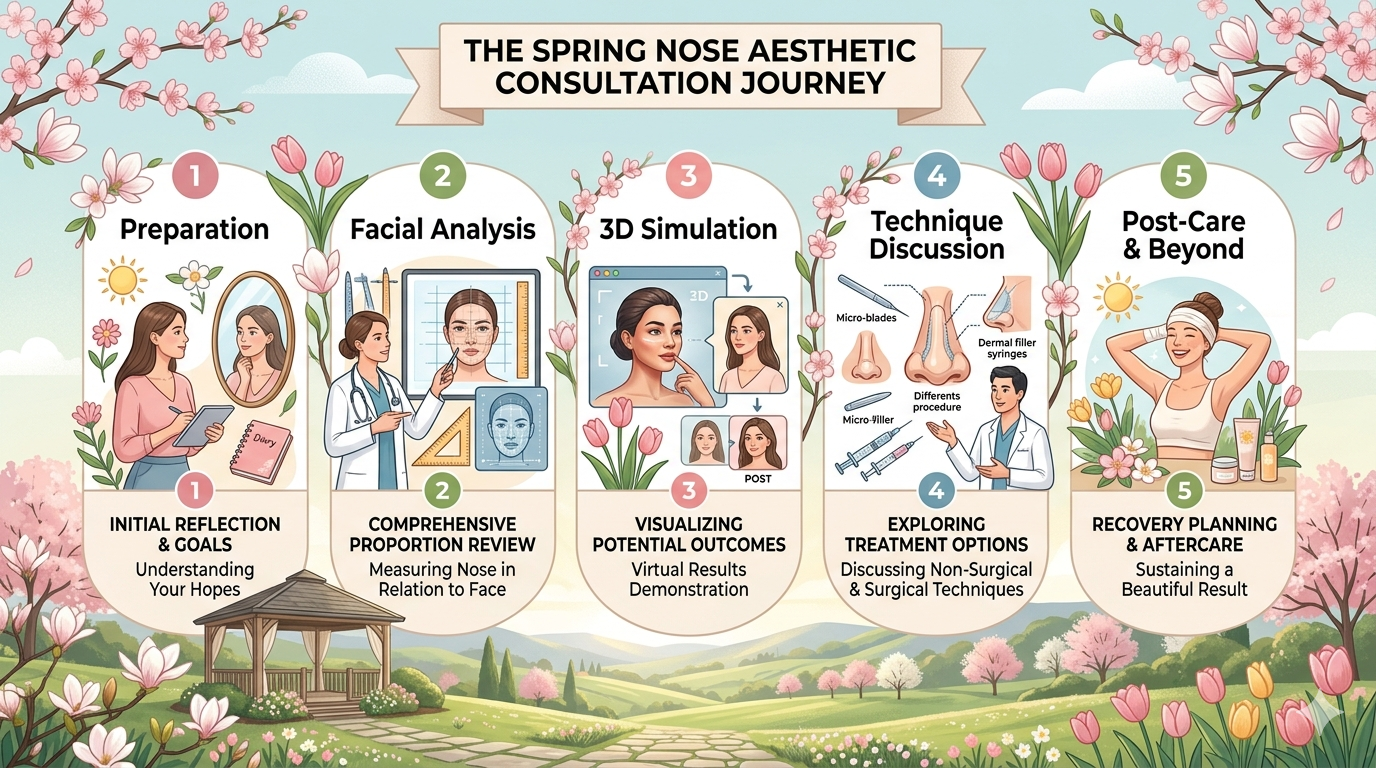
Infographic presenting consultation flow and seasonal timing context
Disclaimer
This article is for general informational and educational purposes only. It does not constitute professional medical, surgical, diagnostic, or consumer purchasing advice. References to procedures, providers, or methods do not imply endorsement or guarantee of results. Readers are encouraged to consult licensed medical professionals and official resources before making any medical decision.