Understanding Spring Dental Checkups and Oral Hygiene: An Educational Overview
An informational look at seasonal reminders for oral hygiene practices and routine dental examinations.
Seasonal reminders are sometimes used in health education to encourage routine checkups and personal hygiene practices. In dental health discussions, the phrase “spring dental checkups” is occasionally used in public awareness campaigns to highlight the importance of periodic oral examinations and hygiene routines. This article provides a neutral overview of oral hygiene practices and routine dental checkups, including how preventive dental care is commonly described in dental education and public health materials.
Oral Health and Tooth Structure
Human teeth perform several functions related to chewing, speech, and maintaining oral structure. A typical tooth contains several layers:
- Enamel – the outer surface that protects the tooth.
- Dentin – the layer beneath enamel that supports the tooth structure.
- Pulp – the internal area containing nerves and blood vessels.
- Cementum – a layer that covers the tooth root and helps anchor the tooth to surrounding tissues.
The teeth are supported by surrounding structures known collectively as the periodontium, which includes the gums, periodontal ligaments, and supporting bone. Dental professionals study these structures when assessing oral health during routine examinations.
Routine Dental Checkups: Educational Overview
Routine dental checkups are commonly described in dental health literature as periodic visits to a licensed dental professional for examination and preventive care. The specific frequency may vary depending on individual circumstances and professional assessment.
During a typical dental checkup, a dental professional may review several aspects of oral health, such as:
- General condition of the teeth
- Gum and soft tissue health
- Presence of plaque or tartar buildup
- Bite alignment and tooth positioning
- Signs associated with common oral conditions
Dental records or charts may also be updated during visits. In some cases, dental imaging may be used to observe structures that are not visible during a standard visual examination.
Oral Hygiene Practices in Preventive Dental Care
Oral hygiene refers to daily practices that support the cleanliness of the mouth and teeth. Public health guidance often describes several commonly recognized components:
Toothbrushing
Toothbrushing is typically performed using a toothbrush and toothpaste to remove food particles and plaque from tooth surfaces. Brushing routines are widely discussed in oral hygiene education programs.
Interdental Cleaning
Interdental cleaning tools, such as dental floss or interdental brushes, are used to reach areas between teeth where toothbrush bristles may not easily reach.
Mouth Rinsing
Some individuals use oral rinses as part of their hygiene routines. Dental literature describes these products as tools designed to assist in oral cleaning or breath freshness, depending on formulation.
Tongue Cleaning
Tongue cleaning tools or toothbrushes may also be used to remove debris from the surface of the tongue as part of general oral hygiene practices.
These activities are typically discussed in preventive dentistry education as methods for maintaining oral cleanliness between professional dental visits.
Hypothetical Example of a Routine Dental Visit
To illustrate how dental checkups are often described in educational materials, consider a hypothetical scenario:
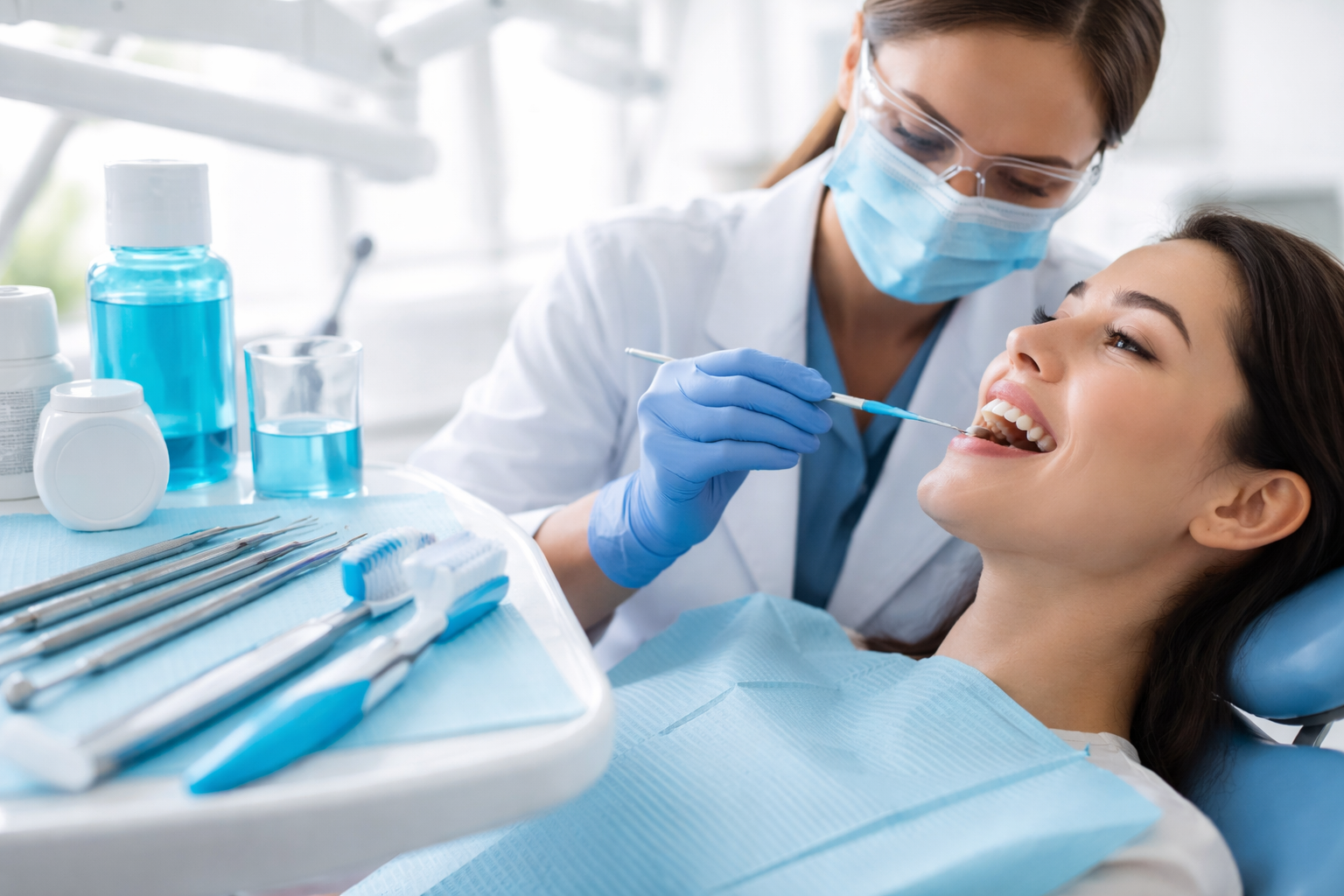
A patient attends a scheduled dental appointment following several months of routine home oral hygiene. During the visit, the dental professional performs a visual examination of the teeth and gums, reviews the patient’s dental history, and records observations in the dental chart. Preventive cleaning procedures may be discussed or performed depending on the clinical assessment.
This example represents a general description used in dental education and may differ depending on individual clinical circumstances.
Context: Preventive Dental Care in Public Health
Preventive dental care has been discussed in dental research and public health programs for many decades. Many health organizations highlight the role of early observation, routine oral hygiene practices, and patient education in maintaining oral health.
Public awareness campaigns sometimes use seasonal reminders—such as the beginning of a new year, school terms, or seasonal transitions—to encourage people to review health routines. In dental education contexts, references to “spring checkups” may simply function as a reminder to review oral hygiene habits and schedule routine dental examinations if needed.
Health authorities and dental associations generally emphasize that dental care decisions should be made with licensed professionals who can assess individual needs.
FAQ (Educational Overview)
What is preventive dental care?
Preventive dental care refers to practices intended to support oral health and identify potential dental concerns at an early stage. It commonly includes routine dental examinations, professional cleanings, and daily oral hygiene practices.
What occurs during a routine dental checkup?
A routine dental checkup generally involves an examination of the teeth, gums, and oral tissues by a licensed dental professional. Dental records may be updated, and observations about oral health may be documented.
What tools are commonly used for oral hygiene at home?
Common oral hygiene tools include toothbrushes, toothpaste, dental floss or interdental brushes, and in some cases oral rinses. These tools are widely discussed in dental hygiene education.
Trusted Sources
- Department of Health (DOH) Philippines — Oral Health Program
- Food and Drug Administration (FDA Philippines)
- World Health Organization (WHO) Oral Health Resources
- American Dental Association (ADA) — Oral Health Topics
- Peer-reviewed journals in dental public health and preventive dentistry
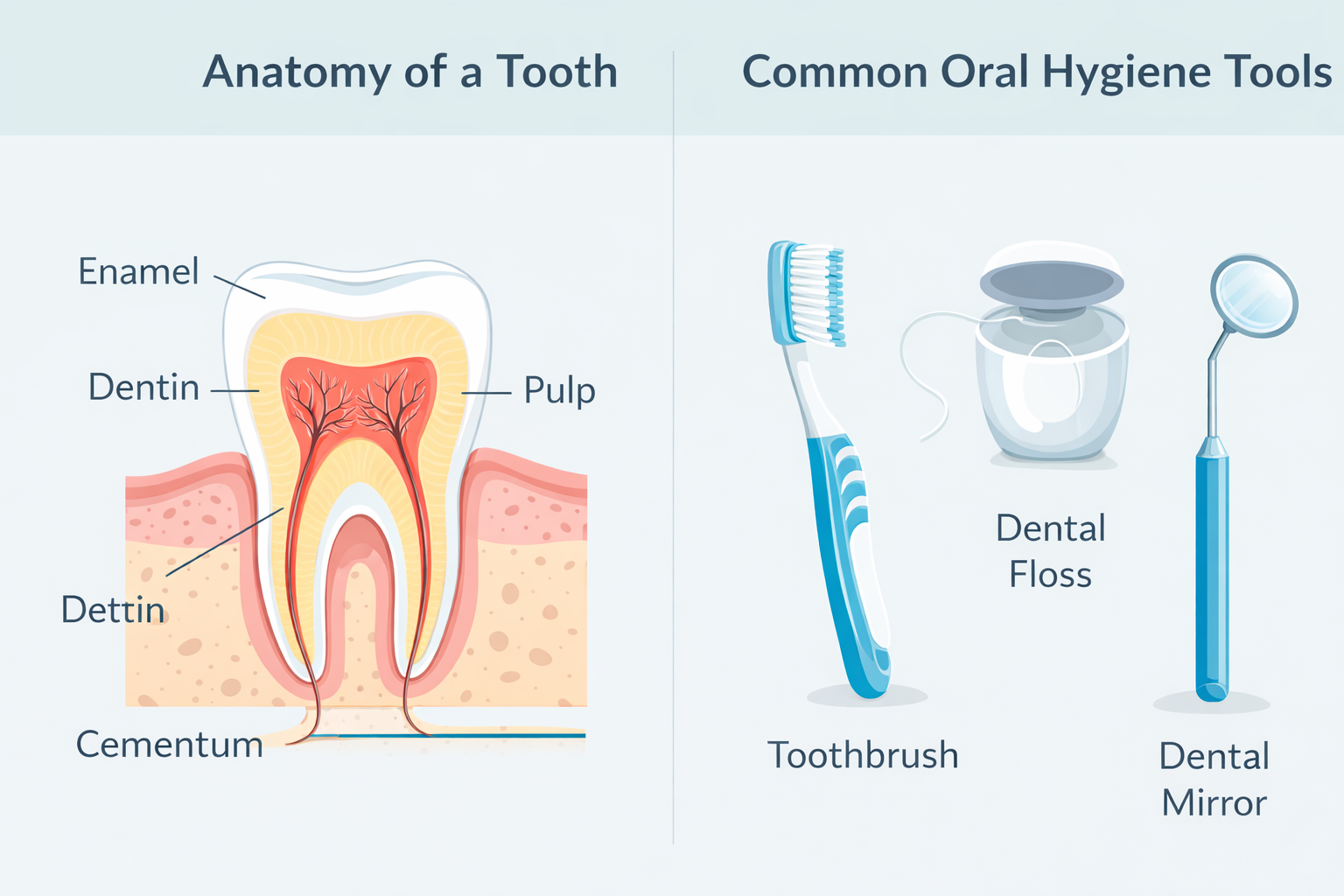
Visual diagram displaying tooth anatomy and commonly recognized oral hygiene tools.
Disclaimer
This article is for general informational and educational purposes only. It does not constitute professional medical, dental, or consumer purchasing advice. References to procedures, products, or clinics do not imply endorsement or guarantee of results. Readers are encouraged to consult licensed dental professionals and verified resources for oral health decisions.