Seasonal Planning for Surgical Nose Enhancements
A neutral overview of timing considerations for rhinoplasty procedures
Seasonal planning refers to how the timing of a medical procedure may relate to environmental conditions, personal schedules, and recovery logistics. In the context of rhinoplasty, some individuals consider factors such as weather, work or school commitments, and healing periods when planning consultations or procedures. This article provides a general educational overview of how seasonal factors may influence planning, without suggesting specific timing decisions.
What is Rhinoplasty?
Rhinoplasty is a surgical procedure that involves modifying the structure of the nose. It may address functional concerns, such as airflow, or structural aspects of the nasal framework. The procedure can involve bone, cartilage, and soft tissue, depending on the case.
Why Seasonal Planning is Considered
Seasonal planning is not a medical requirement but may be discussed in general patient education contexts. Timing considerations often relate to:
- Recovery time availability
- Environmental exposure (such as heat or humidity)
- Personal or professional schedules
These factors may affect convenience rather than clinical outcomes.
Climate Considerations in the Philippines
The Philippines has a tropical climate with generally warm temperatures and seasonal rainfall patterns.
Dry Season (Typically December to May)
- Warmer temperatures may increase perspiration
- Outdoor activities are more common, which may affect sun exposure
Rainy Season (Typically June to November)
- Increased humidity and rainfall
- Potential for reduced outdoor exposure
Environmental conditions may influence comfort during recovery, but they do not determine procedural success.
Scheduling Around Work or School
Some individuals explore timing based on personal schedules. Examples include:
- School breaks or holidays
- Leave periods from work
- Times with fewer social or physical commitments
Planning in advance may help accommodate general recovery periods, which can vary.
Recovery and Environmental Factors (General Overview)
After rhinoplasty, general recovery considerations may include:
- Limiting exposure to direct sunlight
- Avoiding activities that may impact the nose
- Allowing time for swelling to gradually subside
Climate conditions such as heat or humidity may affect comfort levels, but individual experiences differ.
Travel and Activity Planning
Post-procedure travel and activities are often discussed in general terms during patient education:
- Air travel may be delayed depending on recovery status
- Physical activities are typically limited during early healing
- Scheduling flexibility may support follow-up appointments
Specific timelines are determined by licensed professionals based on individual cases.
Long-Term Timing Considerations
Seasonal timing does not guarantee specific outcomes. Long-term results are influenced by:
- Individual healing response
- Surgical technique
- Adherence to general recovery guidance
Planning may focus on convenience and personal readiness rather than seasonal advantage.
Context & Consumer Awareness
Under medical advertising and consumer protection standards, timing-related information should not imply improved results based on specific seasons.
In patient education materials, it is commonly emphasized that:
- No season guarantees better outcomes
- Recovery experiences vary
- Decisions are typically made after consultation with a licensed professional
Consumers are encouraged to rely on verified medical guidance and avoid assumptions based on timing alone.
FAQs
Is there a “best” season for rhinoplasty?
There is no medically established “best” season. Timing is usually based on personal schedules and general recovery considerations.
Does weather affect healing results?
Weather may influence comfort during recovery, but it does not determine final outcomes.
Can rhinoplasty be scheduled year-round?
Yes. Rhinoplasty procedures are performed throughout the year, depending on availability and individual readiness.
Trusted Sources
- Philippine Department of Health (DOH) public advisories
- U.S. Food and Drug Administration (FDA) safety information
- Peer-reviewed journals such as Plastic and Reconstructive Surgery
- American Society of Plastic Surgeons (ASPS) educational resources
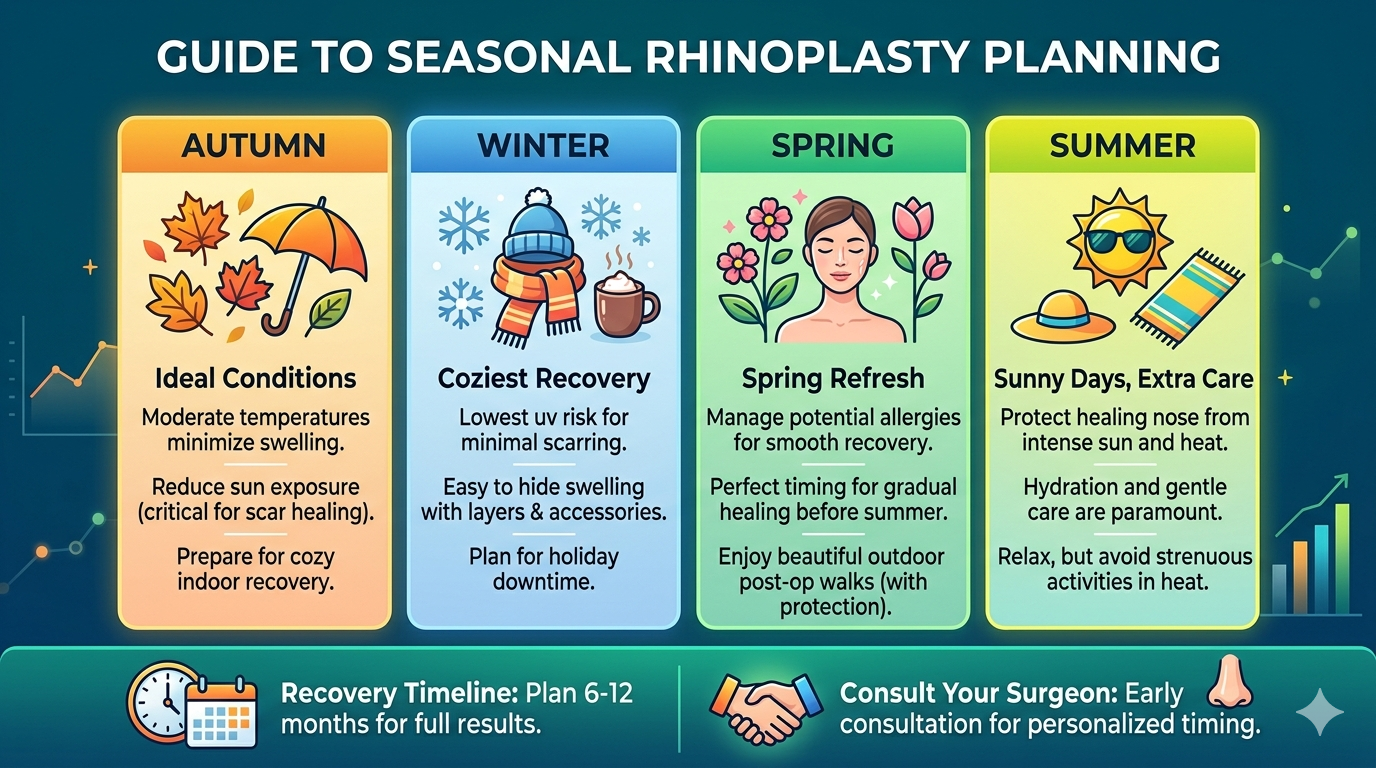
Visual layout of seasonal timing elements related to rhinoplasty planning
Disclaimer
This article is for general informational and educational purposes only. It does not constitute professional medical, surgical, diagnostic, or consumer purchasing advice. References to procedures, providers, or methods do not imply endorsement or guarantee of results. Readers are encouraged to consult licensed medical professionals and official resources before making any medical decision.