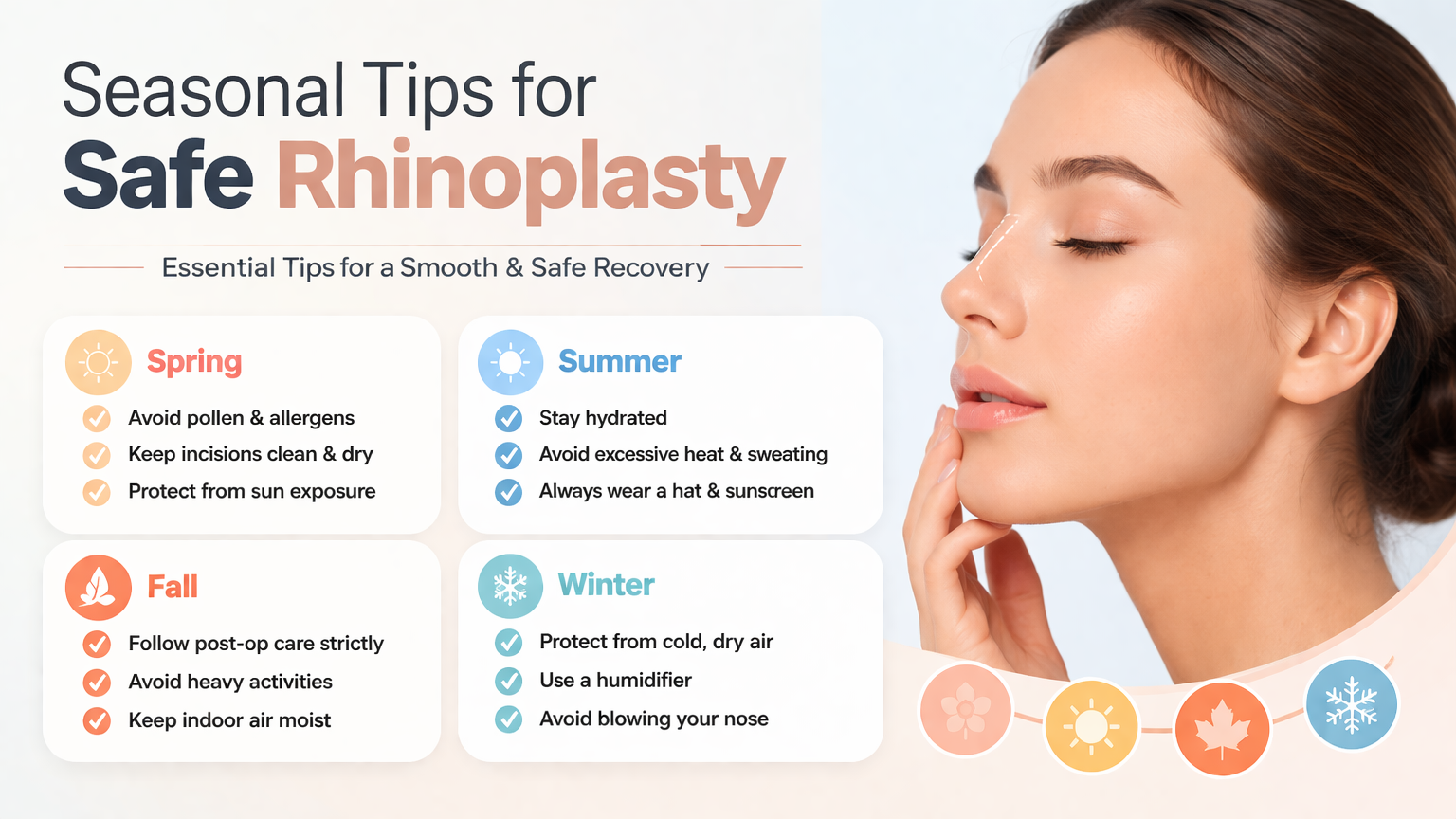
Seasonal Considerations for Rhinoplasty: A General Safety Overview
How environmental factors across the year may relate to planning and recovery
Rhinoplasty is a procedure that modifies the structure of the nose for functional or structural purposes. While the procedure itself is not limited to a specific time of year, environmental conditions such as temperature, humidity, and seasonal health patterns may influence general comfort during recovery. This article outlines neutral, educational information on how seasonal factors may be considered in relation to rhinoplasty, with a focus on safety awareness and informed planning.
What is Rhinoplasty?
Rhinoplasty is a surgical procedure that alters the shape or internal structure of the nose. It may involve bone, cartilage, and soft tissue. The procedure is performed by licensed medical professionals, and outcomes vary depending on individual anatomy and healing response.
What Parts of the Nose Are Involved?
Key anatomical structures include:
- Nasal bones – upper structural support
- Cartilage – shapes the nasal tip and lower areas
- Septum – internal divider affecting airflow
- Skin and soft tissue – outer covering and support
Seasonal conditions do not change anatomy but may influence recovery comfort.
Rhinoplasty vs Septoplasty
- Rhinoplasty involves structural or external nasal changes
- Septoplasty focuses on correcting the nasal septum to improve airflow
Both procedures may be performed separately or together, depending on clinical evaluation.
Surgical vs Non-Surgical Nose Enhancement
Surgical Rhinoplasty
Involves permanent structural modification under controlled medical conditions.
Non-Surgical Nose Enhancement
Uses injectable materials to temporarily adjust contour. Effects are limited in scope and duration.
Typical Consultation Process (General Overview)
In educational settings, consultations typically include:
- Review of medical background
- Discussion of nasal structure
- Explanation of possible approaches
- General discussion of risks and recovery
Seasonal timing may be discussed, but decisions are based on medical considerations.
Seasonal Factors That May Affect Recovery (General Awareness)
Warm and Humid Conditions
In climates with higher temperatures and humidity, such as parts of the Philippines during summer months:
- Sweating may increase skin sensitivity
- Heat exposure may contribute to general discomfort
- Maintaining hygiene around the nasal area may require attention
Rainy Season Considerations
During periods of frequent rainfall:
- Higher incidence of respiratory infections may occur in the general population
- Environmental humidity remains elevated
- Travel conditions may be less predictable for follow-up visits
Cooler or Drier Periods
In relatively cooler or less humid periods:
- Some individuals report less sweating-related discomfort
- Dry air (in certain environments with air conditioning) may affect nasal passages
These factors do not determine outcomes but may influence personal comfort during recovery.
Common Risks and Complications (General Awareness)
Rhinoplasty may involve risks such as:
- Infection
- Bleeding
- Swelling and bruising
- Temporary or persistent breathing changes
- Structural irregularities
Seasonal conditions do not eliminate these risks but may interact with general health factors.
Recovery and Healing Timeline (General)
Typical recovery phases described in educational materials include:
- First 1–2 weeks: visible swelling and bruising
- Several weeks: gradual improvement
- Several months to one year: continued healing and tissue settling
Environmental comfort during these phases may vary depending on seasonal conditions.
Long-Term Considerations (Neutral)
Long-term results may be influenced by:
- Natural healing processes
- Individual biological variation
- Environmental exposure over time
Seasonal timing does not guarantee differences in long-term outcomes.
Context & Consumer Awareness
Under medical advertising and consumer protection standards, timing-related claims must avoid implying improved results based on season alone.
In patient education literature, it is generally noted that:
- There is no universally “ideal” season for rhinoplasty
- Medical readiness and professional evaluation are primary considerations
- Environmental comfort is a secondary, personal factor
Consumers are encouraged to verify medical information through licensed professionals and official health resources.
FAQ (Definition-Based)
Is there a specific season recommended for rhinoplasty?
There is no medically established “best” season. Timing depends on individual circumstances and clinical evaluation.
Can weather affect rhinoplasty recovery?
Weather may influence comfort levels, such as heat or humidity, but does not determine surgical outcomes.
Are respiratory conditions relevant when planning rhinoplasty?
General respiratory health may be discussed during consultation, as it can relate to overall readiness for procedures.
Trusted Sources
- Philippine Department of Health (DOH)
- U.S. Food and Drug Administration (FDA)
- Peer-reviewed journals such as Plastic and Reconstructive Surgery
- American Society of Plastic Surgeons (ASPS)
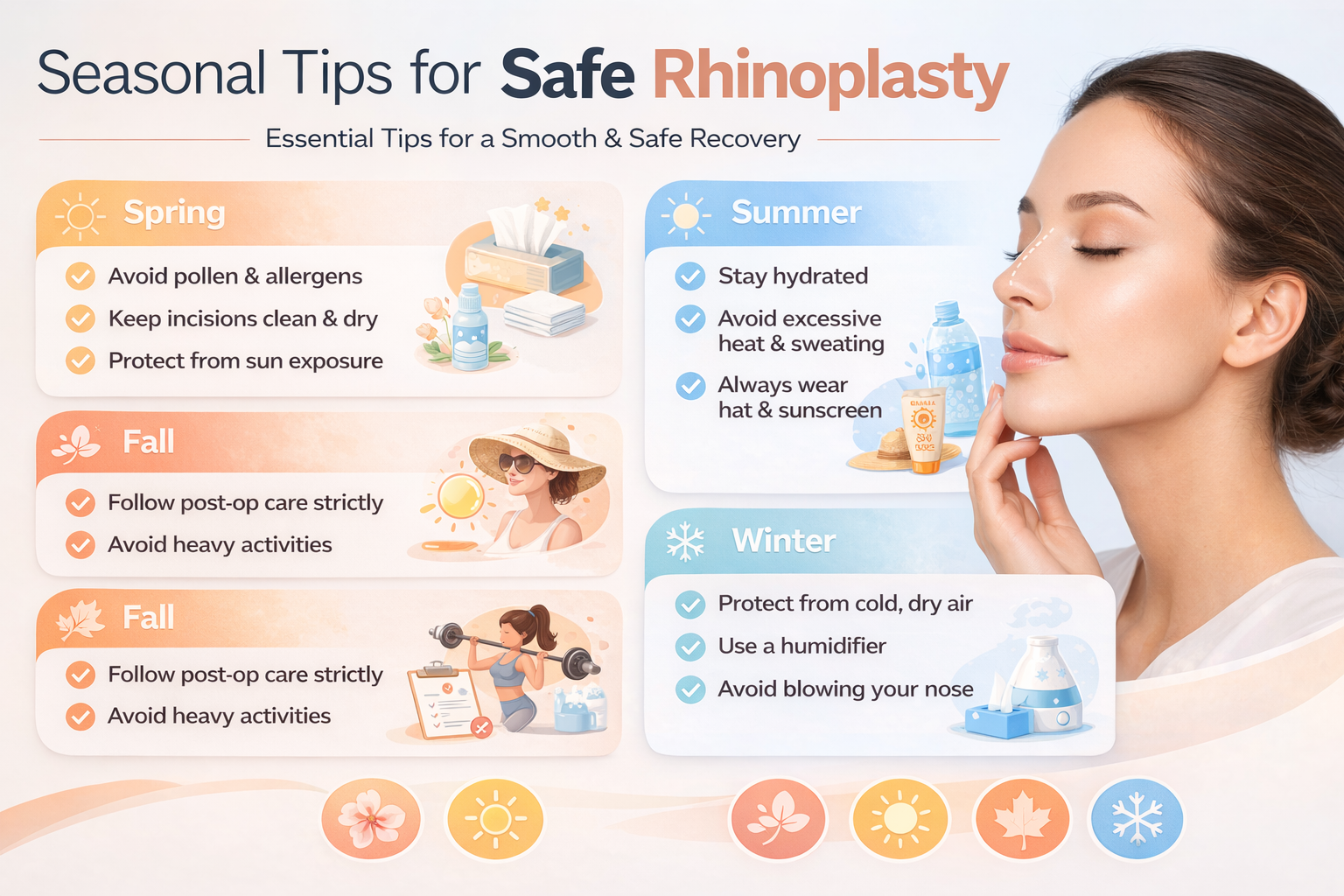
Infographic illustrating seasonal elements and general recovery phases
Disclaimer
This article is for general informational and educational purposes only. It does not constitute professional medical, surgical, diagnostic, or consumer purchasing advice. References to procedures, providers, or methods do not imply endorsement or guarantee of results. Readers are encouraged to consult licensed medical professionals and official resources before making any medical decision.