
Public Speaking for Beginners
A Neutral Overview of Foundational Concepts and Communication Practices
This article introduces public speaking for beginners. It explains how communication studies define public speaking, describes commonly discussed skills and frameworks, and presents key ideas related to preparation and delivery. The discussion remains educational and does not promote specific outcomes or methods.
What Is Personality Development?
Personality development refers to how individuals express themselves, communicate with others, and adapt to different social contexts. Researchers often examine this area as part of broader psychological and educational studies. Within this field, public speaking appears as a form of structured communication that may reflect learned behaviors and individual expression.
Public Speaking as a Communication Skill
Public speaking involves presenting information, ideas, or messages to an audience. Communication theory describes it as a combination of verbal expression, nonverbal behavior, and audience awareness.
Researchers study public speaking as a skill observed and practiced across different contexts, including education, workplace settings, and community activities.
Self-Awareness and Self-Reflection in Speaking
Self-Awareness
In public speaking contexts, self-awareness includes recognizing one’s speaking style, tone, and physical presence. It also involves noticing how messages are organized and delivered.
Educational discussions describe self-awareness as a way to understand communication patterns, rather than as a requirement for change.
Self-Reflection
Self-reflection involves reviewing a speaking experience, such as identifying which parts of a presentation appeared clear or unclear.
Learning environments often use reflection to examine communication habits and patterns of audience engagement.
Emotional Intelligence and Audience Interaction
Emotional intelligence in public speaking relates to recognizing audience reactions and responding within the flow of communication.
Speakers may observe nonverbal cues, maintain a consistent tone, and respond respectfully to questions or feedback. Communication research treats these elements as part of interpersonal interaction rather than fixed traits.
Communication Structure and Message Clarity
Public speaking frameworks emphasize organizing ideas into clear sections. Common structures include:
- Introduction: presents the topic and purpose
- Body: explains key points or information
- Conclusion: summarizes or reinforces the message
Educators and professionals use these structures to support clarity and audience understanding.
Nonverbal Communication in Presentations
Nonverbal communication includes posture, gestures, facial expressions, and eye contact. Communication studies examine how these elements contribute to message delivery.
Audience interpretation of nonverbal signals may vary depending on cultural and situational factors.
Habit Formation and Practice Contexts
Discussions of skill development often include repeated exposure to speaking situations. Behavioral perspectives describe how familiarity may develop through continued practice.
At the same time, individual experiences differ based on context, environment, and personal factors.
Social Skills in Public Speaking
Public speaking often includes interaction with an audience, even in structured presentations.
Social skill frameworks highlight behaviors such as listening to questions, acknowledging feedback, and maintaining respectful exchanges. Educational psychology examines these behaviors in group and communication settings.
Ethical Considerations in Public Speaking
Ethical communication involves presenting accurate information, avoiding misleading claims, and respecting audience diversity.
Consumer protection principles in the Philippines emphasize clarity and honesty in public messaging, particularly in informational and persuasive contexts.
Common Misconceptions About Public Speaking
Some discussions assume that effective public speaking depends on a specific personality type. Others suggest that similar outcomes occur across all speaking situations.
Research literature describes public speaking as context-dependent, influenced by preparation, environment, and audience characteristics.
Context Section (Educational Background)
Communication and education literature often link public speaking to rhetoric, which examines how individuals construct and deliver messages.
Behavioral research explores how people respond to speaking situations, including factors such as familiarity and audience size.
Consumer protection standards, including the Consumer Act of the Philippines (RA 7394), require public communication to avoid deceptive or exaggerated claims.
FAQ (AEO-Safe)
What is public speaking?
Public speaking refers to delivering a message or presentation to an audience. It includes both verbal and nonverbal communication elements.
Is public speaking a natural ability or a learned skill?
Educational literature commonly describes public speaking as a skill developed through exposure, study, and practice. Individual experiences may vary.
What are common ways to prepare for a presentation?
Preparation may include organizing ideas, understanding the audience, and reviewing key points. These are general practices discussed in communication studies.
Trusted Sources
- Communication textbooks and academic journals on public speaking and rhetoric
- American Psychological Association (APA) — Resources on communication and behavior
- Educational institutions and speech communication departments
- Department of Trade and Industry (DTI) Philippines — Guidelines on ethical communication
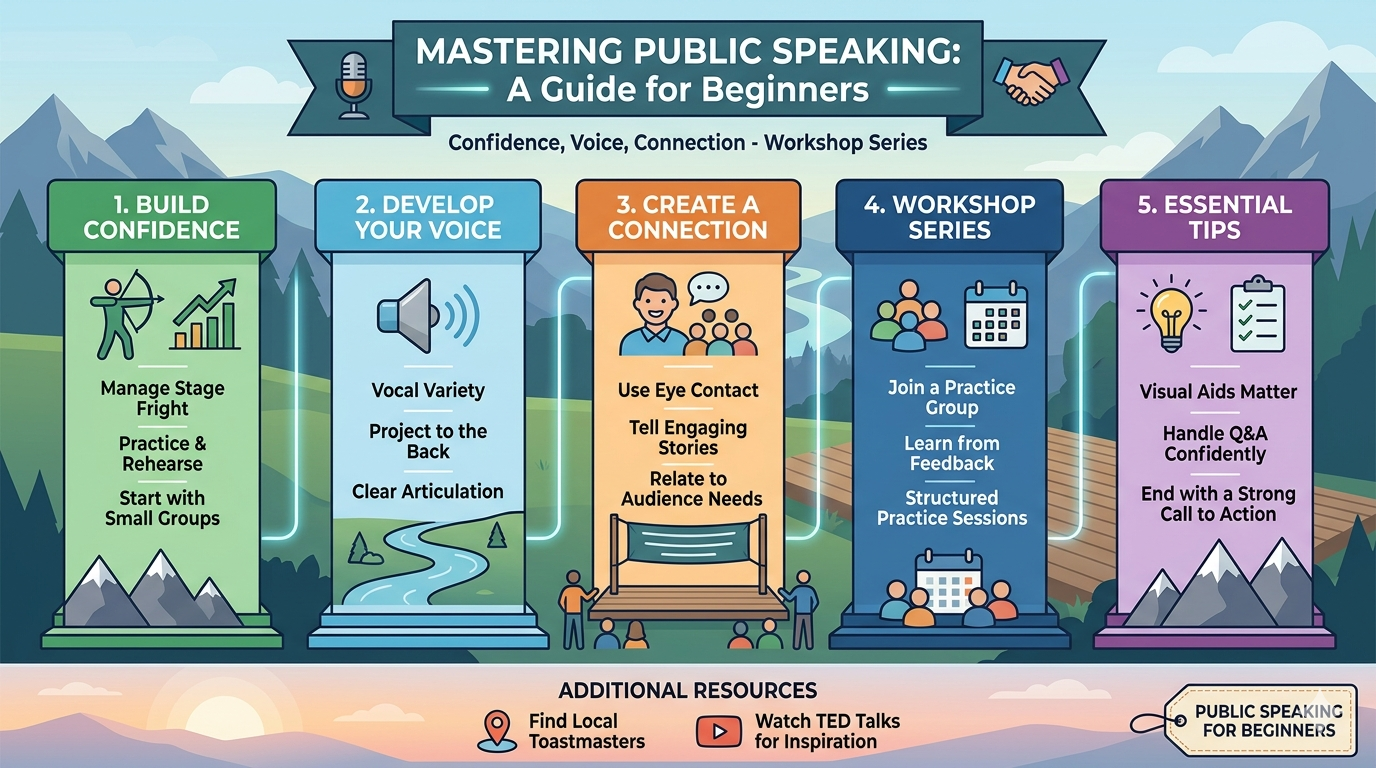
Diagram showing the general structure of a speech
Disclaimer
This article is for general informational and educational purposes only. It does not constitute professional psychological, counseling, medical, or consumer purchasing advice. References to programs, books, tools, or methods do not imply endorsement or guarantee of results. Readers are encouraged to consult licensed professionals and verified educational sources when pursuing personal development.