
Understanding “Pastel Glow” and Anti-Pollution Skin Care
An Educational Overview of Skin Appearance and Environmental Exposure
Skin care discussions sometimes use descriptive phrases such as “pastel glow” to refer to a soft, even-looking skin appearance. At the same time, anti-pollution skin care refers to practices intended to help protect skin from environmental factors such as air pollutants and particulate matter. This article provides a neutral explanation of these concepts, along with basic information about skin function and preventive skin care practices. References to health guidance may align with public information provided by institutions such as the Department of Health (Philippines) and the Food and Drug Administration Philippines.
Skin Appearance and the Term “Pastel Glow”
The phrase “pastel glow” is commonly used in skin care discussions to describe a visual impression of skin that appears smooth, softly illuminated, and evenly toned. The term is descriptive rather than scientific. It does not correspond to a specific dermatological condition or measurable skin parameter.
Several normal biological factors influence how skin appears under natural or artificial light, including:
- Hydration levels in the outer skin layer
- Distribution of natural skin pigments
- Surface texture of the skin barrier
- Reflection of light from the skin’s surface
Variations in these characteristics are common across individuals and can change due to climate, environmental exposure, or routine skin care practices.
Environmental Pollution and Skin Exposure
Urban environments may contain airborne pollutants such as particulate matter, vehicle emissions, and industrial by-products. These particles can come into contact with the outermost skin layer.
Dermatology research has examined possible interactions between pollutants and the skin barrier. Environmental exposure may contribute to factors such as:
- Accumulation of particles on the skin surface
- Oxidative stress processes in skin cells
- Changes in the skin barrier’s protective function
The degree of impact can vary depending on environmental conditions, individual skin type, and daily habits such as cleansing or sun protection.
Preventive Skin Care Practices in Polluted Environments
Preventive skin care focuses on maintaining the integrity of the skin barrier and supporting general skin hygiene. Educational dermatology resources often mention the following routine practices:
Gentle Cleansing
Cleansing may remove dirt, sweat, and environmental particles from the skin surface.
Moisturization
Moisturizers help maintain hydration in the outer skin layer and support the skin barrier.
Sun Protection
Sunscreen and protective clothing are commonly discussed in public health guidance regarding ultraviolet (UV) exposure.
Environmental Awareness
Limiting prolonged exposure to heavily polluted environments, when possible, may reduce the amount of airborne particles contacting the skin.
These practices are generally discussed as preventive or maintenance measures rather than methods for producing a specific visual outcome.
Understanding Anti-Pollution Skin Care
The phrase “anti-pollution skin care” is frequently used in product marketing and educational discussions to describe formulations or routines intended to address environmental exposure.
In dermatology literature, this concept may involve ingredients or formulations designed to:
- Support the skin barrier
- Provide antioxidant activity in laboratory settings
- Assist with removal of surface pollutants during cleansing
The effectiveness of individual products can vary depending on formulation, usage conditions, and personal skin characteristics. Regulatory authorities such as the Food and Drug Administration Philippines oversee safety and labeling standards for cosmetic products sold in the Philippines.
Context: Skin Care and Consumer Awareness
Under consumer protection laws such as the Consumer Act of the Philippines (RA 7394), cosmetic and personal care products are required to follow truthful labeling and advertising standards. These regulations aim to reduce misleading claims and ensure that product information is presented transparently.
Dermatology and cosmetic science research often emphasize that skin care routines are influenced by multiple factors, including climate, genetics, lifestyle, and environmental exposure. As a result, outcomes associated with skin care practices can vary between individuals.
FAQ
What does “anti-pollution skin care” mean?
Anti-pollution skin care generally refers to routines or products intended to help manage exposure to environmental pollutants. The term is descriptive and may involve cleansing, barrier support, and skin maintenance practices.
What factors influence how skin reflects light?
Skin hydration, surface texture, natural oils, and pigment distribution can affect how light reflects from the skin. These factors contribute to the visual appearance of skin under different lighting conditions.
Are environmental pollutants harmful to skin?
Research in dermatology has explored possible effects of pollutants on the skin barrier and oxidative processes. The extent of interaction can depend on exposure levels, individual skin characteristics, and daily skin care practices.
Trusted Sources
- Department of Health (Philippines) — public health advisories
- Food and Drug Administration Philippines — cosmetic regulation and safety information
- American Academy of Dermatology — dermatology education resources
- Peer-reviewed journals in dermatology and cosmetic science
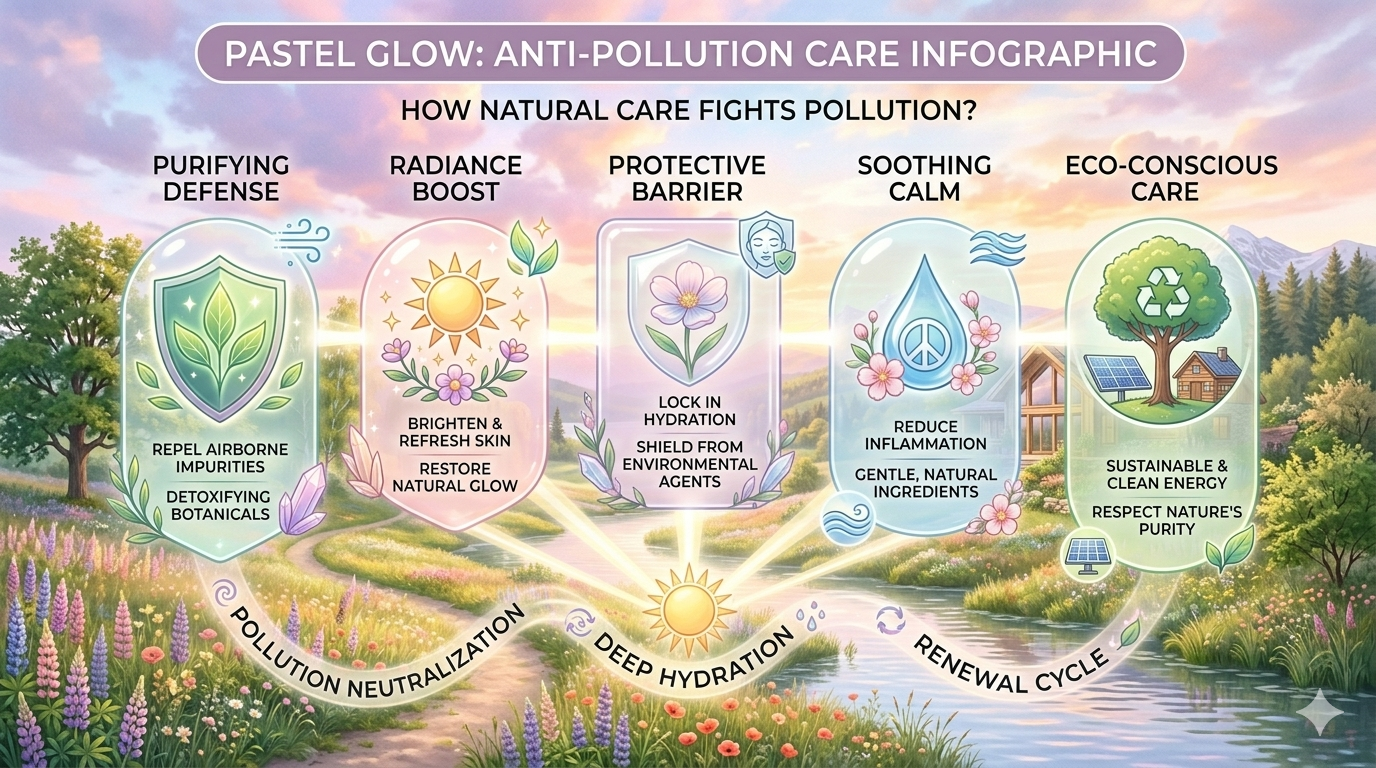
Illustrated diagram showing environmental elements and simplified skin surface layers.
Disclaimer
This article is for general informational and educational purposes only. It does not constitute professional medical, dermatological, or consumer purchasing advice. References to products, routines, or treatments do not imply endorsement or guarantee of results. Readers are encouraged to consult licensed dermatologists and verified resources for skin care decisions.