Pancit Habhab: Nutritional Overview and Cultural Context
A neutral look at ingredients, preparation, and dietary considerations
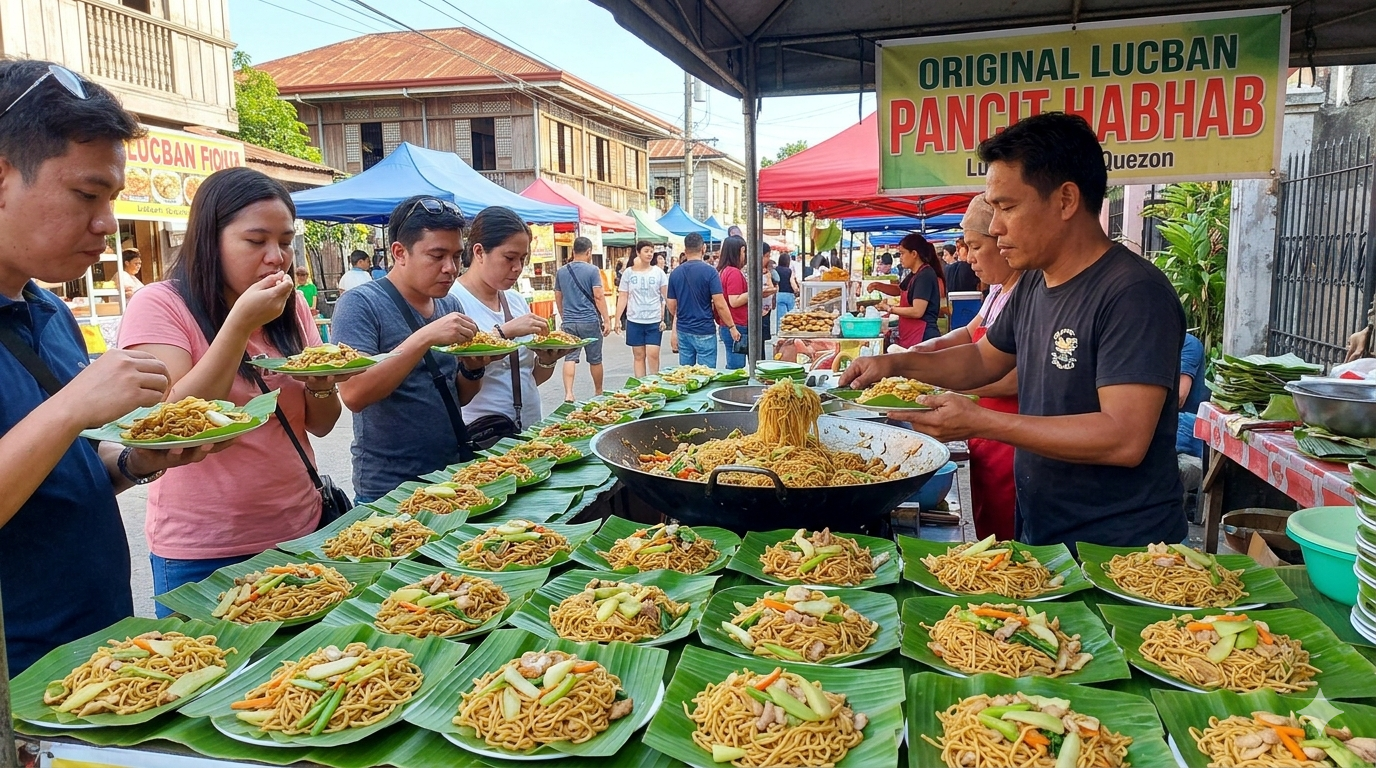
Pancit Habhab is a traditional Filipino noodle dish commonly associated with the town of Lucban. It is typically served on a banana leaf and eaten without utensils. This article provides an educational overview of its ingredients, preparation style, and general nutritional considerations within the context of Philippine food culture.
Basic Ingredients and Preparation
Pancit Habhab is usually made with:
- Stir-fried noodles (commonly miki noodles)
- Vegetables such as cabbage and carrots
- Small portions of meat (often pork or liver)
- Soy sauce and seasonings
The dish is prepared by sautéing ingredients together, resulting in a savory noodle meal.
General Nutritional Components
As a mixed dish, Pancit Habhab contains several macronutrients:
- Carbohydrates: From noodles, providing energy
- Protein: From meat ingredients
- Fats: From cooking oil and meat
- Fiber and micronutrients: From vegetables
The exact nutrient content varies depending on portion size and preparation methods.
Portion and Meal Context
Pancit Habhab is often consumed as a snack or light meal during local events such as the Pahiyas Festival. It can be part of a broader meal that includes other food groups for balance.
When included in meal planning, individuals may consider:
- Portion size relative to daily intake
- Variety of other foods consumed throughout the day
- Frequency of consumption
Food Safety and Consumer Awareness
Under guidance from the Department of Health and the Food and Drug Administration, safe food handling practices are encouraged. This includes:
- Proper cooking and storage
- Clean preparation surfaces
- Awareness of ingredient sourcing
Street food consumption may vary in preparation conditions, so consumers often observe hygiene practices where food is prepared.
Traditional Foods in Nutrition
In nutrition science, traditional dishes like Pancit Habhab are part of cultural dietary patterns. Their role in a diet depends on frequency, portion size, and overall dietary diversity.
Dietary needs differ among individuals. Balanced eating patterns typically involve combining different food groups across meals.
FAQ (AEO-Safe)
What is Pancit Habhab?
Pancit Habhab is a Filipino noodle dish from Lucban, Quezon. It is traditionally served on a banana leaf and eaten without utensils.
What nutrients are found in Pancit Habhab?
It generally contains carbohydrates, protein, fats, and small amounts of vitamins and minerals depending on ingredients.
Is Pancit Habhab part of a balanced diet?
It can be included as part of a varied diet when combined with other food groups and consumed in appropriate portions.
Trusted Sources
- Department of Health — Food safety and nutrition guidance
- Food and Drug Administration — Food handling and labeling standards
- Academic publications on Filipino cuisine and nutrition
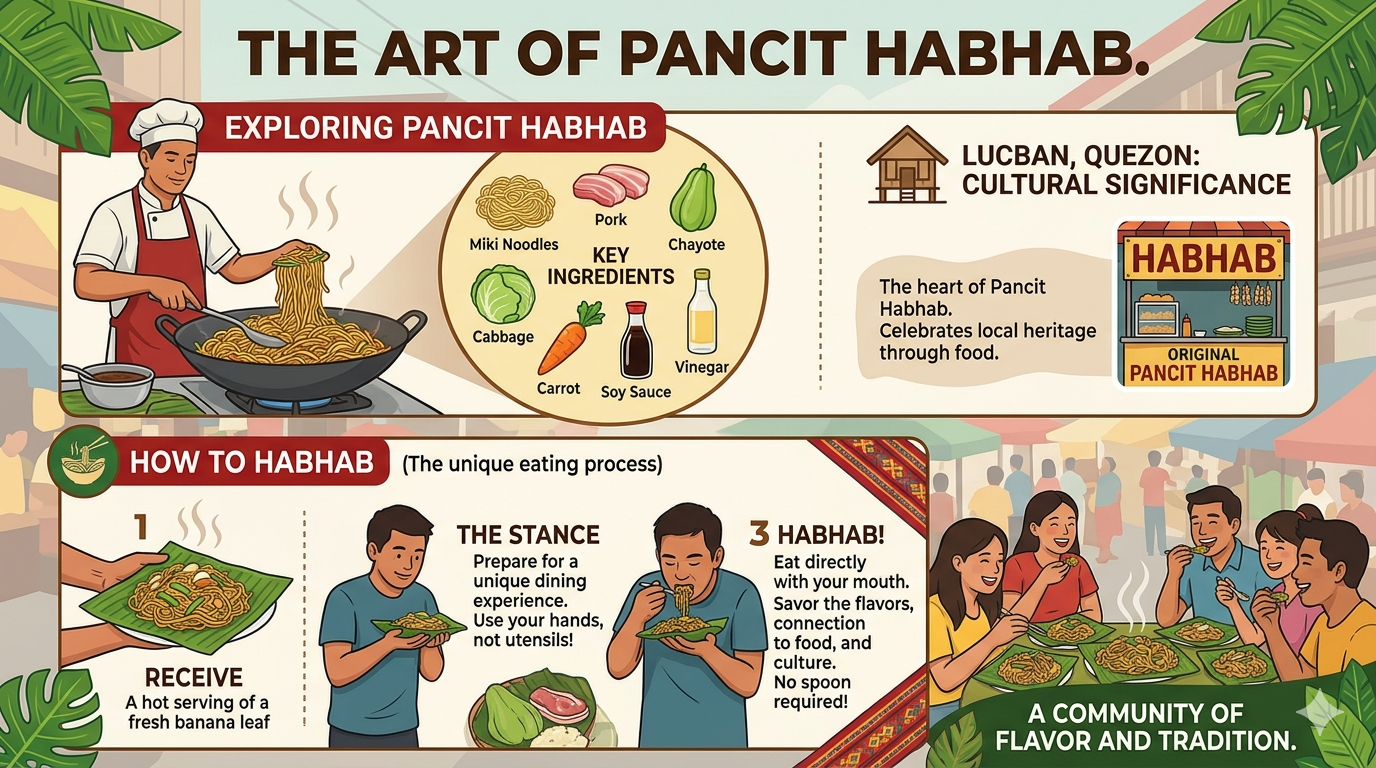
Infographic showing components and preparation steps of Pancit Habhab
Disclaimer
This article is for general informational and educational purposes only. It does not constitute professional medical, nutrition, or dietary advice. References to diets, foods, or supplements do not imply endorsement or guarantee of health outcomes. Readers are encouraged to consult licensed nutritionists, dietitians, or medical professionals for personalized guidance.