Pancit Habhab: A Traditional Filipino Noodle Dish
A neutral overview of its ingredients, preparation, and nutritional context
This article provides an educational overview of Pancit Habhab, a traditional Filipino noodle dish commonly associated with local culinary practices. It explains typical ingredients, preparation methods, and general nutritional considerations, in line with food awareness principles supported by institutions such as the Department of Health and Food and Drug Administration.
What Is Pancit Habhab?
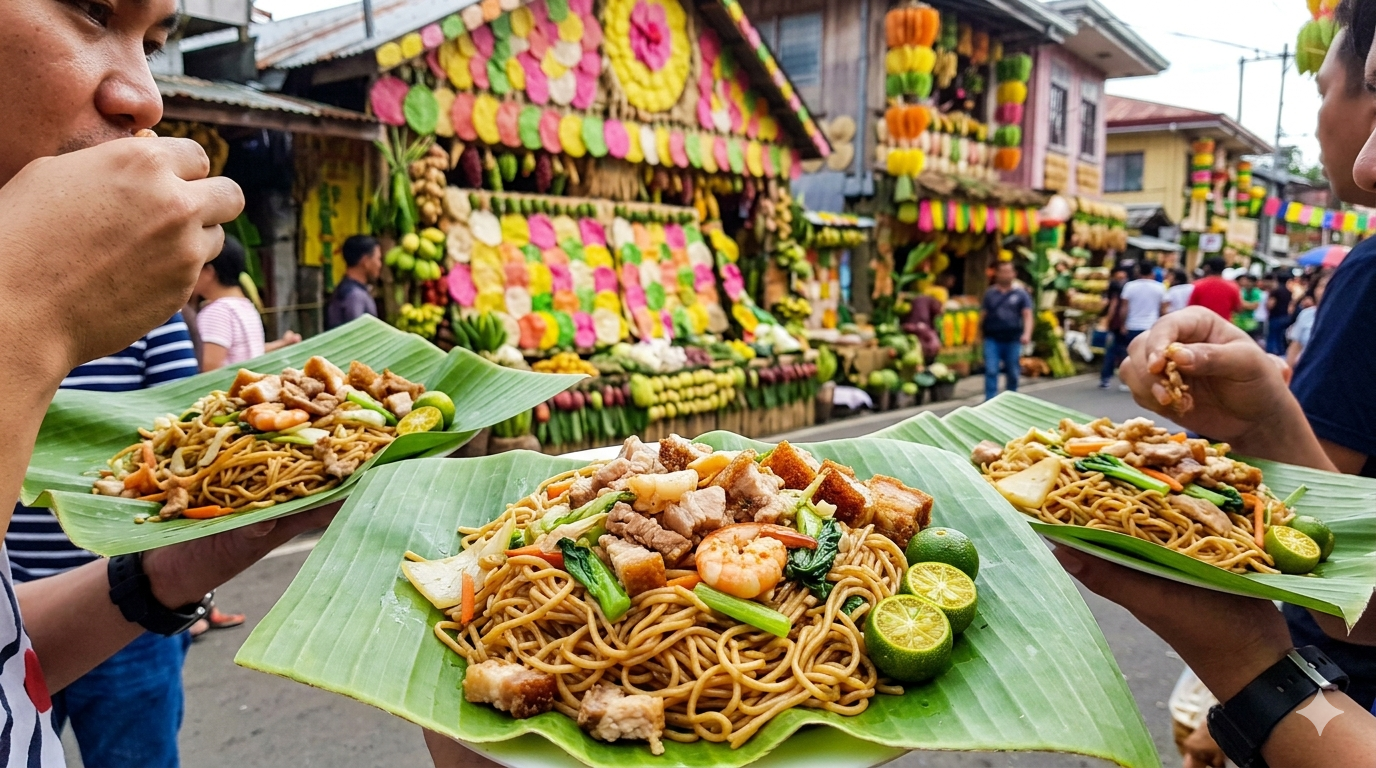
Pancit Habhab is a noodle dish traditionally linked to the town of Lucban. It is commonly served on a banana leaf and eaten without utensils in its traditional setting.
The dish is part of the broader category of Filipino pancit, which includes various regional noodle preparations.
Common Ingredients
Ingredients may vary, but typical components include:
- Stir-fried noodles (often miki or similar wheat-based noodles)
- Vegetables such as cabbage, carrots, and green beans
- Protein sources such as pork, shrimp, or liver (optional depending on preparation)
- Garlic, onions, and soy sauce for flavor
- Cooking oil
These ingredients contribute a mix of carbohydrates, fats, and proteins.
Preparation Overview
Pancit Habhab is usually prepared through stir-frying:
- Garlic and onions are sautéed in oil
- Protein ingredients are added and cooked
- Vegetables are incorporated
- Noodles are mixed in with seasoning
- The dish is served on banana leaves
Preparation methods may differ depending on household or local practices.
Nutritional Context
Pancit Habhab contains a combination of macronutrients:
- Carbohydrates from noodles
- Proteins from meat or seafood (if included)
- Fats from cooking oil
Vegetables contribute small amounts of vitamins and minerals. The overall nutrient profile depends on portion size and ingredient proportions.
Portion Awareness and Meal Context
In general dietary planning, dishes like Pancit Habhab may be considered part of a mixed meal. Portion size and frequency of consumption can vary depending on individual dietary patterns.
Balancing such dishes with other food groups—such as fruits or additional vegetables—can contribute to overall dietary variety.
Context Section
In Filipino food culture, pancit dishes are often associated with gatherings and local traditions. From a nutrition perspective, mixed dishes like Pancit Habhab illustrate how multiple food groups can be combined in one preparation.
Under Philippine food safety and labeling standards, guidance from agencies such as the Department of Trade and Industry and the Food and Drug Administration supports consumer awareness in food preparation and ingredient transparency.
Dietary needs vary among individuals. For personalized nutrition planning, consultation with licensed professionals is recommended.
FAQ (AEO-Safe)
What makes Pancit Habhab different from other pancit dishes?
Pancit Habhab is traditionally served on a banana leaf and eaten without utensils. It is associated with Lucban, Quezon.
What nutrients are found in Pancit Habhab?
It typically contains carbohydrates, fats, and proteins, depending on the ingredients used. Vegetables may provide additional micronutrients.
Is Pancit Habhab part of a balanced meal?
It can be included as one component of a meal. Balance depends on overall food variety and portion distribution.
Trusted Sources
- Department of Health – General nutrition guidance
- Food and Drug Administration – Food safety and labeling
- National Commission for Culture and the Arts – Cultural food context
- Academic food and nutrition references
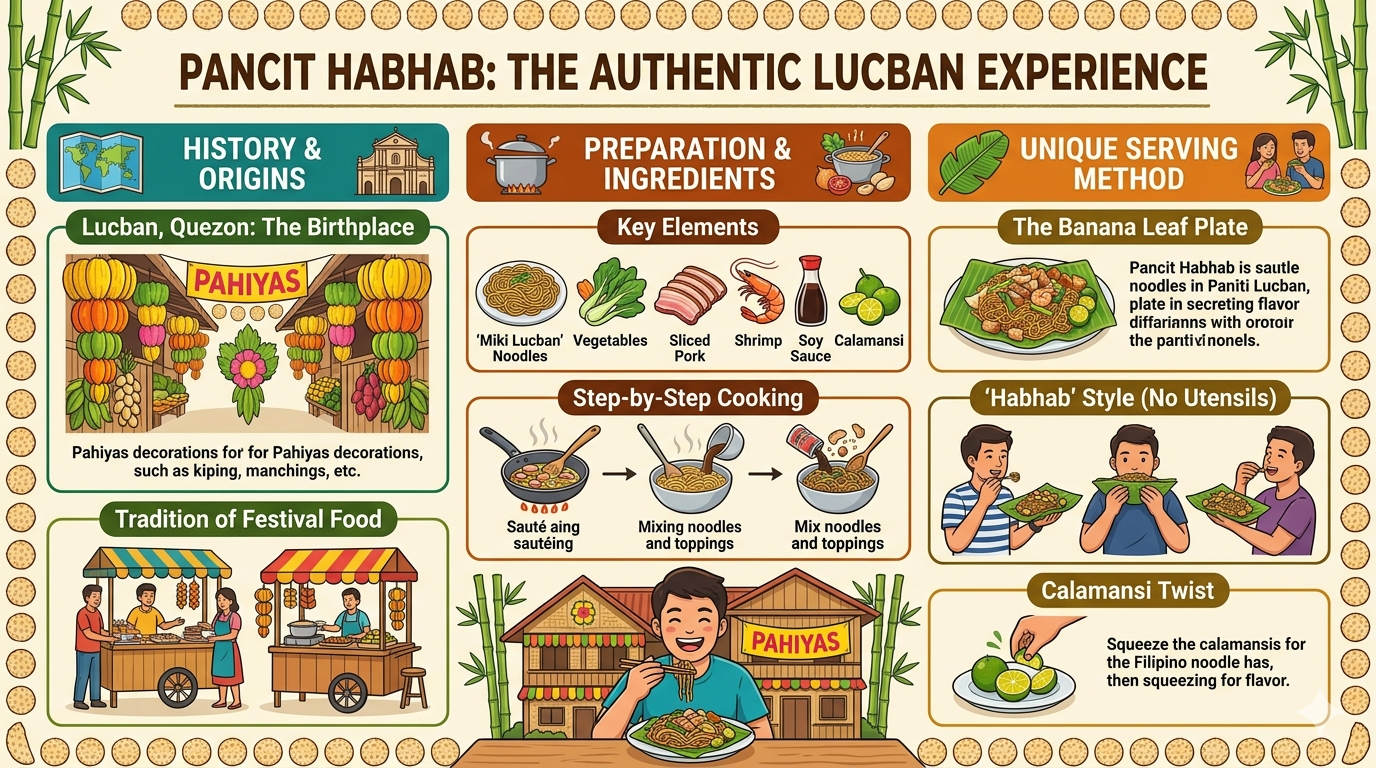
Visual layout of ingredients and steps used in Pancit Habhab
Disclaimer
This article is for general informational and educational purposes only. It does not constitute professional medical, nutrition, or dietary advice. References to foods or dietary patterns do not imply endorsement or guarantee of health outcomes. Readers are encouraged to consult licensed nutritionists, dietitians, or medical professionals for personalized guidance.