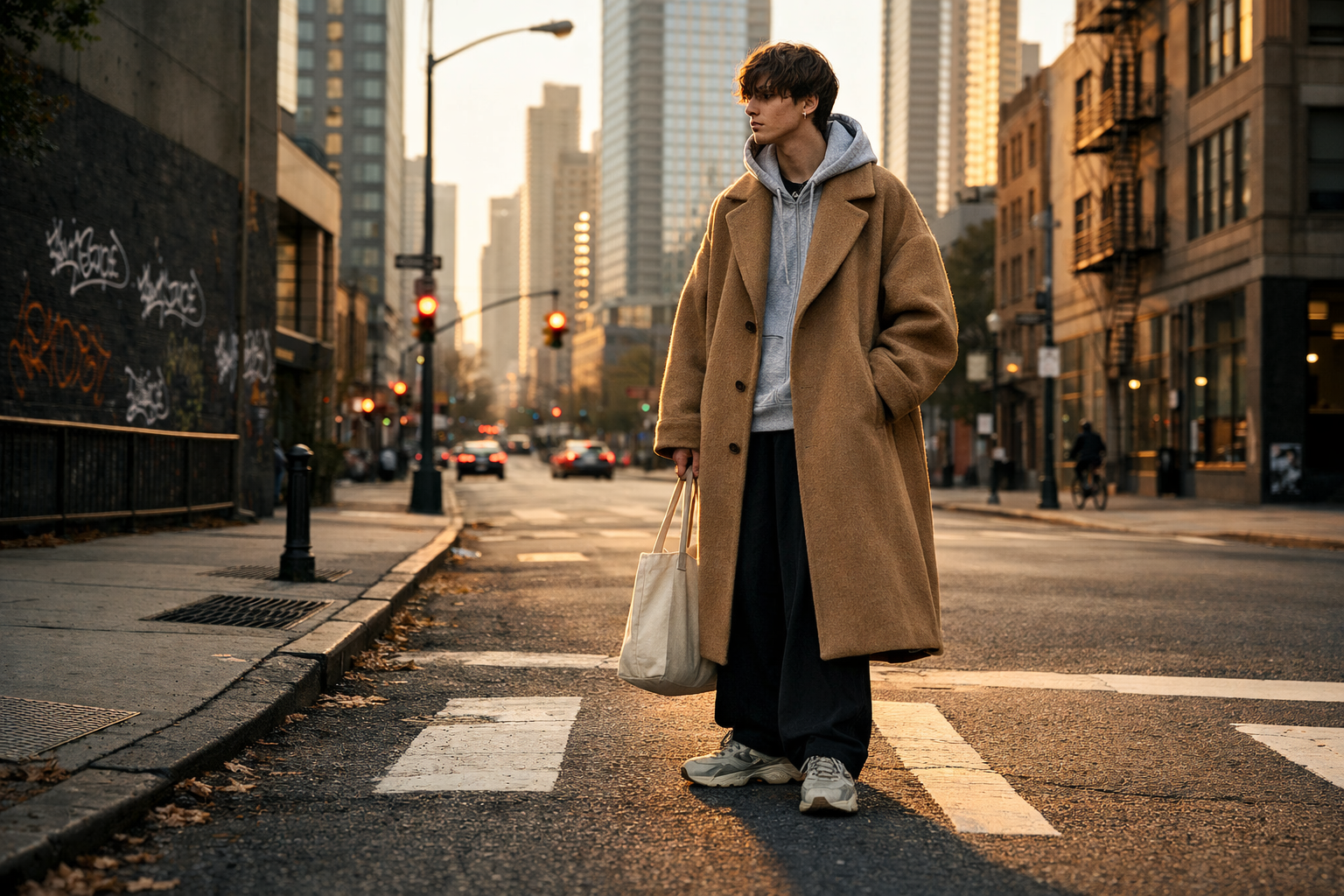
A factual overview of silhouette, fabric, and styling context in contemporary city fashion.
This article explains how oversized wool coats function within urban streetwear from a design, fabric, and styling perspective. It references general consumer protection and advertising standards in the Philippines, including the Consumer Act of the Philippines (RA 7394), to ensure neutral and non-deceptive informational framing. Readers will learn about the structure, material characteristics, historical influences, and practical considerations related to oversized wool coats in streetwear.
Oversized Silhouettes in Streetwear
Oversized coats are defined by a relaxed and extended fit that exceeds standard tailoring proportions. In streetwear contexts, this silhouette is often associated with layered outfits, relaxed movement, and visual balance between fitted and loose garments. The oversized structure typically includes dropped shoulders, extended sleeve lengths, and a longer hemline.
Wool as a Coat Material
Wool is a natural fiber known for insulation, durability, and moisture resistance. In coat construction, wool fabrics may vary in weight, texture, and weave, such as melton wool, tweed, or boiled wool. Heavier wool tends to provide structure, while softer weaves may allow for more fluid draping. Lining materials are often used to support comfort and garment longevity.
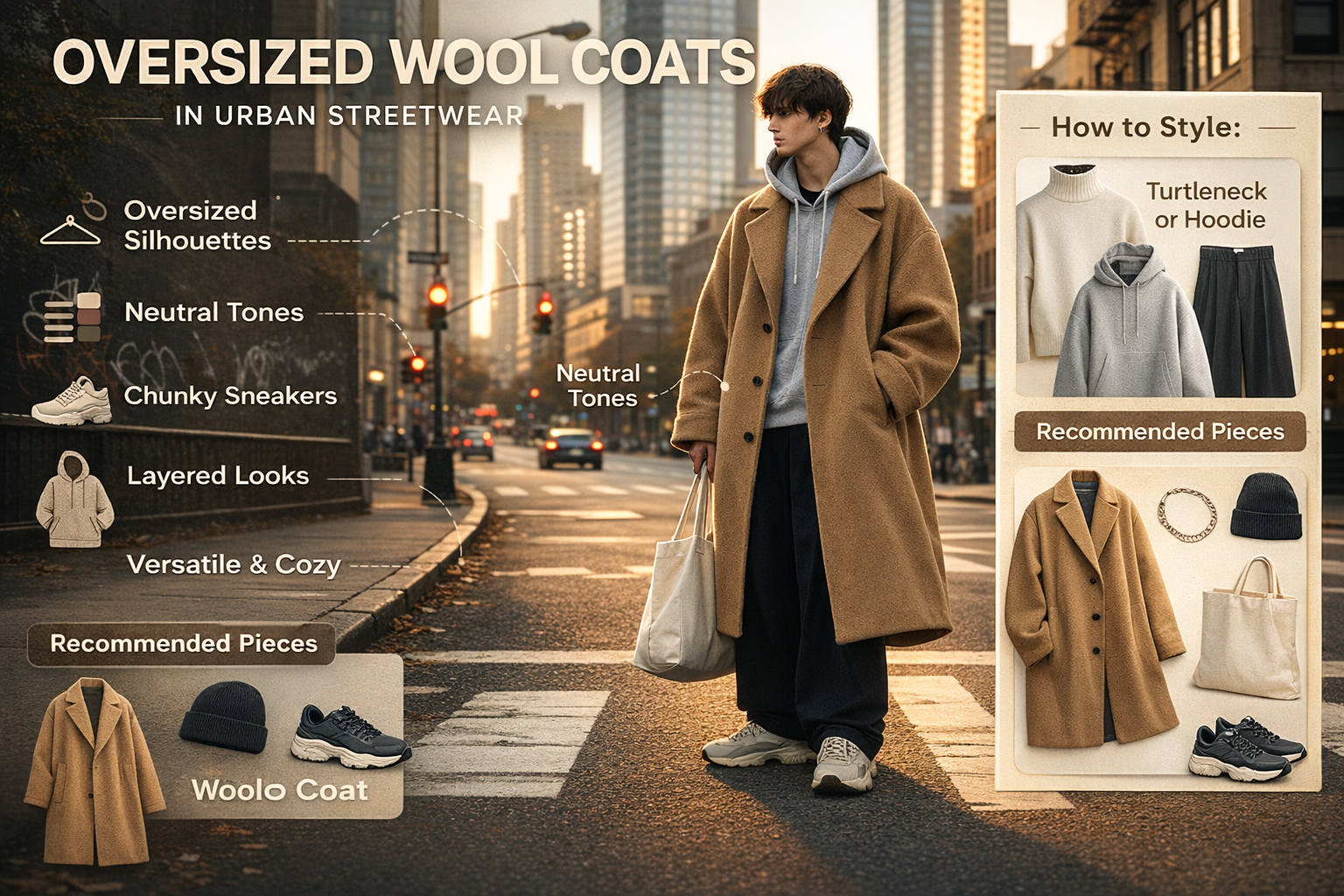
Infographic outlining key features of oversized wool coats.
Construction and Garment Structure
Oversized wool coats commonly feature straight or boxy cuts to maintain a consistent shape. Structural elements may include wide lapels, large pockets, double-breasted fronts, or minimal hardware. Stitching quality, seam reinforcement, and fabric thickness influence how the coat maintains its form over time.
Layering and Proportion in Urban Styling
In general styling practice, oversized coats are paired with a variety of garment types, including hoodies, knitwear, tailored trousers, or casual denim. Styling focuses on proportion management rather than appearance enhancement. For example, wide outerwear may be balanced with narrower inner layers to maintain visual coherence.
Ethical and Sustainability Considerations
Wool sourcing practices vary depending on production standards and animal welfare policies. Some manufacturers disclose information about responsible wool sourcing, recycled wool use, or environmentally conscious dyeing processes. Consumers may refer to publicly available sustainability disclosures or independent textile certifications for verification.
In fashion history, oversized outerwear has appeared across multiple movements, including military surplus styling, 1990s hip-hop fashion, and contemporary streetwear culture. In general styling practice, oversized garments serve functional and aesthetic roles, including thermal insulation and layering flexibility. Under consumer advertising standards, descriptions of fashion items should avoid misleading claims about personal outcomes, appearance changes, or social effects.
FAQ
What is an oversized coat?
An oversized coat is a garment designed with a deliberately larger fit than standard sizing, often featuring extended length and relaxed proportions.
What makes wool suitable for coats?
Wool provides insulation, breathability, and durability, making it commonly used for outerwear in cooler environments.
What is urban streetwear?
Urban streetwear refers to a fashion category influenced by casual city wear, youth culture, and everyday functional clothing.
Trusted Sources
-
Consumer Act of the Philippines (RA 7394)
-
International Textile and Apparel Association (ITAA)
-
Fashion Institute of Technology (FIT) — Educational Resources
-
Textile Exchange — Wool and Fiber Standards
-
The Metropolitan Museum of Art — Fashion History Archives
Disclaimer
This article is for general informational and educational purposes only. It does not constitute professional styling, psychological, medical, or consumer purchasing advice. References to fashion trends, brands, or styling methods do not imply endorsement or guarantee of results. Readers are encouraged to rely on personal preference, verified product information, and official consumer protection resources when making fashion or purchasing decisions.