
Nose Surgery Planning for Summer Holidays: A General Educational Guide
A neutral overview of timing, recovery considerations, and planning factors for rhinoplasty around holiday periods.
Rhinoplasty is a procedure that modifies the structure of the nose for functional or structural reasons. Some individuals explore scheduling this procedure during extended breaks, such as summer holidays, due to potential flexibility in rest and recovery time. This article provides a general, non-promotional overview of planning considerations, recovery timelines, and consumer awareness factors when aligning rhinoplasty with holiday periods.
What is Rhinoplasty?
Rhinoplasty is a surgical procedure involving changes to nasal bone, cartilage, or soft tissue. It may address structural concerns affecting breathing or alter nasal shape. The procedure is performed by licensed medical professionals in appropriate clinical settings.
Why Timing is Considered in Planning
In general patient education discussions, timing may be considered for practical reasons such as:
- Availability of time for rest and reduced daily obligations
- Ability to attend follow-up visits
- Personal scheduling preferences
Summer holidays are one example of a period when some individuals have fewer work or school commitments. However, suitability depends on individual circumstances and medical evaluation.
General Recovery Timeline and Holiday Alignment
Recovery varies by individual, but general phases may include:
- First 7–10 days: Swelling, bruising, and possible use of nasal support devices
- 2–4 weeks: Gradual reduction in visible swelling
- Several months: Continued healing and structural settling
- Up to 1 year or more: Final outcomes stabilize
When aligning with a holiday period, individuals often consider whether the available time allows for initial recovery before resuming routine activities.
Environmental and Seasonal Considerations
During warmer months, general considerations may include:
- Increased exposure to sunlight
- Higher temperatures that may affect comfort during recovery
- Need for careful skin and wound care as advised by professionals
These factors are typically discussed during pre-procedure consultations.
Typical Planning Process (General Overview)
In educational settings, planning may involve:
- Scheduling a consultation in advance
- Reviewing medical history and current health status
- Discussing general recovery expectations
- Coordinating time for rest and follow-up visits
Licensed professionals determine appropriate timing based on clinical assessment.
Common Risks and Considerations
Rhinoplasty, like other surgical procedures, carries potential risks:
- Infection
- Bleeding
- Swelling or delayed healing
- Breathing-related concerns
- Structural irregularities
Risk awareness is part of informed decision-making and is typically discussed during consultation.
Long-Term Considerations
Outcomes may evolve over time due to:
- Natural aging
- Individual healing response
- Skin and tissue characteristics
Additional evaluation may be considered in some cases, depending on medical findings.
Context & Consumer Awareness
Under Philippine consumer protection and medical ethics standards, including guidance from the Department of Health, medical information must be accurate and not misleading.
Consumers are generally encouraged to:
- Verify the credentials of healthcare providers
- Confirm facility accreditation
- Review informed consent documents carefully
Planning around holidays should not replace individualized medical assessment.
FAQs
Is summer the required time for rhinoplasty?
No. Rhinoplasty can be scheduled at different times of the year depending on individual circumstances and medical advice.
How much time is usually needed before returning to normal activities?
Initial recovery may take a few weeks, but timelines vary depending on the individual and the procedure.
Does weather affect recovery?
Environmental factors such as heat and sun exposure may influence comfort during recovery, but effects vary and should be discussed with a licensed professional.
Trusted Sources
- Department of Health
- U.S. Food and Drug Administration
- Peer-reviewed medical journals in plastic and reconstructive surgery
- Recognized medical associations
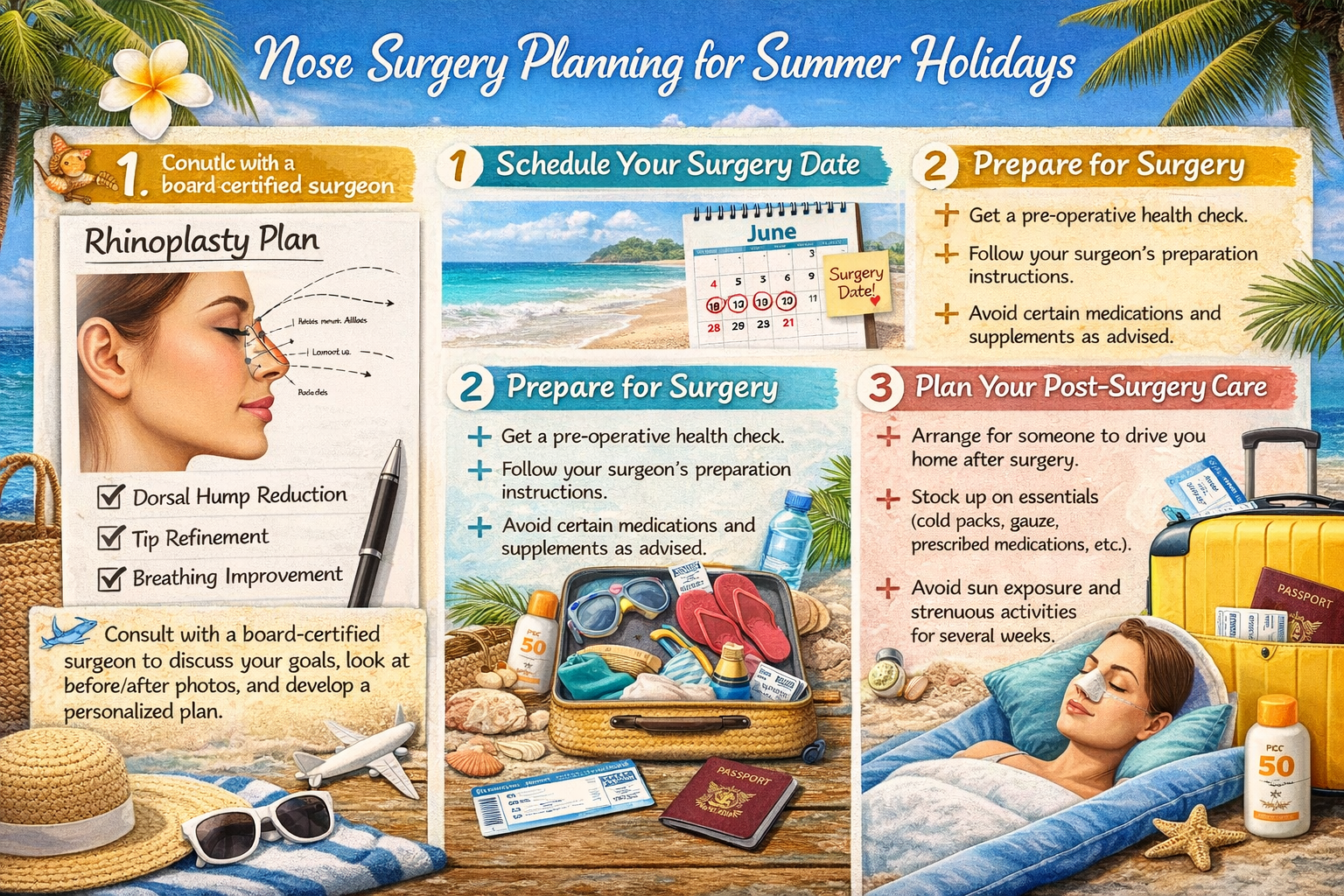
Illustrated timeline of procedural stages and recovery phases
Disclaimer
This article is for general informational and educational purposes only. It does not constitute professional medical, surgical, diagnostic, or consumer purchasing advice. References to procedures, providers, or methods do not imply endorsement or guarantee of results. Readers are encouraged to consult licensed medical professionals and official resources before making any medical decision.