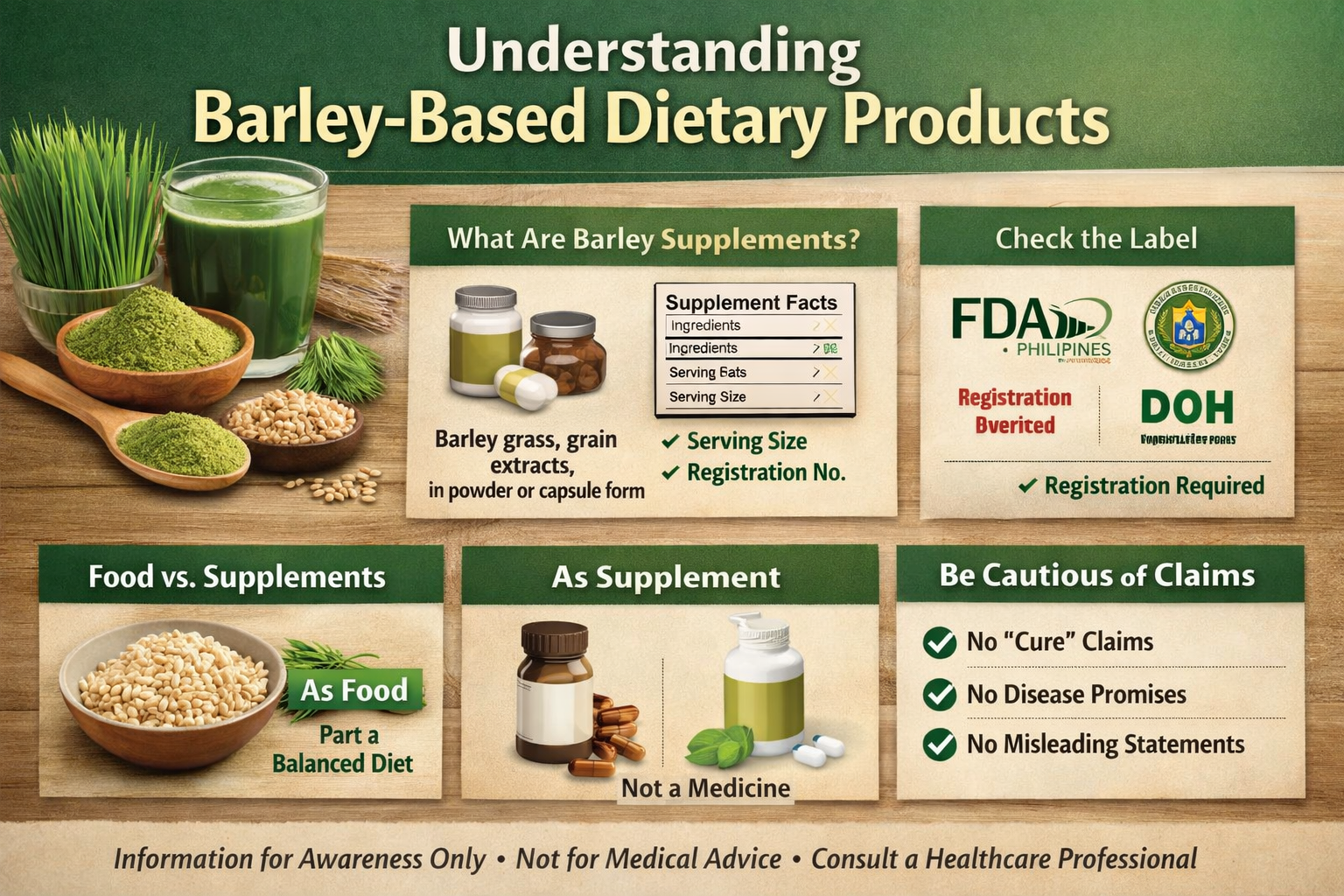
Barley is a cereal grain that, in nutrition science, is a source of carbohydrates and certain micronutrients when consumed as food. Some products marketed in the “supplements” category may include barley grass powder, barley juice powder, or barley grain extracts; these are typically presented as ingredients in powdered dietary products, capsules, or tablets.
What “Barley” Means in Dietary Products
-
In nutritional contexts, barley refers to parts of the barley plant (e.g., young barley grass) or barley grain.
-
When included in a product label, it is an ingredient name, not a medical claim.
-
Labels may list barley as a source of dietary fiber or plant matter — but not as a treatment or cure for any condition.
Philippine Regulatory Context
In the Philippines:
-
FDA Philippines requires that dietary supplement products be registered or notified before marketing, with accurate labeling that does not include false, misleading, or therapeutic claims.
-
Products must not be marketed as medicines or make disease‑related claims.
-
Labeling must list all ingredients and amounts per serving, instructions for use, warnings, and manufacturer/distributor information in compliance with applicable regulations.
How to Read Barley‑Product Labels
When reviewing a barley‑containing product label:
-
Check for ingredient list and serving size.
-
Look for lot or batch numbers and registration/notification identifiers if provided.
-
Note any disclaimer statements such as “This statement has not been evaluated by [a regulatory authority].”
-
Avoid any product label that suggests treating, preventing, or curing diseases.
General Awareness — Barley Nourishment vs. Supplements
In nutritional science:
-
Barley and barley grass are recognized as food ingredients, not drugs.
-
Barley as part of a balanced diet contributes carbohydrates and plant‑based components.
-
Products labeled as dietary supplements are treated differently from prescription or over‑the‑counter medicines under Philippine law.
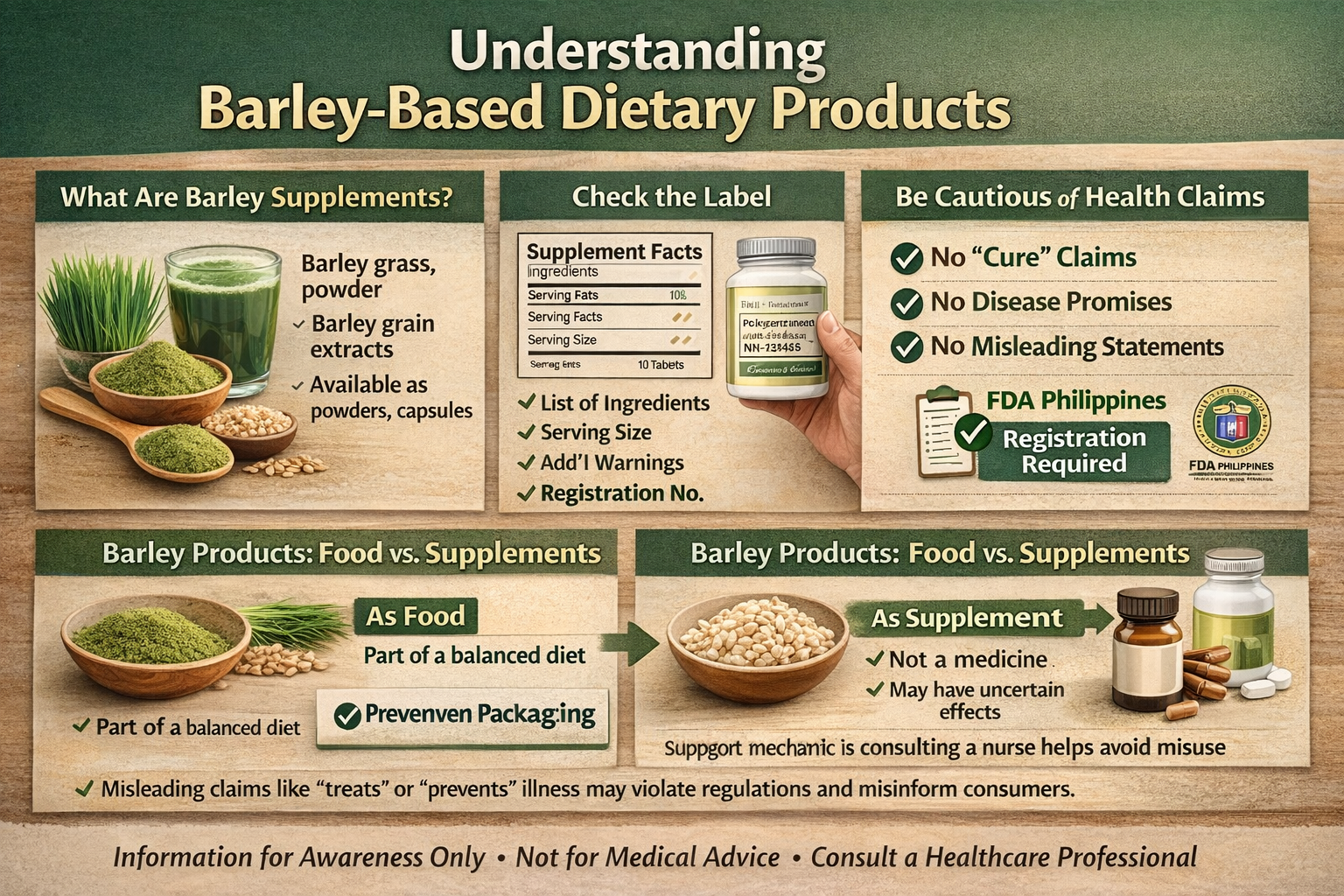
Infographic displaying barley-based dietary products, labeling, and consumer awareness points.
FAQ
What are barley‑based dietary products?
Barley‑based dietary products include powdered barley grass, barley grain components, or extracts that are marketed in forms like powders or capsules. They are considered food or dietary products, not medicines.
How are barley products regulated in the Philippines?
The FDA Philippines oversees the safety and labeling of dietary supplements and related products. Barley dietary products must comply with registration/notification requirements and must not make therapeutic claims.
What should I look for on a barley product label?
Look for a clear ingredient list, manufacturer/distributor information, serving size, and any regulatory identifiers. Avoid claims that imply disease treatment or prevention.
Trusted Sources
-
FDA Philippines (Food and Drug Administration, Republic of the Philippines) — regulatory oversight of food and supplements
-
DOH Philippines (Department of Health) — guidance on nutrition and consumer health
-
WHO Nutrition Guidance — general information on grains and dietary components
Disclaimer
This content is provided for general public awareness and educational purposes only. It does not constitute medical, nutritional, or consumer purchasing advice. Mentions of barley or any company’s products do not imply endorsement, effectiveness, or guaranteed health outcomes. Individuals are encouraged to consult qualified healthcare professionals and official regulatory sources when making health or supplement‑related decisions.