
Understanding Natural Enzyme Toothpaste and Gum Care: An Educational Overview
A neutral explanation of enzyme-based oral hygiene products and their role in routine dental care.
Natural enzyme toothpaste is a type of oral hygiene product formulated with biological enzymes that participate in chemical reactions in the mouth. In dental science, enzymes are sometimes included in toothpaste formulations to support natural processes involved in saliva activity and oral cleanliness. This article explains what enzyme-based toothpaste is, how it is commonly described in dental literature, and how it relates to general gum care practices. References to oral care products are discussed in an informational context under consumer protection and health communication standards.
Tooth and Gum Structures in Oral Health
The human oral cavity contains several structures that interact during daily hygiene routines. Teeth are composed of enamel, dentin, and pulp, while surrounding tissues include the gingiva (gums), periodontal ligament, and alveolar bone. These tissues help stabilize teeth and participate in chewing and speech.
The mouth also contains saliva, a fluid that contributes to lubrication, digestion, and natural microbial balance. Saliva includes proteins and enzymes that interact with food particles and microorganisms present in the oral environment.
What Enzymes Are in Oral Care Contexts
Enzymes are biological molecules that help accelerate chemical reactions. In oral care discussions, enzymes such as lysozyme, lactoperoxidase, and glucose oxidase are sometimes referenced in scientific literature. These enzymes occur naturally in saliva and are part of the body’s biochemical systems.
Some toothpaste products are formulated with enzyme components intended to imitate or complement certain salivary processes. The inclusion of these ingredients is typically described in product documentation or ingredient lists. The presence of enzymes does not automatically determine clinical outcomes, and research continues regarding how different formulations interact with oral environments.
Enzyme Toothpaste Formulations
Toothpaste described as “natural enzyme” toothpaste often combines enzymes with common oral care ingredients such as mild abrasives, humectants, and flavoring agents. The label “natural” may refer to the origin of specific ingredients or marketing descriptions provided by manufacturers.
From a consumer awareness perspective, ingredient labels may list enzymes individually. In many jurisdictions, including the Philippines, oral care products are subject to regulatory oversight concerning labeling, ingredient disclosure, and consumer safety.
General Gum Care in Oral Hygiene
Gum care refers to practices that support the health of the gingival tissues. Oral hygiene routines described in dental education commonly include mechanical cleaning methods such as toothbrushing and interdental cleaning tools.
Dental literature frequently emphasizes the importance of maintaining regular hygiene habits and monitoring changes in gum condition, such as swelling, redness, or bleeding during brushing. These observations can help individuals determine when professional dental evaluation may be appropriate.
Hypothetical Example
In a hypothetical scenario, a consumer reviewing toothpaste options may notice that some products include enzyme ingredients in their formulation. The consumer may compare ingredient lists, review product documentation, and consult educational resources to understand the intended purpose of those ingredients. This type of evaluation is part of general consumer awareness when selecting oral hygiene products.
Context: Background in Dental Research and Regulation
In dental research, saliva’s natural enzyme systems have been studied for several decades. Researchers have examined how enzymes participate in microbial balance and biochemical reactions in the mouth.
Under consumer protection frameworks such as the Consumer Act of the Philippines (RA 7394), product labels and advertising materials are expected to avoid misleading claims. Health-related consumer products, including toothpaste, may also fall under regulatory guidance from the Department of Health (DOH) and the Food and Drug Administration Philippines (FDA Philippines) regarding labeling and safety standards.
Because of these standards, educational discussions about oral care products typically emphasize ingredient transparency and informed consumer evaluation.
FAQ
What is enzyme toothpaste?
Enzyme toothpaste refers to toothpaste formulations that include biological enzymes as ingredients. These enzymes may be similar to compounds naturally found in saliva and are described in product ingredient lists.
How are gums related to oral hygiene?
Gums, also called gingiva, are soft tissues that surround and support teeth. Their condition is often discussed in dental education as part of overall oral health monitoring.
What tools are commonly used in oral hygiene routines?
Oral hygiene routines commonly involve toothbrushes, toothpaste, and interdental cleaning tools such as floss or interdental brushes. Dental professionals may also use instruments for professional cleaning during routine dental visits.
Trusted Sources
- Philippine Department of Health (DOH) – Oral health advisories
- Food and Drug Administration Philippines (FDA) – Consumer product safety information
- World Health Organization (WHO) – Oral health resources
- FDI World Dental Federation – Educational materials on oral hygiene
- Peer-reviewed dental journals on saliva enzymes and oral microbiology
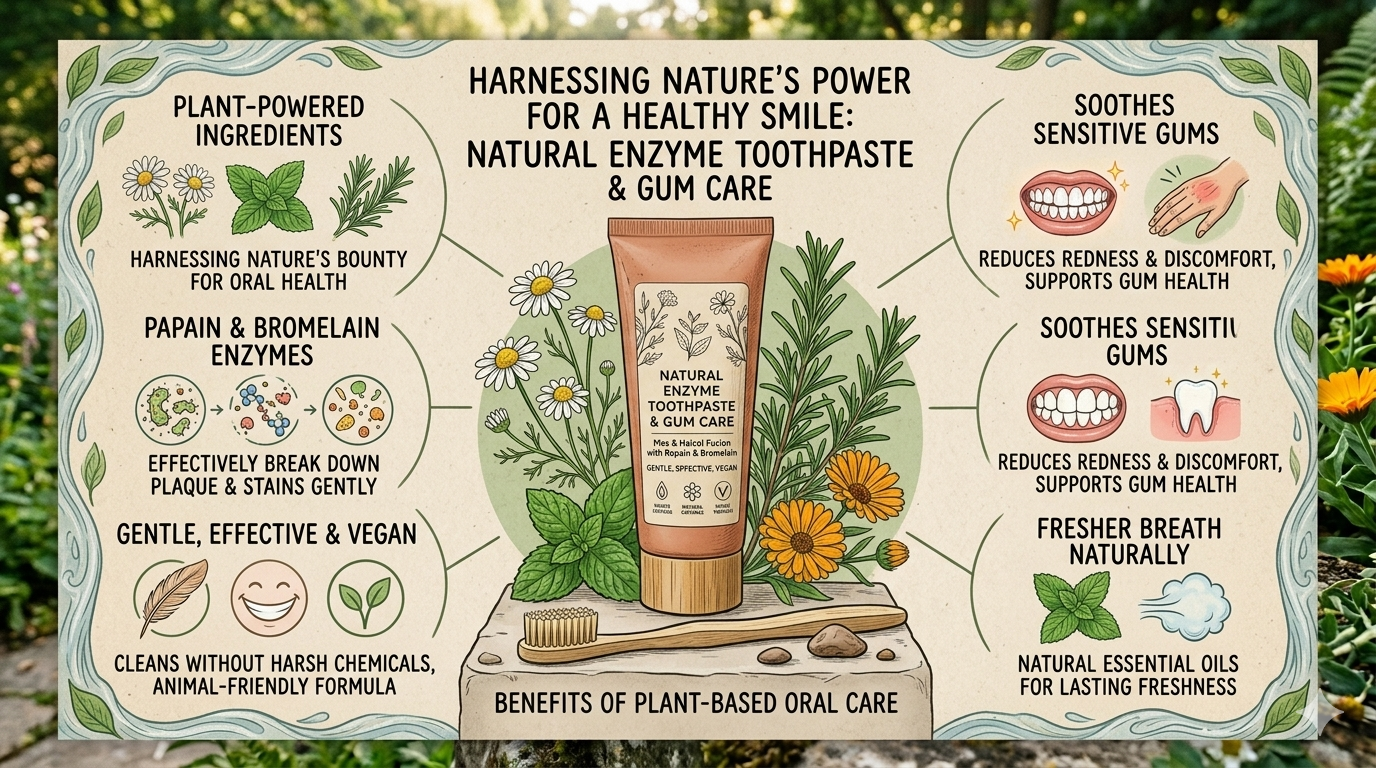
Illustrated layout presenting enzyme toothpaste ingredients and oral hygiene elements.
Disclaimer
This article is for general informational and educational purposes only. It does not constitute professional medical, dental, or consumer purchasing advice. References to procedures, products, or clinics do not imply endorsement or guarantee of results. Readers are encouraged to consult licensed dental professionals and verified resources for oral health decisions.