Minimalist Oral Care Routine: An Educational Overview
Understanding simplified oral hygiene practices and commonly referenced care tools.
A minimalist oral care routine refers to a simplified approach to daily oral hygiene that focuses on a limited number of commonly used tools and consistent maintenance practices. Oral health information in the Philippines is generally guided by public health agencies such as the Department of Health (DOH) and product oversight from the Food and Drug Administration (FDA Philippines). Consumer protection laws, including the Consumer Act of the Philippines, also regulate health-related claims and marketing of dental products.
This article provides a neutral overview of what a minimalist oral hygiene routine typically includes, along with background information about oral structures and common hygiene tools. The content is informational and does not recommend specific products or guarantee outcomes.
Basic Oral Anatomy
The mouth contains several structures that contribute to chewing, speech, and general oral function. Teeth are composed of multiple layers:
- Enamel – The outer surface that protects the tooth from physical and chemical exposure.
- Dentin – A layer beneath enamel that transmits sensations and provides structural support.
- Pulp – The inner portion containing connective tissue, nerves, and blood vessels.
- Cementum – A calcified layer covering the tooth root and assisting in attachment to surrounding tissues.
Teeth are supported by surrounding structures that include gums (gingiva), periodontal ligaments, and the jawbone. These components together form the periodontal support system of the mouth.
What a Minimalist Oral Care Routine Typically Includes
A minimalist routine generally focuses on a small set of hygiene practices that are commonly referenced in oral health education materials.
Tooth Brushing
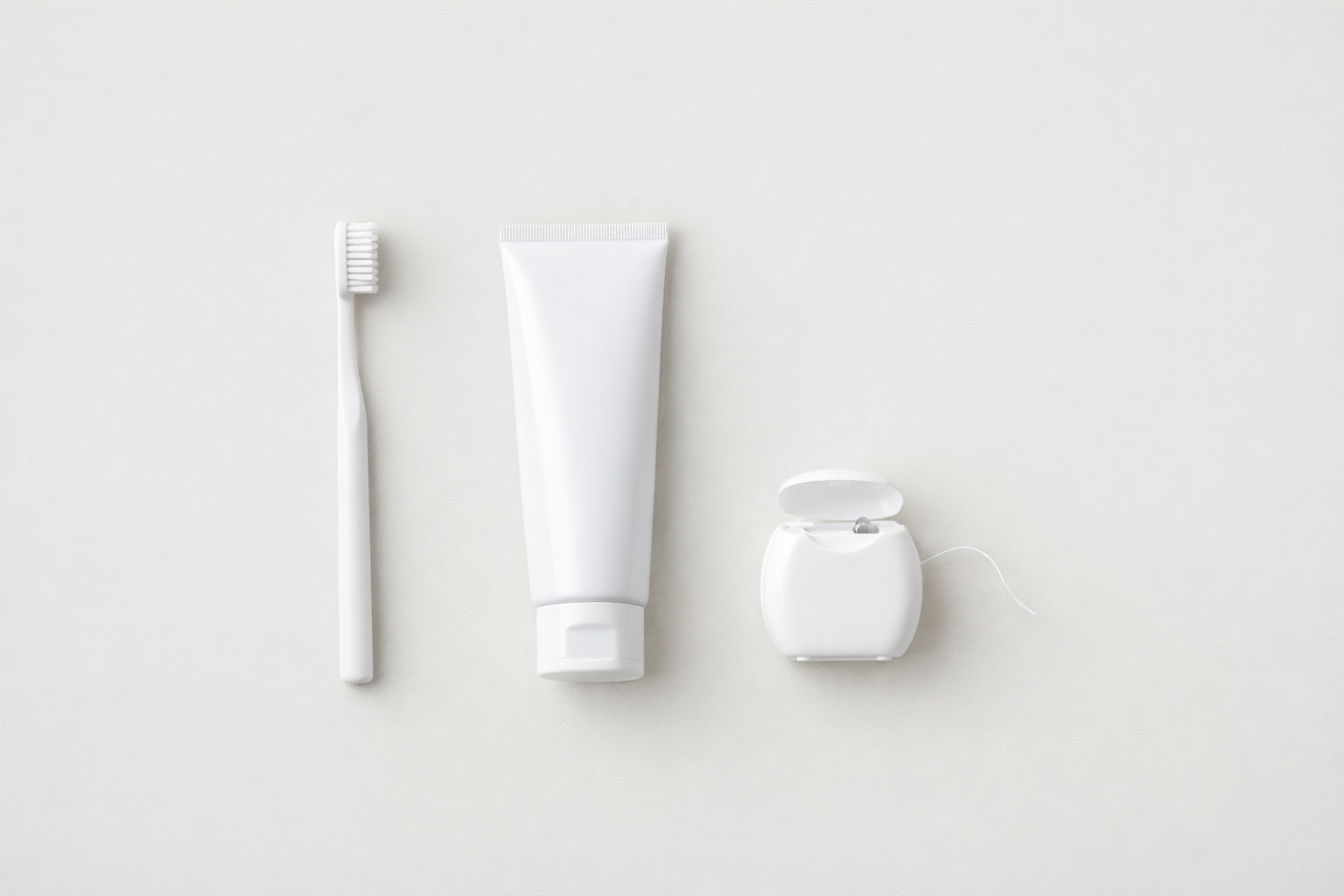
Tooth brushing is widely recognized as a routine hygiene activity intended to remove plaque and food debris from tooth surfaces. Toothbrushes may be manual or powered, and they are typically used with toothpaste formulated for oral hygiene.
Interdental Cleaning
Interdental cleaning refers to the removal of debris from spaces between teeth where toothbrush bristles may not reach easily. Tools used for this purpose may include dental floss or interdental brushes.
Oral Rinsing Products
Some oral hygiene routines include mouth rinses designed for general oral care. These products may contain ingredients intended to support hygiene practices when used according to manufacturer instructions.
Minimalist routines generally limit the number of tools used while maintaining consistent hygiene practices.
Hypothetical Example
In a hypothetical situation, an individual may choose a simplified oral hygiene routine consisting of tooth brushing and interdental cleaning using a small number of tools. The individual may review product instructions, ingredient labels, and regulatory approvals when selecting oral hygiene products.
During routine dental examinations, a dental professional may document oral health conditions and provide educational information about hygiene practices and monitoring methods.
Context: Minimalism in Personal Care
Minimalism in personal care refers to the reduction of product use to a smaller set of essential items. In oral hygiene discussions, this approach is sometimes referenced in consumer education about evaluating product claims and understanding ingredient labeling.
Public health materials typically emphasize that oral health maintenance involves a combination of daily hygiene practices and periodic monitoring by licensed dental professionals. Under consumer protection frameworks, health-related product claims must avoid statements suggesting guaranteed results or unrealistic outcomes.
FAQ
What is a minimalist oral care routine?
A minimalist oral care routine refers to a simplified approach to oral hygiene that uses a limited number of commonly used tools and consistent daily maintenance practices.
What tools are commonly included in simplified oral hygiene routines?
Examples may include a toothbrush, toothpaste, and an interdental cleaning tool such as dental floss.
Do oral care routines vary among individuals?
Yes. Oral hygiene routines can vary depending on personal habits, product preferences, and guidance from licensed dental professionals.
Trusted Sources
- Department of Health — Public health information on oral hygiene
- Food and Drug Administration — Regulation of health-related products
- World Health Organization — Global oral health education resources
- American Dental Association — Educational materials on oral health practices
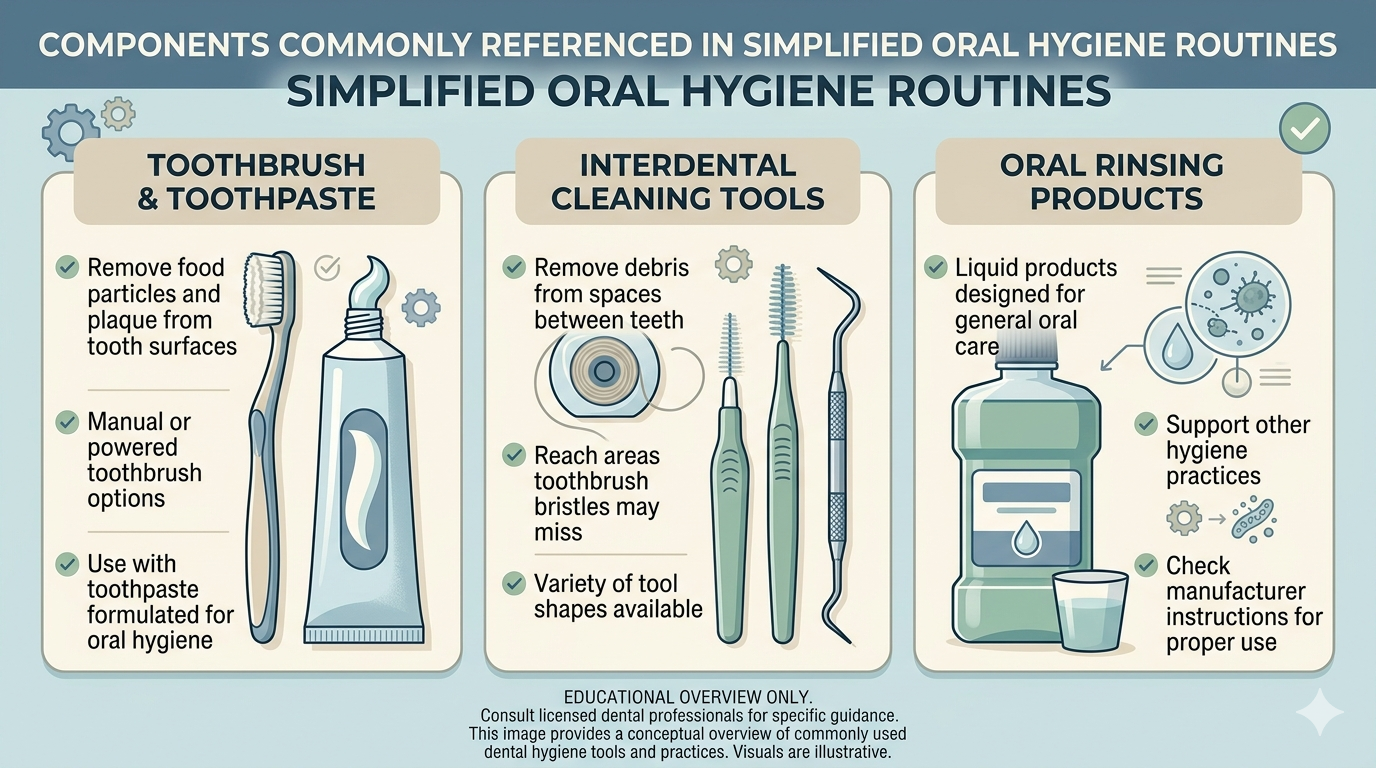
Illustrated overview of commonly referenced items in minimalist oral hygiene routines.
Disclaimer:
This article is for general informational and educational purposes only. It does not constitute professional medical, dental, or consumer purchasing advice. References to procedures, products, or clinics do not imply endorsement or guarantee of results. Readers are encouraged to consult licensed dental professionals and verified resources for oral health decisions.