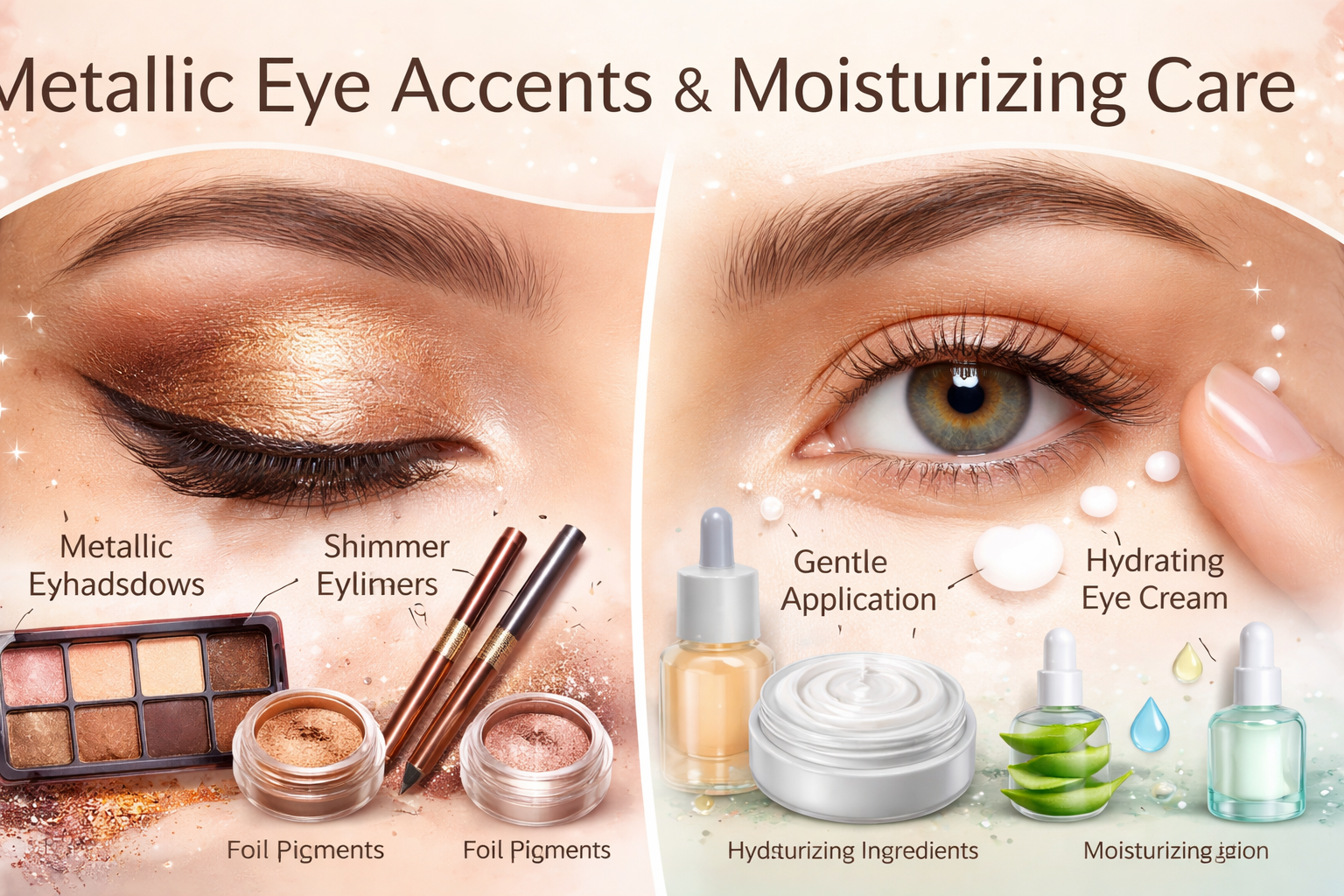
Metallic Eye Accents & Moisturizing Care: An Educational Overview of Cosmetic Use Around the Eyes
Understanding basic considerations for decorative eye cosmetics and skin moisture maintenance.
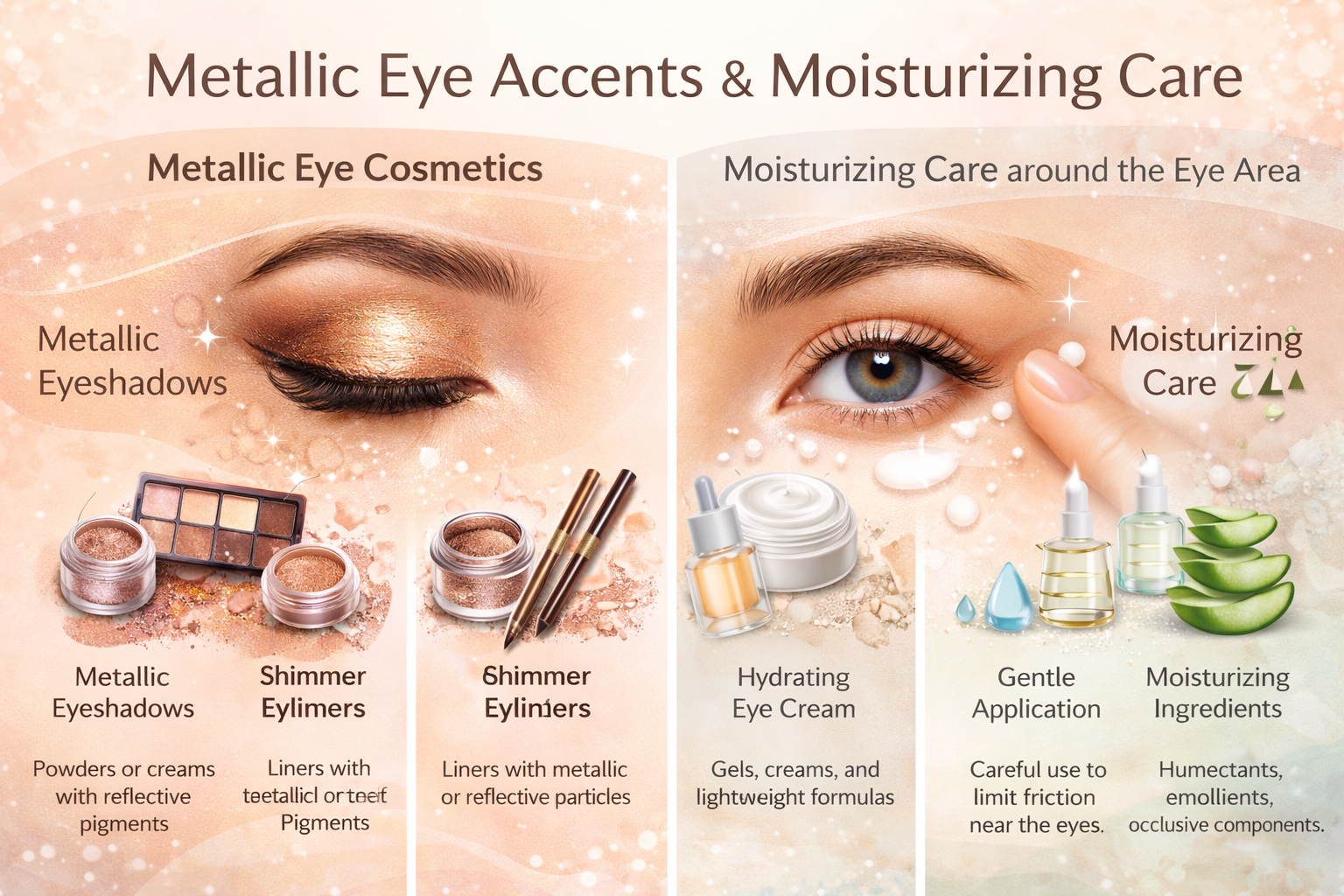
Illustrated layout presenting cosmetic textures and general moisture care concepts around the eye area.
Decorative eye cosmetics, including metallic eye accents, are used in many makeup routines. At the same time, moisturizing practices around the eye area are commonly discussed in skin care and consumer product guidance. This article provides an educational overview of metallic eye accents, the characteristics of the skin around the eyes, and general considerations related to moisturizing care. References to consumer safety and product awareness align with health and consumer protection standards, including guidance relevant to agencies such as the Department of Health (DOH) and the Food and Drug Administration (FDA) Philippines.
Understanding Metallic Eye Accents
Metallic eye accents refer to eye makeup products designed to create reflective or shimmer-like finishes. These products are typically used on the eyelids or near the eye area as part of cosmetic styling.
Common forms include:
- Metallic eyeshadows – powders or creams that contain reflective pigments
- Shimmer eyeliners – liquid or pencil products with metallic particles
- Foil-style eye pigments – concentrated pigments designed to reflect light
Reflective effects usually come from small particles that interact with light. In consumer cosmetic products, these particles may include mica or other mineral-based materials that create a metallic appearance.
When used around the eyes, cosmetic products are expected to follow ingredient safety standards and labeling requirements. In the Philippines, cosmetics distributed commercially are subject to regulatory oversight from the FDA under the ASEAN Cosmetic Directive framework.
The Eye Area and Moisture Balance
The skin surrounding the eyes is structurally different from many other areas of the face. It is often described in dermatology and skin science literature as thinner and more sensitive to environmental factors.
Factors that may influence moisture levels around the eyes include:
- Exposure to dry environments
- Frequent blinking and facial movement
- Makeup application and removal practices
- Screen exposure and lighting conditions
- Individual skin characteristics
Moisturizing products formulated for the eye area are designed to help maintain skin hydration. These products may contain ingredients that support the skin’s barrier function, such as humectants, emollients, or mild occlusive components.
Proper removal of eye cosmetics is also commonly included in discussions of routine skin care. Gentle cleansing methods are often referenced in dermatology literature to minimize unnecessary friction near the eyes.
Cosmetic Application Considerations
Individuals who use decorative eye cosmetics sometimes combine color products with moisturizing skin care. This may involve applying moisturizing products before or after cosmetic products depending on personal routines and product instructions.
General considerations discussed in consumer education materials include:
- Reading product labels and ingredient lists
- Avoiding products that cause visible irritation or discomfort
- Ensuring cosmetic products are intended for use around the eyes
- Following manufacturer guidance for storage and usage periods
These considerations are commonly included in consumer safety information related to cosmetic use.
Context: Consumer Safety and Eye Area Products
In ophthalmology and dermatology discussions, the eye region is often described as a sensitive area due to the proximity of the skin to the eye surface. Because of this, cosmetic products used near the eyes are expected to follow safety evaluation standards before distribution.
Under consumer protection frameworks and health regulations, product labeling, ingredient disclosure, and safety assessments help inform consumers about cosmetic products intended for the eye area.
Routine eye care discussions in medical literature generally focus on hygiene practices, appropriate cosmetic use, and awareness of potential irritation or sensitivity.
FAQ
What are metallic eye accents?
Metallic eye accents are cosmetic eye products designed to create reflective or shimmer-like visual effects on the eyelids or near the eye area. They typically contain pigments that reflect light to produce a metallic appearance.
Why is moisturizing discussed in relation to the eye area?
The skin surrounding the eyes is often described in dermatology research as thinner than other facial skin. Moisturizing practices are commonly referenced in skin care discussions related to maintaining skin hydration.
Are eye cosmetics regulated in the Philippines?
Cosmetic products sold in the Philippines are subject to regulatory oversight by the Food and Drug Administration (FDA) Philippines under national and regional cosmetic safety frameworks.
Trusted Sources
- Department of Health (DOH), Philippines – Public health advisories
- Food and Drug Administration (FDA) Philippines – Cosmetic product regulations
- ASEAN Cosmetic Directive – Cosmetic safety framework for Southeast Asia
- American Academy of Ophthalmology – Educational resources on eye health
- Peer-reviewed dermatology and ophthalmology journals on skin and eye care
Disclaimer:
This article is for general informational and educational purposes only. It does not constitute professional medical, ophthalmological, or consumer purchasing advice. References to procedures, products, or clinics do not imply endorsement or guarantee of results. Readers are encouraged to consult licensed eye care professionals and verified resources for vision health decisions.