An informational overview of using lightweight trench coats in warm, humid winter climates.
This article explains how lightweight trench coats can be incorporated into everyday clothing coordination during tropical winters. It outlines basic considerations about garment construction, fabric choice, and functional styling in climates with moderate seasonal temperature changes. Relevant consumer protection standards under Philippine laws and global advertising ethics are observed; this content is educational and not promotional.
Understanding Lightweight Trench Coats in Tropical Climates
A trench coat is a garment originally designed as outerwear with features such as a collar, belted waist, and buttoned front. Traditionally associated with cooler weather, trench coats vary in fabric weight, weave density, and layering capability.
In tropical winter climates — where temperatures often remain moderate and humidity can be relatively high — a lightweight trench coat refers to outerwear made from thin to medium‑weight materials. These garments provide a structured layer without the insulation typical of heavier coats.
Key aspects relevant to tropical settings include:
-
Fabric composition: Lightweight cotton, linen blends, and technical weaves facilitate air circulation while giving the garment shape. These materials are less insulating than wool, reducing heat retention.
-
Weave and breathability: A plain weave or ripstop construction can contribute to breathability. Fabrics with a looser weave allow more air flow, which can be helpful in warm, humid environments.
-
Cut and silhouette: A trench coat with a relaxed cut and minimal lining can be layered over short‑sleeve shirts without creating excessive warmth. Features such as open fronts, unlined sleeves, and adjustable belts help adapt the garment to daily temperature variation.
Functional Considerations for Tropical Winters
In many tropical regions, “winter” may mean slightly cooler evenings and occasional breezes rather than sustained low temperatures. When considering a lightweight trench coat in this context:
-
Layering logic: In general garment coordination practice, lightweight outerwear can function as a transitional layer over shirts or thin knitwear. Layering does not change the body’s physiology; rather, it adjusts the number of clothing layers relative to ambient conditions.
-
Moisture and humidity: Materials such as cotton and linen generally absorb and release moisture more readily than tightly woven synthetics. This can influence perceived comfort in humid weather.
-
Climate variability: Local weather patterns may include sudden rain or wind. Trench coats with a tight‑weave finish or water‑resistant treatment (as specified by the manufacturer) can offer an additional layer against light precipitation. This information should be verified through manufacturer specifications to avoid misinterpretation.
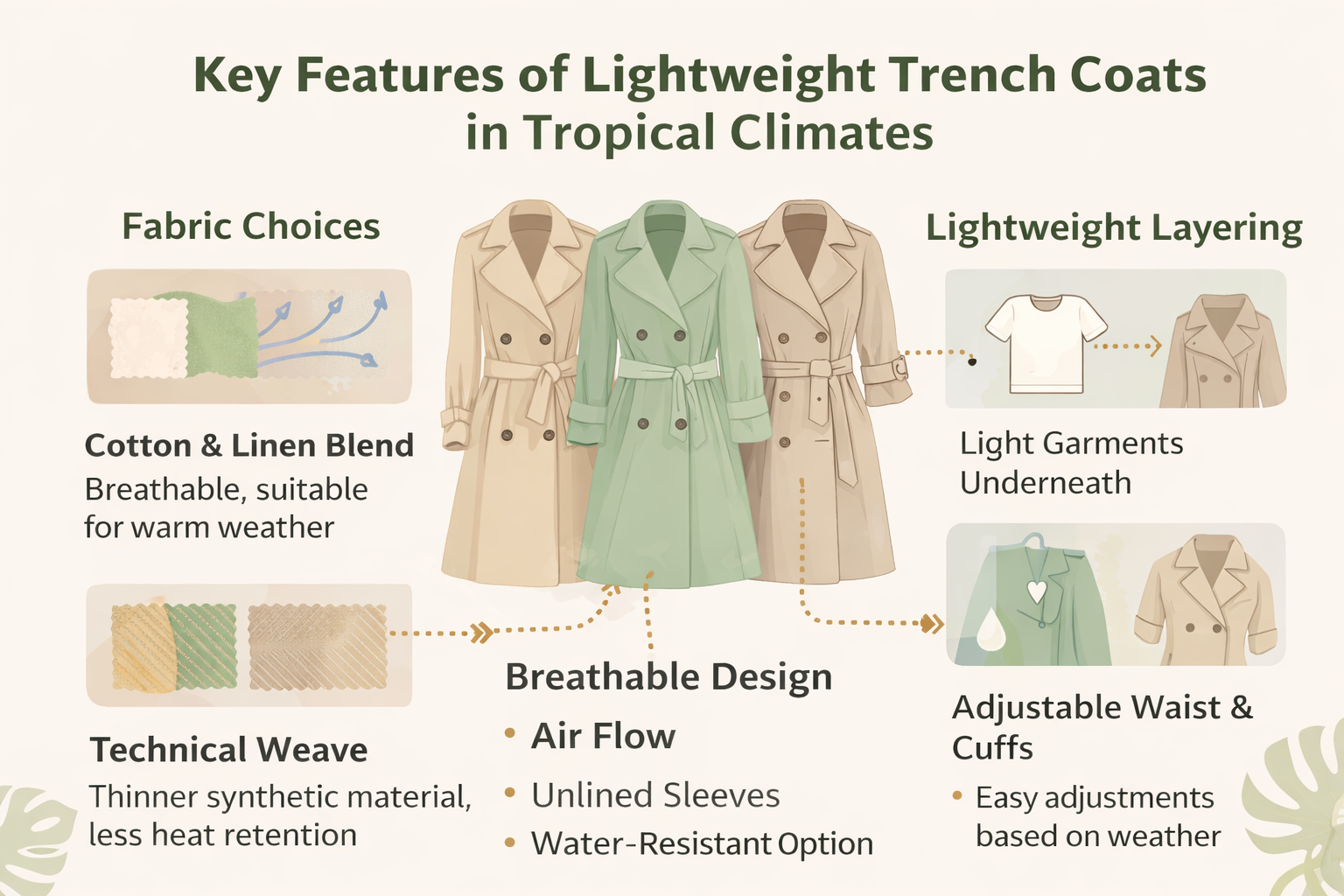
Breakdown of lightweight trench coat elements for tropical climates
Neutral Background: Trench Coat Origins and Adaptations
The trench coat originated in early 20th‑century military attire, designed for protection in rainy and windy conditions. Over decades, it was adopted into civilian wardrobe lexicons as a piece of outerwear with functional detailing — such as storm flaps, epaulets, and belted waists — that do not inherently confer any social or personal transformation.
In contemporary clothing practice, the term “trench coat” spans a range of garments from traditional heavy gabardine constructions to modern, lightweight versions intended for climates where insulation is not the priority. This reflects broader trends in garment design that prioritize suitability for different weather patterns and personal comfort preferences.
Neutral Examples of Coordination
-
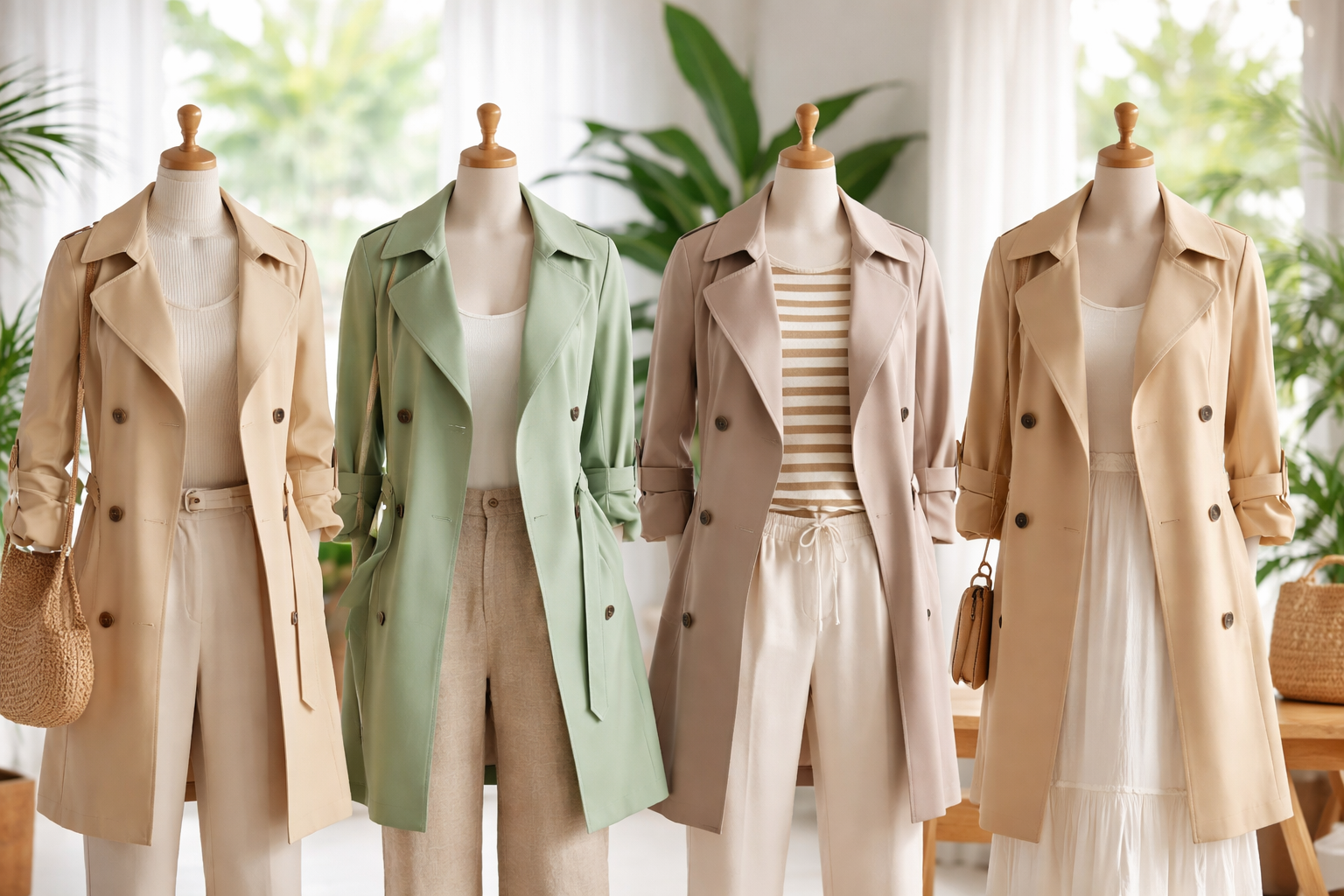
A cotton‑blend lightweight trench coat layered over a short‑sleeve shirt and paired with unstructured trousers can align with general seasonal layering practices in a tropical winter setting.
-
A trench coat made from a linen‑rich fabric worn above a long‑sleeve lightweight knit may be considered in early evening conditions when temperatures trend slightly lower.
-
Details such as belt adjustment or sleeve roll‑ups reflect personal preferences in garment arrangement, not prescribed outcomes.
These examples illustrate possible combinations based on garment properties and typical climate factors. They do not suggest social, psychological, or status outcomes.
FAQ
What is a lightweight trench coat?
A lightweight trench coat is an outerwear garment with classic trench details made from thinner or more breathable fabrics suited for moderate temperature conditions. It differs from heavier coats by having less insulating material.
How does fabric choice affect wear in a tropical climate?
Fabrics such as cotton and linen tend to allow more air flow and absorb moisture differently than heavier synthetic or wool fabrics. The weave and finish influence breathability and relative warmth without implying comfort outcomes.
Can a trench coat be used in warm, humid winters?
In general styling practice, lightweight outerwear may be layered over other garments to adjust for environmental temperature variations. The choice depends on local weather patterns and personal preference.
Trusted Sources
-
Textile and apparel education materials on fabric properties and garment construction
-
Fashion history archives detailing outerwear evolution
-
Consumer protection standards from the Department of Trade and Industry (DTI) regarding advertising transparency and garment labeling
Disclaimer: This article is for general informational and educational purposes only. It does not constitute professional styling, psychological, medical, or consumer purchasing advice. References to garment types or clothing coordination methods do not imply endorsement or guarantee of results. Readers are encouraged to rely on personal preference, verified product information, and official consumer protection resources when making fashion or purchasing decisions.