
Understanding Light Smokey Eye and Fresh Face Makeup Styles: An Educational Overview
A neutral explanation of two commonly referenced cosmetic styling approaches.
In cosmetic practice, makeup styles are often described using informal terms that refer to color placement, product intensity, or overall visual balance. Two commonly mentioned styles in makeup discussions are “light smokey eye” and “fresh face makeup.” These terms describe general approaches to color use and product layering rather than fixed cosmetic standards.
Cosmetic products used in these styles remain subject to regulatory oversight in the Philippines, including product safety and labeling requirements administered by the Food and Drug Administration (FDA Philippines) under provisions of the Consumer Act of the Philippines (RA 7394).
This article provides educational information about what these makeup styles typically involve, the types of cosmetic products used, and the tools often associated with their application.
Light Smokey Eye: General Cosmetic Characteristics
The phrase light smokey eye refers to a makeup approach in which darker or mid-tone eyeshadow colors are softly blended around the eyelids and lash line. The term “smokey” refers to the blended appearance of pigment rather than a specific color requirement.
Products Commonly Used
Cosmetic routines associated with this style may include:
- Eyeshadow in neutral or darker tones
- Eyeliner applied near the lash line
- Mascara for eyelash coating
Typical Application Concept (Educational Example)
- Eyeshadow may be placed across the eyelid and blended outward to soften color edges.
- A darker tone may be applied closer to the lash line or outer eyelid area.
- Eyeliner can be added to define the lash line.
- Mascara is applied to the eyelashes using the product’s applicator brush.
Blending tools such as small eyeshadow brushes or cosmetic sponges are often used to distribute pigment evenly.
Fresh Face Makeup: General Cosmetic Characteristics
The phrase fresh face makeup is commonly used to describe cosmetic routines that involve lighter product layering and neutral color choices. The goal in this context is typically a softer visual effect rather than heavy pigmentation.
Products Commonly Associated With This Style
- Light coverage foundation or tinted cosmetic base
- Concealer applied to specific facial areas
- Blush for gentle color placement on the cheeks
- Lip products with subtle pigmentation
Typical Application Concept (Educational Example)
- A base product such as foundation may be applied across the face using a brush or sponge.
- Concealer may be used in smaller areas where additional coverage is desired.
- Blush can be applied lightly to the cheeks.
- Lip products such as lip balm or lipstick add color to the lips.
The products used in this style may vary depending on cosmetic preferences and available formulations.
Tools Commonly Used for Both Styles
Cosmetic tools often used in eye and face makeup routines include:
- Eyeshadow brushes for precise pigment placement
- Blending brushes designed to soften color transitions
- Makeup sponges used for base product distribution
- Mascara applicator wands included with mascara products
Regular cleaning of makeup tools is recommended in dermatology hygiene guidance to reduce contamination risk.
Context: Cosmetic Style Terminology
In cosmetic education and makeup artistry training materials, style terms such as “smokey eye” or “fresh face” function as descriptive language rather than standardized techniques. The final visual appearance can vary widely depending on color choice, application method, and product formulation.
These terms are commonly used in fashion, theater, photography, and personal grooming contexts to describe general cosmetic approaches.
FAQ
What does “smokey eye” mean in makeup terminology?
A smokey eye refers to a blended eyeshadow technique where pigment is diffused around the eyelids and lash line to create a soft transition between darker and lighter tones.
What is meant by “fresh face makeup”?
Fresh face makeup generally refers to cosmetic routines that involve lighter layering of products and softer color placement.
What tools are commonly used for eyeshadow blending?
Small blending brushes, sponge applicators, and soft eyeshadow brushes are commonly used to distribute pigment across the eyelid.
Trusted Sources
- Food and Drug Administration (FDA Philippines) — Cosmetic Product Safety Guidance
- Department of Health (DOH), Philippines — Consumer Health Information
- International Journal of Cosmetic Science
- American Academy of Dermatology — Skin and Cosmetic Safety Resources
- Society of Cosmetic Chemists — Cosmetic Science Education
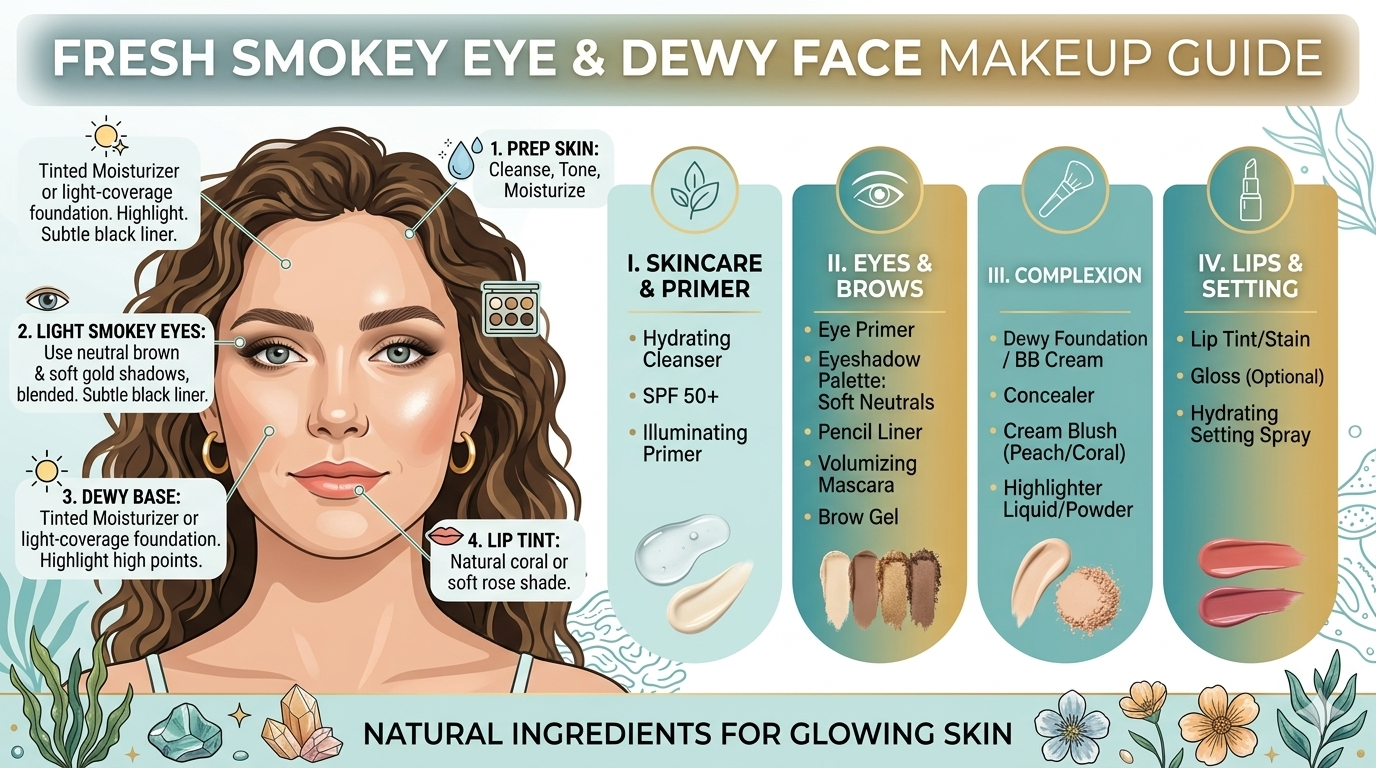
Visual infographic showing cosmetic products and tools associated with two makeup styling approaches.
Disclaimer:
This article is for general informational and educational purposes only. It does not constitute professional cosmetic, dermatological, or consumer purchasing advice. References to products, routines, or brands do not imply endorsement or guarantee of results. Readers are encouraged to consult licensed professionals and verified resources for cosmetic decisions.