Hydration and Sensitive Tooth Care: An Educational Overview
Understanding the relationship between fluid intake and oral comfort
Hydration plays a role in several bodily processes, including saliva production and oral moisture balance. Dental education materials sometimes discuss hydration in the context of oral comfort and basic oral hygiene practices. Sensitive teeth, often described as a reaction to temperature or certain substances, may involve the inner structures of teeth becoming more exposed to external stimuli.
This article provides an educational overview of tooth sensitivity, the role of saliva and hydration in oral conditions, and commonly referenced oral hygiene considerations. The information is intended for general awareness and does not recommend specific treatments, products, or clinical procedures.
What Is Tooth Sensitivity?
Tooth sensitivity refers to a sensation that may occur when teeth encounter external stimuli such as cold temperatures, heat, sweet substances, or acidic foods. The sensation is often described in dental literature as occurring when underlying tooth layers become more responsive to external conditions.
Teeth contain multiple layers:
Enamel
The outer mineralized layer that helps protect inner tooth structures.
Dentin
A layer beneath the enamel containing microscopic channels that connect to the tooth’s inner pulp.
Pulp
The central area of the tooth that contains nerves and blood vessels.
In some situations, dentin may become more exposed due to changes in enamel thickness, gum position, or other oral conditions. When this occurs, external stimuli may reach the microscopic channels within dentin, which can lead to sensations commonly described as sensitivity.
The Role of Saliva in Oral Conditions
Saliva is a naturally occurring fluid in the mouth that contributes to several oral functions.
These functions may include:
- Moistening oral tissues
- Assisting in the breakdown of food during chewing
- Helping wash away food particles and certain acids
- Supporting the natural balance of oral microorganisms
Saliva production can vary depending on hydration levels, diet, medications, and general health conditions. Adequate fluid intake supports normal body hydration, which may influence saliva production.
Dental education sources often mention saliva as part of the mouth’s natural protective environment.
Hydration and Oral Moisture
Hydration refers to maintaining adequate levels of fluid within the body. In the context of oral health discussions, hydration is sometimes referenced in relation to oral dryness.
When oral dryness occurs, individuals may notice:
- Reduced saliva flow
- A feeling of dryness in the mouth
- Changes in oral comfort when eating or drinking
Hydration practices such as drinking water throughout the day are commonly described in general health materials as contributing to fluid balance. However, hydration alone does not address all causes of tooth sensitivity.
Hypothetical Example of Hydration and Oral Comfort
A hypothetical scenario may help illustrate how hydration may relate to oral comfort.
An individual notices occasional tooth sensitivity when drinking cold beverages. During a routine dental checkup, the dentist observes general oral health and reviews the individual’s daily habits, including fluid intake and oral hygiene practices. The dentist may also examine the gums and enamel surfaces to assess potential contributing factors.
In this situation, hydration may be discussed as one of several lifestyle factors related to oral moisture and saliva production. Additional evaluation may be conducted to identify structural or dental conditions that may contribute to sensitivity.
Tools Commonly Referenced in Sensitive Tooth Care
Dental education materials sometimes mention tools associated with oral hygiene routines for individuals experiencing sensitivity.
Examples include:
Soft-Bristled Toothbrushes
Toothbrushes with softer bristles are sometimes discussed in oral hygiene materials as a gentle cleaning option for tooth surfaces and gums.
Toothpaste Formulations for Sensitivity
Some toothpaste products are formulated with ingredients that dental manufacturers describe as designed for sensitive teeth. These products vary in composition and intended use.
Oral Hydration Practices
Regular water intake and general hydration habits may support normal saliva production and oral moisture levels.
The selection and use of oral care tools may vary depending on individual circumstances and professional dental guidance.
Context: Tooth Sensitivity in Dental Research
Dental literature often describes tooth sensitivity as a common oral condition observed in various populations. Studies have explored possible contributing factors, including enamel wear, gum recession, dietary acids, and oral hygiene habits.
Public health discussions frequently emphasize oral hygiene awareness and routine dental examinations as part of general oral health monitoring. Consumer protection standards also encourage clear communication about dental products and procedures to prevent misleading health claims.
Educational materials therefore tend to describe tooth sensitivity in terms of anatomy, hygiene practices, and observational monitoring rather than guaranteed outcomes.
Frequently Asked Questions
What causes tooth sensitivity?
Tooth sensitivity may occur when the inner dentin layer becomes more responsive to external stimuli such as temperature changes or acidic foods. This can happen when enamel becomes thinner or gum tissue shifts position.
Does hydration affect oral health?
Hydration supports general bodily functions, including saliva production. Saliva contributes to oral moisture and may help wash away food particles and certain acids.
What tools are associated with sensitive tooth care?
Oral hygiene materials often mention soft-bristled toothbrushes, toothpaste formulated for sensitive teeth, and routine dental observation as part of general oral care discussions.
Trusted Sources
- Philippine Department of Health (DOH) oral health education resources
- Philippine Dental Association educational publications
- World Health Organization oral health reports
- Peer-reviewed dental journals discussing dentin hypersensitivity and saliva function
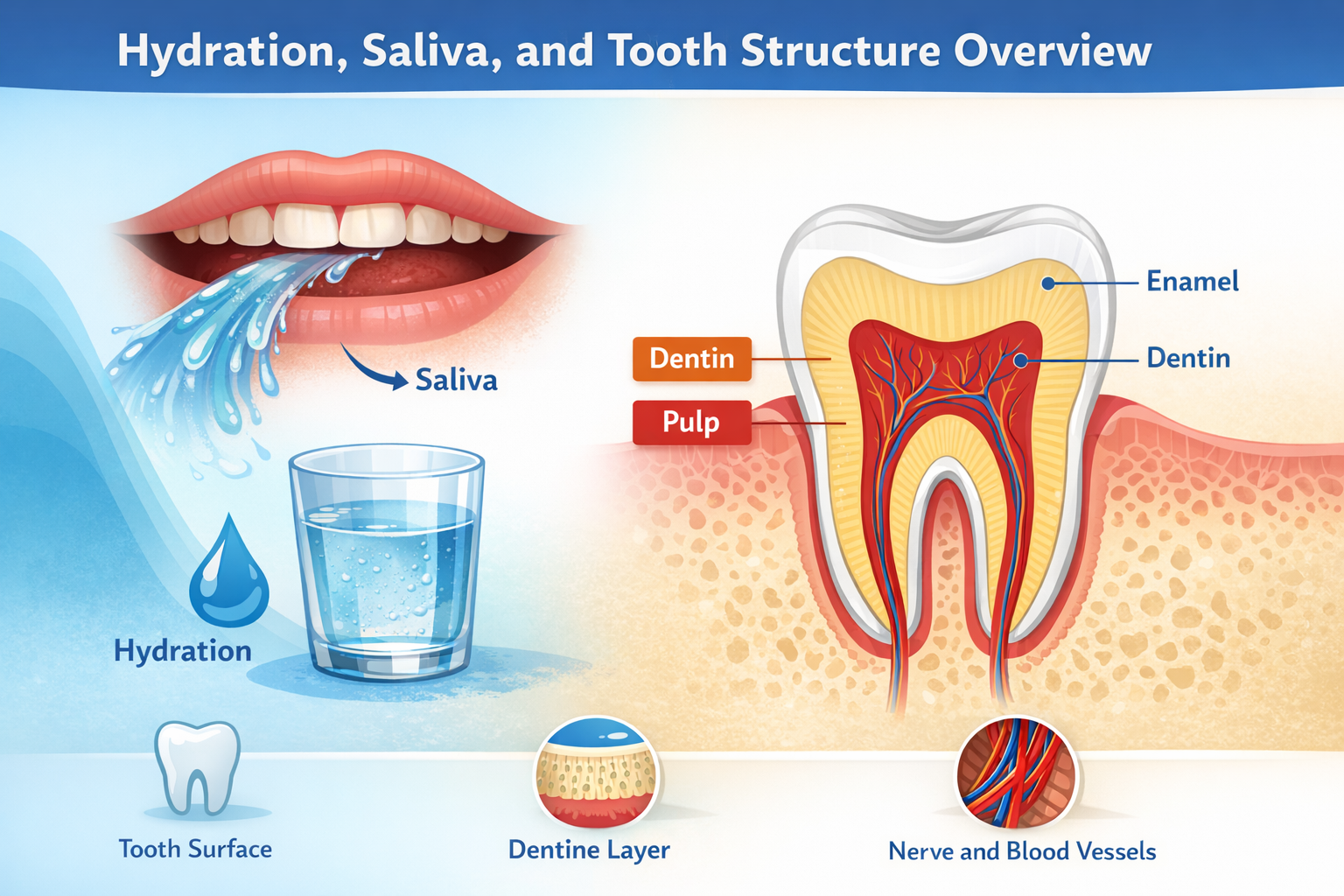
Illustrated diagram displaying labeled tooth layers and saliva presence within the mouth.
Disclaimer
This article is for general informational and educational purposes only. It does not constitute professional medical, dental, or consumer purchasing advice. References to procedures, products, or clinics do not imply endorsement or guarantee of results. Readers are encouraged to consult licensed dental professionals and verified resources for oral health decisions.