
Gentle Nose Refinement Procedures for Spring: An Educational Overview
A neutral guide to subtle nose enhancement approaches and seasonal considerations
Gentle nose refinement refers to medical or minimally invasive approaches that aim to adjust or refine aspects of nasal structure in a subtle manner. These approaches may include both surgical and non-surgical methods, depending on the extent of structural change involved. This article provides a general overview of these procedures, including how they differ, what areas of the nose may be involved, and important safety and recovery considerations. Seasonal references, such as “spring,” are discussed in a general context and do not imply timing recommendations.
What is Gentle Nose Refinement?
Gentle nose refinement is a non-clinical term often used in patient education to describe procedures that involve relatively minor or targeted adjustments to nasal shape or contour. These adjustments may involve:
- Smoothing minor irregularities
- Adjusting symmetry
- Refining specific nasal areas such as the tip or bridge
The extent and method of refinement depend on individual anatomy and clinical evaluation.
What Parts of the Nose Are Involved?
Refinement procedures may involve one or more nasal structures:
- Nasal bridge (dorsum) – the upper contour of the nose
- Nasal tip – the lower, more flexible portion
- Cartilage structures – responsible for shape and support
- Skin and soft tissue – affect surface appearance and healing response
The specific areas addressed vary by procedure type.
Surgical vs Non-Surgical Refinement Options
Surgical Rhinoplasty (Minor Adjustments)
- Involves structural modification of cartilage or bone
- May be used for precise reshaping
- Typically requires anesthesia and recovery time
Non-Surgical Nose Enhancement
- Uses injectable materials such as dermal fillers
- Temporary and reversible in some cases
- Limited to contour changes without altering internal structure
Non-surgical methods do not address functional concerns such as breathing issues.
Typical Consultation Process (General Overview)
In general medical practice, a consultation may include:
- Review of medical and surgical history
- Discussion of structural characteristics of the nose
- Assessment of skin thickness and cartilage support
- Explanation of potential approaches and limitations
Licensed professionals evaluate whether a procedure is appropriate based on safety and anatomical considerations.
Seasonal Considerations (General Awareness)
Seasonal references like “spring” are sometimes mentioned in public discussions, but there is no universal medical requirement to undergo nose procedures during a specific season. However, general considerations may include:
- Environmental factors such as heat, humidity, or allergens
- Personal scheduling and availability for recovery time
- Sun exposure, which may affect healing skin
These factors vary by location and individual circumstances.
Common Risks and Complications (General Awareness)
Potential risks associated with nose refinement procedures may include:
- Swelling and bruising
- Infection
- Bleeding
- Temporary or persistent asymmetry
- Skin sensitivity or irritation (for non-surgical methods)
- Need for additional procedures or adjustments
Risk levels differ depending on the method used and individual health factors.
Recovery and Healing Timeline (General)
Recovery varies depending on the type of procedure:
- Non-surgical methods:
Mild swelling or redness may occur and typically resolves within days - Surgical procedures:
Initial swelling and bruising may last several weeks
Gradual refinement may continue over several months
Healing timelines differ across individuals.
Long-Term Considerations (Neutral)
- Surgical changes are generally long-lasting but may evolve with natural aging
- Non-surgical enhancements require maintenance as effects diminish over time
- Outcomes depend on anatomy, technique, and healing response
Expectations are typically discussed during consultation, with emphasis on variability.
Context & Consumer Awareness
Under Philippine consumer protection and medical ethics standards:
- Medical procedures must be presented without guaranteed outcomes
- Public-facing information should remain factual and non-deceptive
- Patients are encouraged to verify the credentials of licensed practitioners
- Informed consent is a standard requirement before any procedure
In patient education literature, individuals considering refinement procedures are generally advised to seek information from licensed professionals and official health resources.
FAQs
What does “gentle” mean in nose refinement?
It generally refers to subtle or limited adjustments rather than major structural changes. The term is descriptive and not a formal medical classification.
Are non-surgical nose procedures permanent?
No. Most non-surgical methods, such as dermal fillers, are temporary and require repeat treatments over time.
Is there a specific season recommended for these procedures?
There is no universal medical recommendation for a specific season. Timing depends on individual circumstances and professional evaluation.
Trusted Sources
- Philippine Department of Health (DOH) – Public health information
- U.S. Food and Drug Administration (FDA) – Guidance on injectable materials
- Peer-reviewed journals in plastic and reconstructive surgery
- International Society of Aesthetic Plastic Surgery (ISAPS) educational materials
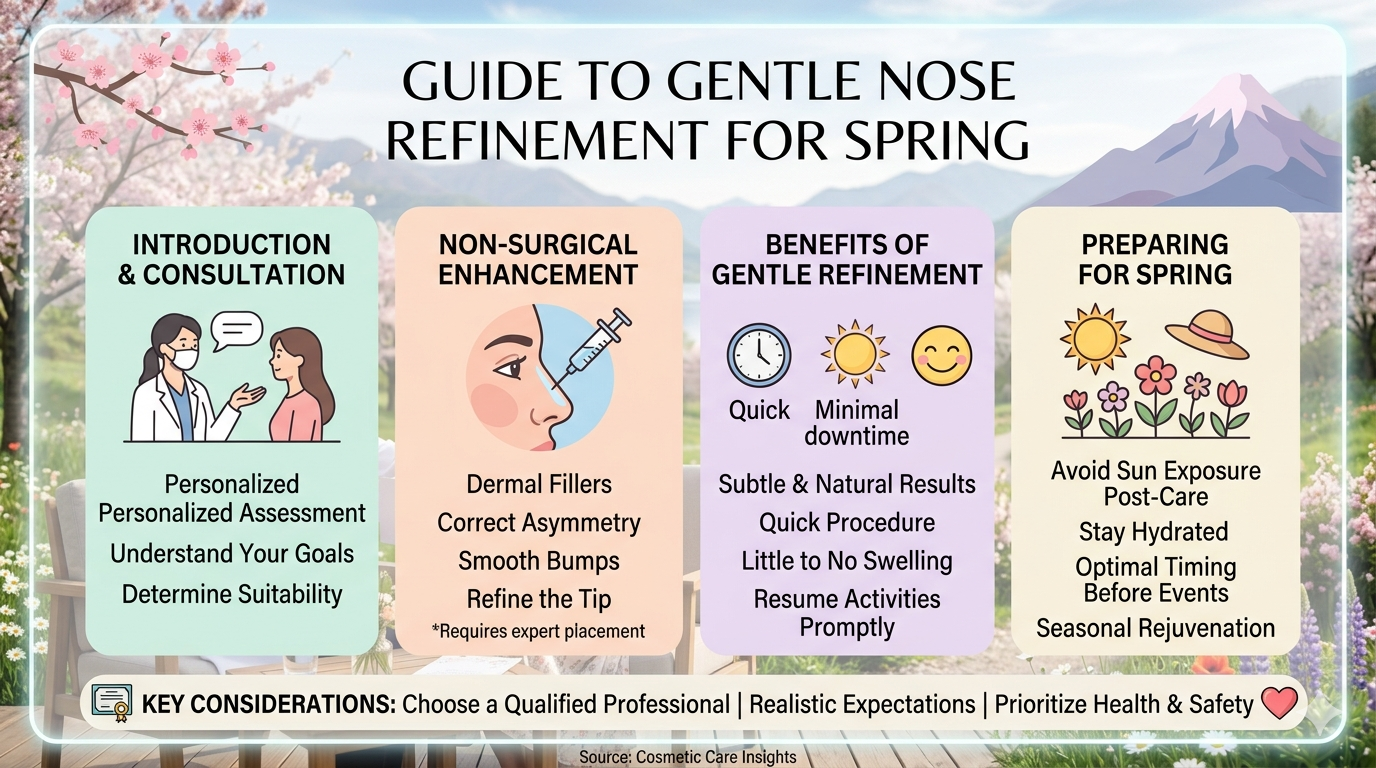
Visual layout of nasal structure and refinement method categories
Disclaimer
This article is for general informational and educational purposes only. It does not constitute professional medical, surgical, diagnostic, or consumer purchasing advice. References to procedures, providers, or methods do not imply endorsement or guarantee of results. Readers are encouraged to consult licensed medical professionals and official resources before making any medical decision.