Fresh Breath and Gum Care: An Educational Overview
Understanding oral hygiene factors related to breath odor and gum health.
Fresh breath and gum care are topics frequently discussed in oral hygiene education. These subjects relate to the condition of oral bacteria, saliva balance, and the tissues that surround and support the teeth. In the Philippines, consumer health information and public health communication about oral care may fall under agencies such as the Department of Health (Philippines), the Food and Drug Administration Philippines, and the Department of Trade and Industry (Philippines) for consumer protection matters.
This article provides a neutral overview of how breath odor can occur, the structure and role of gum tissues, and commonly referenced oral hygiene practices discussed in dental education materials.
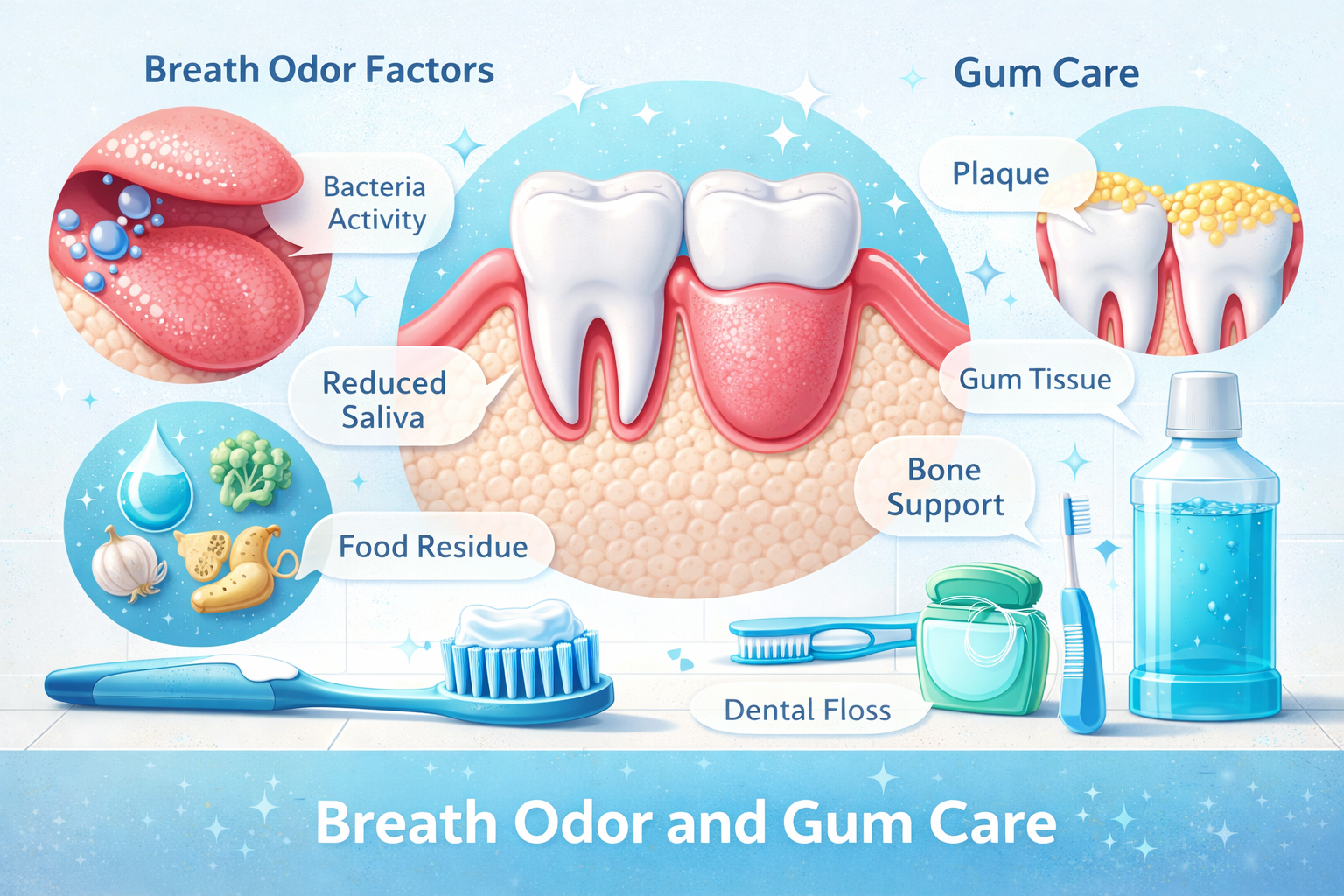
Diagram showing oral structures and commonly referenced oral hygiene tools.
Understanding Breath Odor
Breath odor is sometimes described in dental literature as Halitosis, a term used to refer to noticeable odors originating from the mouth. Various factors in the oral environment may contribute to this condition.
Bacterial Activity
Bacteria naturally exist in the mouth. When these microorganisms interact with food particles and organic materials, chemical compounds associated with odor may be produced.
Saliva Flow
Saliva helps rinse the mouth and move food particles toward digestion. Lower saliva levels may allow compounds associated with odor to remain in the mouth for longer periods.
Food Residues
Certain foods contain aromatic compounds that can remain temporarily in the oral cavity after eating.
Tongue Surface Conditions
The tongue contains small structures that can retain bacteria and particles, which may contribute to odor development.
Dental professionals may evaluate these factors during oral examinations when reviewing oral hygiene practices.
The Role of Gum Tissues
The gingiva, commonly referred to as gums, are soft tissues that surround and protect the teeth. These tissues help maintain the connection between teeth and the supporting bone.
In dental education materials, gum care discussions often relate to several structural and environmental aspects:
Plaque Formation
Plaque is a biofilm composed of bacteria and organic material that can accumulate along tooth surfaces and near the gum line.
Gum Tissue Appearance
Dental professionals may observe the color, shape, and texture of gum tissues during routine examinations.
Tooth Support Structures
Gums work together with connective tissue and bone to help stabilize teeth in the jaw.
Regular observation of gum conditions allows dental professionals to document changes in oral tissues over time.
Common Oral Hygiene Practices Discussed in Dental Education
Educational resources on oral hygiene often reference several routine practices associated with oral cleanliness:
Tooth Brushing
Brushing with a toothbrush and toothpaste is commonly used to remove plaque and debris from tooth surfaces.
Interdental Cleaning
Tools such as dental floss or interdental brushes are sometimes used to clean spaces between teeth.
Tongue Cleaning
Some individuals clean the surface of the tongue using a toothbrush or specialized tongue-cleaning tools.
Mouth Rinsing
Mouth rinses are sometimes included in oral hygiene routines. Formulations may vary among manufacturers.
Dental Observation Visits
Dental professionals may perform examinations to observe oral tissues and document changes across visits.
These practices are widely referenced in oral health awareness materials and dental education programs.
Hypothetical Example
In a hypothetical situation, an individual attends periodic dental checkups. During these visits, the dentist observes the condition of the teeth, gums, and tongue surface and records notes about plaque presence or gum appearance. Over time, this documentation allows the dental professional to monitor patterns in oral hygiene conditions.
This example illustrates how observation and recordkeeping are used in dental care settings.
Context and Background
In dental research and public health education, oral hygiene discussions often focus on the interaction between bacteria, saliva, food particles, and oral tissues. These elements are part of the natural oral environment.
Consumer protection and medical communication standards encourage accurate and non-misleading information about dental procedures and oral care topics. Public health resources typically emphasize educational explanations of oral hygiene concepts rather than promotional claims.
Organizations such as the World Health Organization and dental research groups including the International Association for Dental Research publish materials related to oral health awareness and dental science.
FAQ
What is halitosis?
Halitosis is a term used in dental literature to describe noticeable breath odor originating from the mouth. It may involve multiple factors within the oral environment.
What are gums in the mouth?
Gums, also known as gingiva, are soft tissues that surround teeth and help protect the underlying bone structures.
What tools are commonly associated with oral hygiene routines?
Common tools referenced in oral hygiene education include toothbrushes, toothpaste, dental floss, interdental brushes, and mouth rinses.
Trusted Sources
- Department of Health (Philippines) — Oral Health Program
- Food and Drug Administration Philippines consumer health advisories
- World Health Organization oral health resources
- International Association for Dental Research publications
- Peer-reviewed dental journals and academic dental textbooks
Disclaimer
This article is for general informational and educational purposes only. It does not constitute professional medical, dental, or consumer purchasing advice. References to procedures, products, or clinics do not imply endorsement or guarantee of results. Readers are encouraged to consult licensed dental professionals and verified resources for oral health decisions.