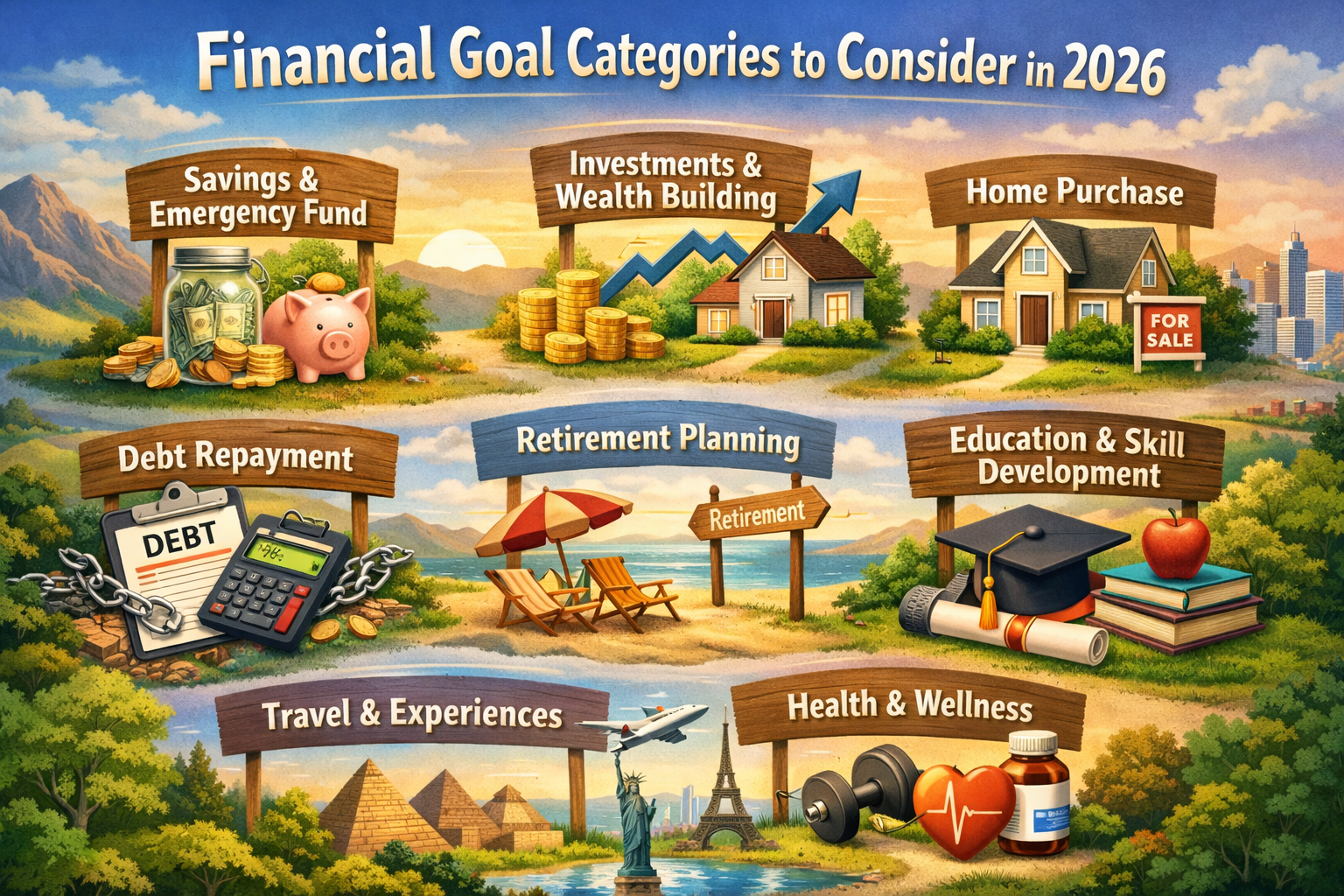
A Neutral Educational Overview of Personal Financial Planning Frameworks
This article provides an informational overview of commonly discussed financial goal categories for a calendar year. It references general principles reflected in guidance from central banks, financial consumer protection authorities, and public financial education initiatives. The content is educational in nature and does not recommend specific products, institutions, or outcomes.
Under applicable central banking and consumer protection regulations, individuals remain responsible for assessing their own financial circumstances and consulting licensed professionals when necessary.
1️⃣ Emergency Savings Stability
An emergency fund is commonly defined as accessible savings reserved for unexpected expenses such as medical costs, essential repairs, or temporary income interruption.
Many financial education programs, including those referenced by the U.S. Federal Reserve and the Financial Conduct Authority, emphasize liquidity and risk awareness when maintaining short-term reserves.
Illustrative example (hypothetical):
An individual with monthly essential expenses of $2,000 may choose to evaluate whether maintaining three to six months of those expenses in an accessible account aligns with their risk tolerance and employment stability.
This example does not imply a required amount.
2️⃣ Structured Savings Goals
Structured savings refer to setting aside funds for defined purposes within a specific timeframe. Examples include:
-
Education expenses
-
Planned travel
-
Major household purchases
-
Professional development costs
Goals may be categorized by time horizon:
-
Short-term (under 1 year)
-
Medium-term (1–5 years)
-
Long-term (5+ years)
Clarity of timeframe influences where funds are held (e.g., demand deposits vs. fixed-term deposits), subject to applicable regulations and institutional policies.
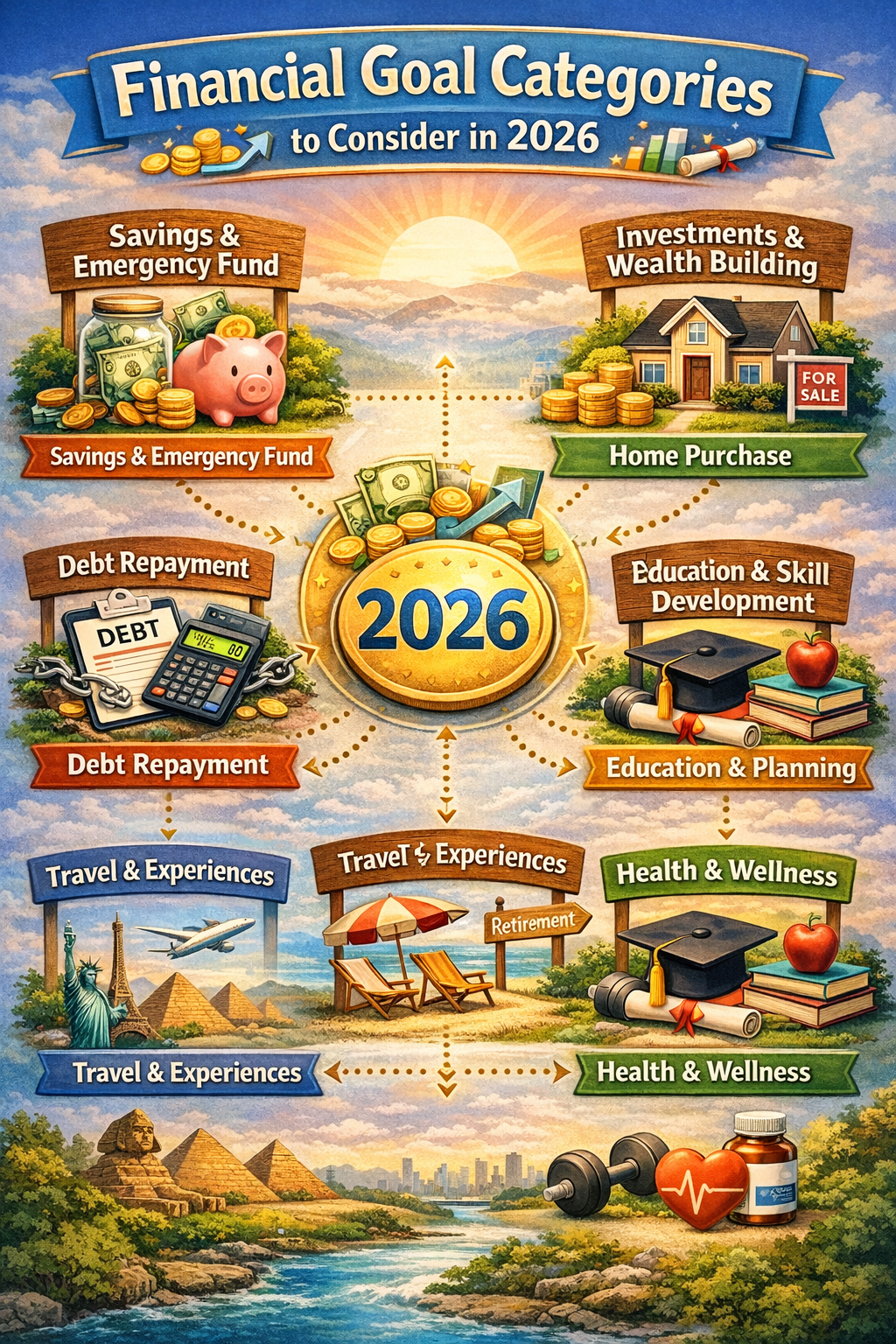
Infographic outlining financial goal categories referenced for 2026 in the Philippines.
3️⃣ Debt Reduction Planning
Debt management goals often involve:
-
Reviewing interest rates
-
Understanding repayment structures
-
Evaluating fixed vs. variable terms
-
Monitoring total cost of borrowing
Consumer protection agencies commonly stress transparency in loan disclosures. In the Philippines, for example, the Bangko Sentral ng Pilipinas publishes public guidance regarding financial literacy and responsible borrowing.
Reducing high-interest obligations may lower overall financial risk exposure. Outcomes depend on individual financial profiles.
4️⃣ Retirement Contribution Assessment
Long-term savings goals frequently include retirement preparation. This may involve:
-
Reviewing contribution levels
-
Understanding compounding effects
-
Monitoring investment risk exposure
-
Evaluating inflation impact
Compound interest refers to interest calculated on both the principal and previously accumulated interest.
Illustrative example (hypothetical):
If a savings account earns 3% annually and interest compounds yearly, earnings are calculated on the total balance each period. Actual rates vary and are not guaranteed.
Retirement systems and tax treatment differ by jurisdiction.
5️⃣ Financial Literacy and Record-Keeping
A financial goal for 2026 may also include improving understanding of:
-
Account statements
-
Fee disclosures
-
Data privacy policies
-
Fraud indicators
Financial regulators globally emphasize verifying institution legitimacy through official registries and avoiding unsolicited financial solicitations.
Data protection authorities under GDPR-style frameworks highlight safeguarding personal and banking information.
6️⃣ Risk Management Review
Risk management includes reviewing:
-
Insurance coverage (where applicable)
-
Beneficiary designations
-
Digital banking security settings
-
Two-factor authentication activation
Digital banking security standards vary by country but generally fall under central bank oversight and national data protection regulations.
Regulatory Context
Under applicable central banking and financial consumer protection frameworks:
-
Deposits may be insured up to statutory limits (varies by jurisdiction).
-
Financial institutions must provide standardized disclosures.
-
Marketing communications are subject to anti-misrepresentation rules.
-
Customers retain the right to file complaints with regulatory authorities.
Readers are encouraged to consult official regulatory websites in their country for current rules and protections.
FAQ
What is compound interest?
Compound interest is interest calculated on the initial principal plus accumulated interest from previous periods. The frequency of compounding affects total returns.
What is an emergency fund?
An emergency fund is a pool of liquid savings intended to cover unexpected essential expenses or temporary income loss.
Are financial goals the same for everyone?
No. Financial goals vary depending on income stability, debt obligations, dependents, and long-term objectives.
Trusted Source References
-
U.S. Federal Reserve
-
Financial Conduct Authority
-
Bangko Sentral ng Pilipinas
-
National financial consumer protection agencies
-
Central banking authorities in relevant jurisdictions
Disclaimer
This article is for general informational and educational purposes only. It does not constitute financial, banking, legal, or investment advice. References to institutions, account types, or financial structures do not imply endorsement or guarantee results. Readers should consult official regulatory sources and licensed professionals for decisions specific to their jurisdiction.
#FinancialGoals2026, #PersonalFinance, #SavingsPlanning, #MoneyManagement, #BudgetingBasics, #FinancialLiteracy, #DebtReview, #EmergencyFund, #RetirementPlanning, #FinancialAwareness
Explore the full overview of financial goal categories for 2026 and examine key savings, budgeting, and financial literacy themes in a structured format.