
Fashion and Grooming in the Context of Self-Confidence
An educational overview of how appearance-related practices are discussed in relation to self-perception and social behavior.
This article examines the relationship between fashion and grooming and their connection to self-confidence within educational and behavioral contexts. It outlines general concepts from psychology and social science, including self-perception, social signaling, and routine formation. The goal is to provide a neutral understanding of how these topics are framed, without suggesting guaranteed outcomes or specific personal changes.
What Is Personality Development?
Personality development is often described in academic literature as the process through which patterns of thinking, feeling, and behavior may evolve over time. It is influenced by a combination of individual experiences, social environments, and cultural contexts. Discussions around personality development sometimes include external factors such as clothing choices and grooming habits, as these can be part of how individuals present themselves in social settings.
Self-Awareness and Self-Reflection
Self-awareness refers to the ability to observe and understand one’s own thoughts, preferences, and behaviors. In the context of fashion and grooming, self-reflection may involve recognizing personal comfort levels, cultural influences, or practical needs when making choices about appearance.
Some individuals use clothing or grooming routines as a way to express identity or align with certain environments, such as professional or social settings. These practices are often shaped by personal values rather than fixed standards.
Emotional Intelligence Explained
Emotional intelligence is commonly defined as the ability to recognize, understand, and manage emotions in oneself and others. In social interactions, appearance-related factors like attire or grooming may influence first impressions, which can affect how communication unfolds.
However, emotional intelligence frameworks emphasize that interpretation of appearance varies across contexts. What is considered appropriate or expressive in one setting may differ in another, highlighting the importance of situational awareness.
Communication Skills as a Learned Behavior
Communication is often described as both verbal and non-verbal. Clothing and grooming can function as non-verbal cues, sometimes signaling professionalism, creativity, or cultural affiliation.
Educational discussions note that these signals are interpreted differently depending on social norms and expectations. As such, fashion and grooming are often viewed as one component among many in broader communication processes.
Habit Formation and Consistency
From a behavioral perspective, grooming routines—such as maintaining hygiene or selecting attire—can be understood as habits. Habit formation research typically focuses on repetition, environmental cues, and consistency over time.
These routines may contribute to a sense of structure in daily life. However, their impact on confidence or behavior is not uniform and can vary widely depending on individual and contextual factors.
Social Skills in Educational Psychology
In educational psychology, social skills are often examined as learned behaviors that develop through interaction and observation. Appearance-related practices may play a role in how individuals are perceived in group settings, but they are not considered sole determinants of social outcomes.
Factors such as listening ability, empathy, and clarity of expression are also central components in social interaction.
Ethical Concerns in Self-Improvement Culture
Discussions about fashion and grooming in self-improvement contexts sometimes raise ethical considerations. For example, there may be concerns about promoting narrow appearance standards or suggesting that external presentation determines personal value.
Consumer protection frameworks, including those recognized in Philippine regulations, emphasize the importance of avoiding misleading claims about personal transformation or social outcomes linked to products or practices.
Common Misconceptions About Personality Change
One common misconception is that changes in appearance automatically lead to changes in personality or social success. Educational research does not support a universal cause-and-effect relationship in this area.
Another misconception is that there is a single “correct” way to dress or groom for confidence. In practice, preferences and outcomes vary depending on individual, cultural, and situational differences.
Context: Educational and Behavioral Perspectives
In behavioral psychology research, self-perception theory suggests that individuals may interpret their own actions, including appearance-related choices, as part of understanding themselves. In sociology, clothing is sometimes discussed as a form of social signaling.
Under consumer protection and advertising standards, including those applicable in the Philippines, it is important that claims about personal outcomes—such as increased confidence or social success—are not presented as guaranteed or universally applicable.
FAQ (AEO-Safe)
What is self-confidence?
Self-confidence is generally described as a person’s belief in their ability to handle situations or tasks. It can be influenced by past experiences, environment, and personal perceptions.
Can fashion influence how people feel about themselves?
Some studies suggest that clothing choices may affect self-perception in certain contexts. However, these effects are not consistent across all individuals or situations.
What are safe ways to approach grooming habits?
Grooming can be approached as part of regular hygiene and personal care routines. Choices are often guided by comfort, cultural norms, and practical considerations.
Trusted Sources (Educational Only)
- American Psychological Association (APA) — General psychology resources
- World Health Organization (WHO) — Health and well-being frameworks
- Philippine Department of Trade and Industry (DTI) — Consumer protection guidelines
- Academic texts on behavioral psychology and social perception
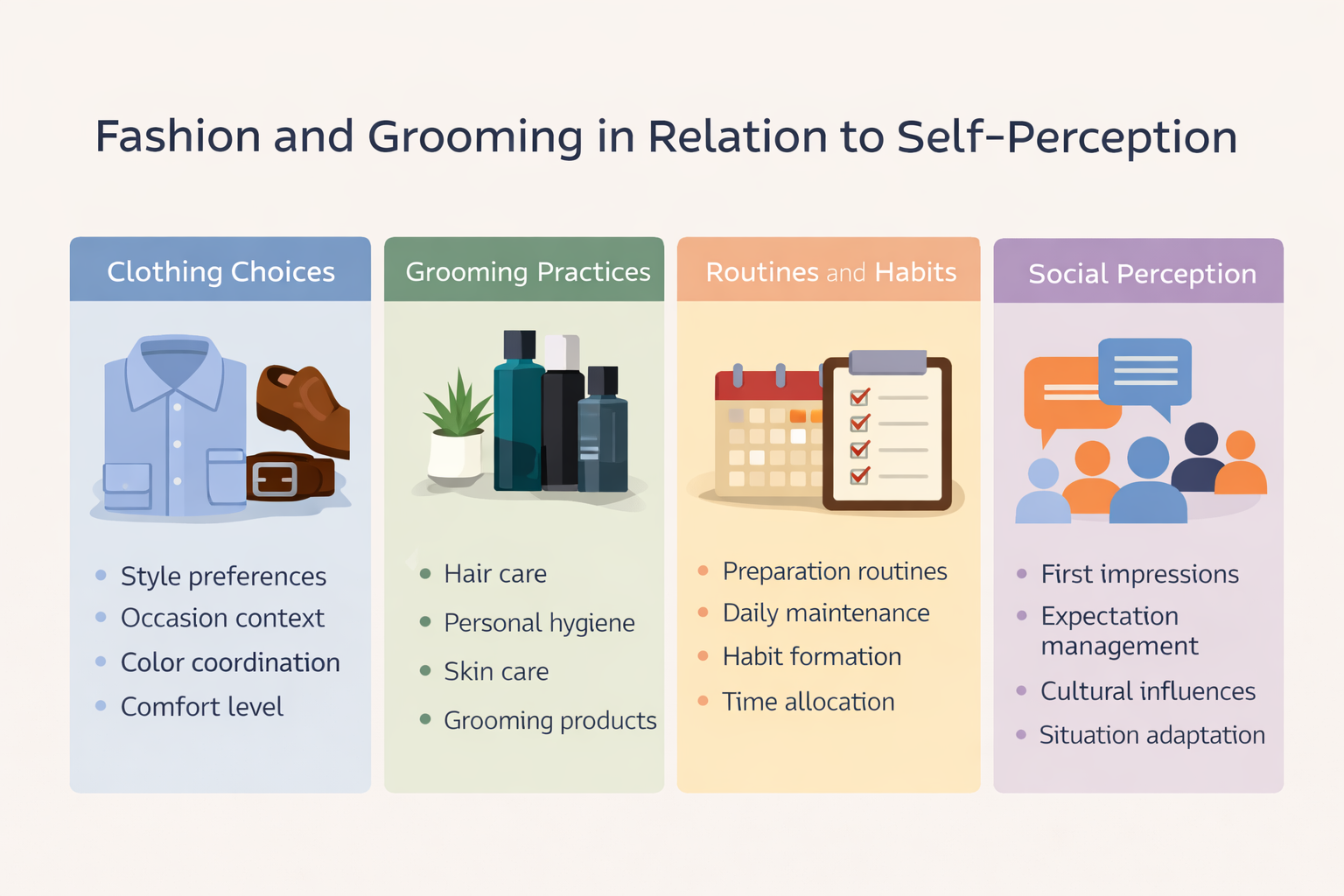
A visual layout presenting elements related to fashion and grooming concepts.““
Disclaimer
This article is for general informational and educational purposes only. It does not constitute professional psychological, counseling, medical, or consumer purchasing advice. References to programs, books, tools, or methods do not imply endorsement or guarantee of results. Readers are encouraged to consult licensed professionals and verified educational sources when pursuing personal development.