Understanding Exfoliation and Lightweight Hydration in Skin Care
An educational overview of two commonly discussed skin care practices and how they relate to basic skin maintenance.
Manila, Philippines — March 13, 2026
Lead Paragraph
Exfoliation and lightweight hydration are two concepts frequently mentioned in discussions about everyday skin care routines. These practices are generally associated with maintaining skin cleanliness, supporting moisture balance, and helping remove surface debris. Health and consumer protection frameworks in the Philippines, including guidance from the Department of Health Philippines and the Food and Drug Administration Philippines, emphasize responsible product use and clear consumer information when discussing cosmetic products. This article provides a neutral explanation of exfoliation and lightweight hydration within a general skin care context.
Exfoliation: Removing Surface Buildup
Exfoliation refers to the process of removing accumulated material from the outermost layer of the skin. The skin naturally renews itself through a cycle in which older cells move to the surface and gradually shed.
In some skin care routines, exfoliation may involve products or tools designed to assist with this surface removal. Two broad categories are commonly described in dermatology and cosmetic science literature:
Physical exfoliation
This involves the use of textured materials or tools that gently rub the surface of the skin.
Chemical exfoliation
This refers to formulations that contain ingredients designed to loosen the bonds between surface cells.
In educational materials on skin care practices, exfoliation is typically described as an occasional step rather than a constant one. Overuse of exfoliating products or tools may contribute to irritation in some individuals, particularly when skin sensitivity is present.
Lightweight Hydration: Maintaining Moisture Balance
Hydration in skin care refers to maintaining an appropriate level of water content in the outer layers of the skin. Moisturizing products may contain ingredients that support this balance by forming a protective barrier or by helping retain water in the skin surface.
The term lightweight hydration is commonly used to describe moisturizers with thinner textures or lower oil content. These formulations are often designed to absorb quickly and leave minimal residue on the skin surface.
Examples of ingredients sometimes associated with lightweight hydration include:
- Humectants, which attract water to the skin surface
- Water-based gels or emulsions
- Low-viscosity lotions
The exact suitability of any formulation can vary depending on an individual’s skin characteristics and environmental conditions such as humidity and temperature.
How These Practices May Appear in Basic Skin Care Routines
In general educational descriptions of skin care routines, exfoliation and hydration are presented as separate steps that address different aspects of skin maintenance.
A simplified example often discussed in dermatology guides may include:
- Cleansing to remove surface dirt and oils
- Occasional exfoliation to remove accumulated surface cells
- Application of a moisturizer to support hydration
These steps are commonly described in broad educational contexts rather than as fixed routines. Individual skin responses to products or ingredients may vary.
Context: Dermatology and Consumer Awareness
In dermatology and cosmetic science research, skin care routines are typically studied in relation to the skin’s outer barrier, known as the stratum corneum. This barrier helps regulate water retention and protects against environmental exposure.
Consumer protection standards emphasize that cosmetic products should not be marketed with misleading claims about guaranteed cosmetic or health outcomes. Regulatory agencies such as the Food and Drug Administration Philippines monitor product registration and labeling to help ensure that products available in the market provide accurate information about their ingredients and intended cosmetic use.
Educational discussions about exfoliation and hydration therefore focus on general skin maintenance concepts, rather than promises of visible transformation or specific aesthetic outcomes.
FAQ
What is exfoliation in skin care?
Exfoliation refers to the removal of accumulated material from the outermost layer of the skin. It can occur naturally through the skin’s renewal cycle and may also be assisted by certain products or tools.
What does lightweight hydration mean?
Lightweight hydration describes moisturizers that have a thinner texture and absorb quickly. These formulations typically aim to help maintain moisture balance on the skin surface.
Why is hydration discussed in skin care routines?
Hydration is related to the skin’s barrier function and moisture balance. Many skin care discussions include moisturization as a step intended to help support the skin surface.
Trusted Sources
-
Department of Health Philippines — Public health advisories on consumer health and hygiene
-
Food and Drug Administration Philippines — Cosmetic product regulation and consumer safety guidance
-
American Academy of Dermatology — Educational dermatology resources
-
Peer-reviewed dermatology and cosmetic science journals on skin barrier function and hydration
Disclaimer:
This article is for general informational and educational purposes only. It does not constitute professional medical, dermatological, or consumer purchasing advice. References to products, routines, or treatments do not imply endorsement or guarantee of results. Readers are encouraged to consult licensed dermatologists and verified resources for skin care decisions.
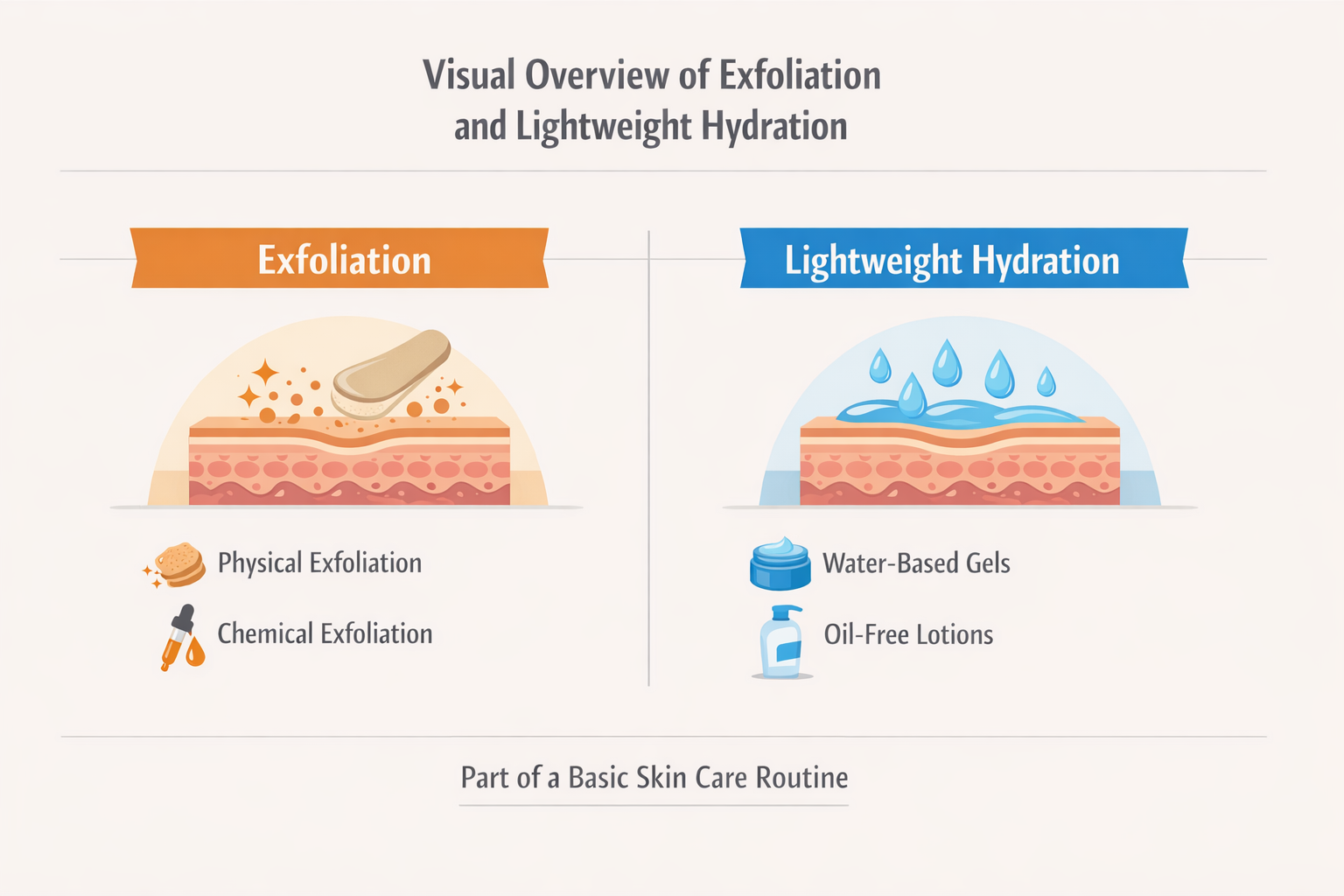
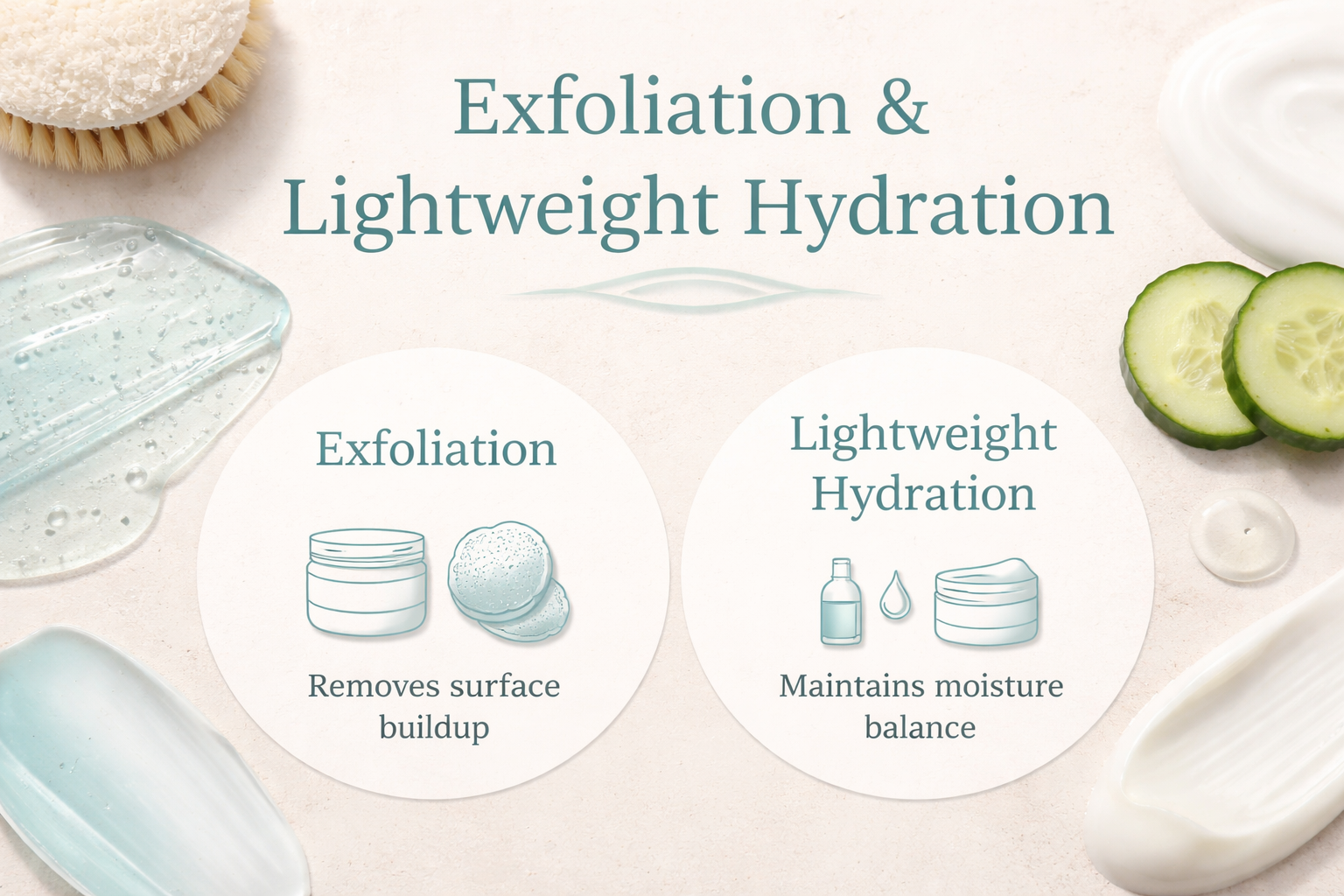
Illustrated layout presenting exfoliation and lightweight hydration as separate skin care routine concepts.