Exfoliation and Lightweight Hydration: Educational Overview of Two Common Skin Care Concepts
A neutral explanation of exfoliation processes and lightweight moisturizing practices in general skin care routines.
Exfoliation and hydration are commonly discussed topics in educational skin care resources. These practices relate to the removal of surface skin buildup and the maintenance of moisture levels in the outer layer of the skin. In the Philippines, cosmetic products and related claims are monitored by regulatory bodies such as the Department of Health and the Food and Drug Administration. These agencies operate within consumer protection frameworks including the Consumer Act of the Philippines (RA 7394).
This article explains the basic concepts of exfoliation and lightweight hydration, how they are described in dermatology literature, and how individuals may observe their role within general skin care routines.
Understanding Exfoliation
Exfoliation refers to the removal of accumulated surface skin cells from the outermost layer of the skin. The outer skin layer naturally renews itself over time, and exfoliation practices are often discussed in cosmetic science as a way to remove surface debris or buildup.
Educational sources typically describe two broad categories of exfoliation:
Physical Exfoliation
Physical exfoliation involves the use of textured materials or tools that mechanically remove surface skin buildup. Examples may include scrubs or textured cloths.
Chemical Exfoliation
Chemical exfoliation involves substances that interact with the bonds between surface skin cells. In cosmetic science literature, this category may include ingredients such as certain acids or enzymes that assist in loosening accumulated cells on the outer layer.
Hypothetical example:
An individual introducing an exfoliating product might observe the instructions on the packaging and apply the product according to the recommended frequency indicated by the manufacturer.
Dermatology sources generally emphasize that exfoliation practices vary widely depending on skin characteristics and product formulation.
Understanding Lightweight Hydration
Lightweight hydration refers to moisturizing products designed to provide surface hydration while typically having a lighter texture or lower viscosity compared with thicker creams or ointments. These formulations are commonly described in cosmetic science literature as water-based or gel-based products.
The purpose of moisturizing in general skin care routines is to support hydration in the outer skin layer and reduce moisture loss. Lightweight formulations are often discussed as one of several categories of moisturizers.
Common characteristics described in cosmetic research include:
- Faster absorption compared with heavier formulations
- Lower oil content in some products
- Water-based or gel-like consistency
These characteristics describe product formulation properties rather than health or cosmetic outcomes.
Typical Placement in Skin Care Routines
Educational skin care guides often describe exfoliation and moisturizing as steps that may appear in a broader routine that includes cleansing and sun protection.
A simplified example of routine structure described in educational materials:
- Cleansing to remove surface debris
- Exfoliation at intervals described by product instructions
- Application of a moisturizing product
- Sun protection when exposed to sunlight
These steps represent general descriptions from skin care education resources rather than standardized medical recommendations.
Context: Dermatology and Cosmetic Science
In dermatology and cosmetic science studies, exfoliation and hydration are frequently examined in relation to the skin barrier and the outer layer known as the stratum corneum. Research may evaluate how various formulations interact with surface skin cells or moisture levels.
Under consumer protection frameworks such as the Consumer Act of the Philippines, marketing materials for cosmetic products are expected to avoid misleading claims about appearance outcomes or health effects. Regulatory agencies may review labeling and advertising to support transparency in consumer information.
FAQ
What is exfoliation in skin care?
Exfoliation refers to the removal of accumulated cells from the outer surface of the skin. It may involve mechanical or chemical methods depending on the product or material used.
What is lightweight hydration?
Lightweight hydration describes moisturizing products that are formulated with a lighter texture, often using water-based or gel-like formulations.
How often is exfoliation discussed in skin care guides?
Educational sources often note that exfoliation frequency varies depending on the product formulation and skin characteristics. Product instructions and dermatology references commonly provide guidance for appropriate use.
Trusted Sources
- Department of Health public health guidance
- Food and Drug Administration cosmetic regulation information
- American Academy of Dermatology dermatology education resources
- Peer-reviewed dermatology and cosmetic science journals
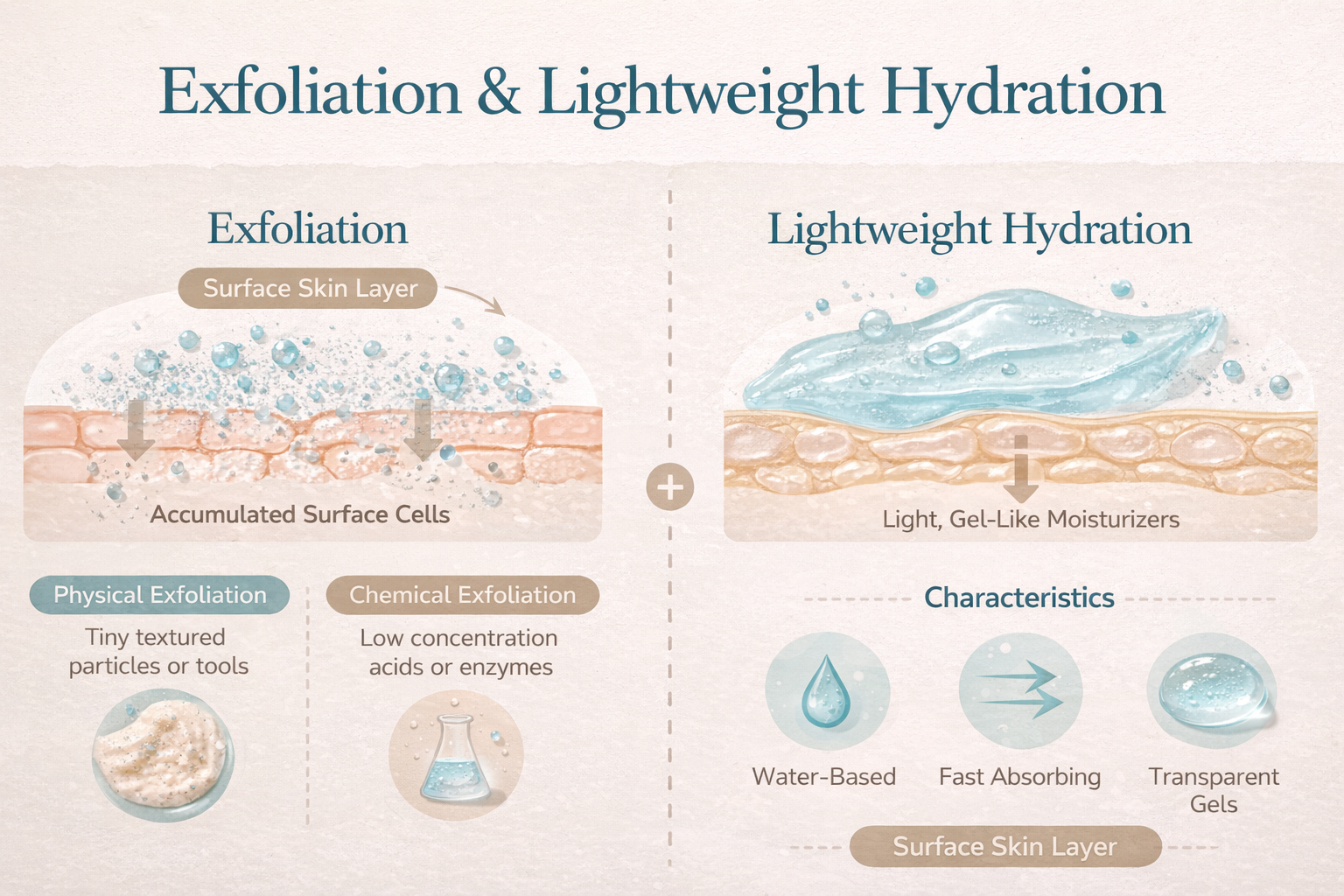
Illustrated overview of exfoliation mechanisms and lightweight hydration textures.
Disclaimer
This article is for general informational and educational purposes only. It does not constitute professional medical, dermatological, or consumer purchasing advice. References to products, routines, or treatments do not imply endorsement or guarantee of results. Readers are encouraged to consult licensed dermatologists and verified resources for skin care decisions.